
Commentary
Somehow American culture treats the pickle as ballpark food, a side to a sandwich, a crunchy whatever of no particular significance. It suddenly occurred to me over the weekend that this is completely wrong. The pickle is a wonderful food on many levels, starting with its foundation in the cucumber.
As I’ve documented in painful detail, the cucumber has a long history as a highly revered vegetable. It is the reason for one of history’s most spectacular agricultural innovations: the greenhouse.
The history traces also to Emperor Tiberius, the successor to Augustus in AD 14 whose rule overlaps with the life of Christ. Tiberius, according to the historian Pliny the Younger, ordered cucumbers on his table daily, even during off-seasons. His courtiers had to use artificial methods to achieve the goal, thus innovating the greenhouse. Also, the ancient Mesopotamians were preserving cucumbers in brine as early as 2400 BCE.
Later, Charlemagne had cucumbers grown in his gardens in the eighth century. They eventually came to England in the 14th century, were lost again, and were reintroduced 250 years later. The Spanish Empire brought them to the Americas in the 15th century. This is how they came to Haiti in 1494: via Christopher Columbus.
Before the discovery of Vitamin C, pickled vegetables (and fruits) were crucial for long sea voyages. Captain Cook reportedly stocked barrels of sauerkraut and pickles, and some historians credit pickle consumption with helping the British Navy maintain healthier crews than their rivals.
In the Civil War, both sides used pickles as reliable food. This is where we get the phrase “in a pickle.” It meant that all the other rations had run out. I can imagine a worse fate than having to live off pickles.
Even in later 19th century English culture, the cucumber was regarded as a luxury that only the rich could afford. Hence, the high status of the cucumber sandwich. It’s a wonderful treat if you have never tried it.
The cucumber even makes an appearance in the Bible, in Numbers 11:5: “We remember the fish, which we did eat in Egypt freely; the cucumbers, and the melons, and the leeks, and the onions, and the garlic.” Thus you can have the satisfaction of knowing that when you eat a cucumber, or a pickle, you are eating a truly Biblical vegetable!
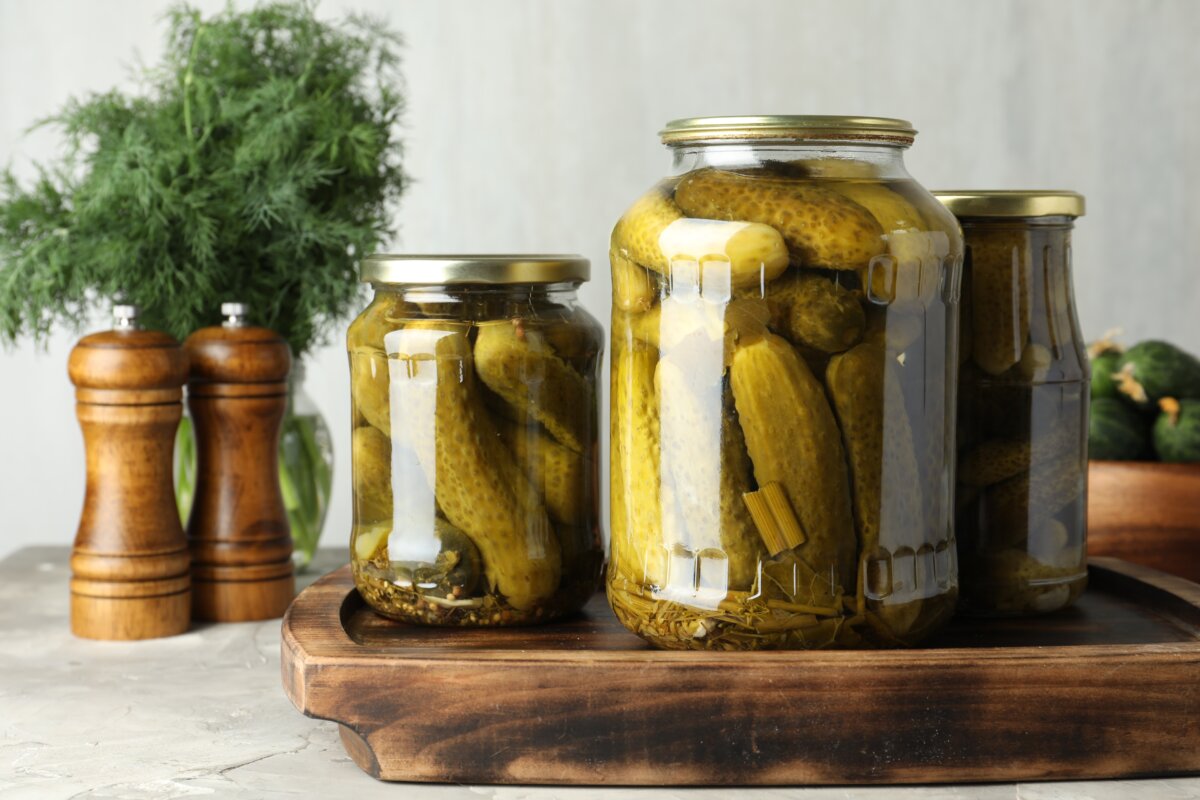
It’s an obvious but overlooked point: the pickle is a cucumber preserved with salt and vinegar, sometimes fermented and sometimes not, sometimes fresh and sometimes pasteurized for long shelf life. If you know cucumbers, you know that they can be fussy to keep in the fridge. They can look crisp for a week and then suddenly collapse into a disastrous mush.
This is likely why they, like eggs, were among the most commonly subjected to the pickling method of preservation. In the first half of the 20th century before refrigeration was everywhere, local stores had barrels of pickles to buy and take out for snack. It was our nation’s first fast food. The pickle barrel was also community infrastructure where people gathered and shared news of the day.
Today pickle relish falls into the same category as mustard and ketchup, a condiment for the ballpark hotdog or a picnic. So we don’t think much about it. We should. In the whole of history, this was a luxury good and one widely seen as healthy.
There are many ways to make a pickle. For the first time, I bought some fresh pickles that require refrigeration and do not have such a long life. They are simply spectacular, with a crunch much closer to the original cucumber and a wonderfully briny taste. It’s nearly a different product from the jarred pickles that have been pasteurized.
All pickles provide what are called electrolytes thanks to the salt and vinegar. So they boost muscle motion and mobility. This is not a small consideration. Some years ago, I found myself wearing down for no apparent reason. It got worse for several days until at some point I was walking only with the help of walls to hold me up. I had no idea what was going on.
Suddenly I had this wild craving for ketchup. I made my way to the fast food place across the street and ordered fries and smothered them with ketchup. I instantly felt much better. By the time I was finished, I was wholly back to normal. I found the entire experience to be bizarre.
That’s when a friend told me what had happened. I was depleted of electrolytes, for whatever reason. This is what sports drinks can provide. You can also get them with tomatoes, salt, and vinegar. The pickle is also a great source. That same experience has happened a few times since those days but now I know what to do.
Legend has it that expecting mothers have a pickle craving. Cannot get enough of them. This is surely for a reason. They are supporting their own lives and growing another inside the womb. Maybe these cravings should tell us something.
Apparently the deli pickle of the sort you see in Kosher sandwich shops in Manhattan are of a special type. They are fermented and offer all the joys of a kimchi or sauerkraut. I heard a lecture recently from a dietician who was going on about the necessity of fermented vegetables, especially for people recently enamored with a carnivore diet. Meat is great but the body needs fermented veggies to make it all work.
Our old friend the deli pickle to the rescue! There is a reason for their persistence in Kosher diets and casual eating for the working classes. It’s healthy food. We just don’t think of it that way. A true fermented pickle contains live cultures that rival expensive supplements. In an era of processed foods and antibiotic overuse, the humble pickle delivers biodiversity to the digestive tract.
Or think of the cocktail you see everyone drinking at an airport bar in the early morning. It’s the Bloody Mary, which has vodka but also other healthy restoratives including tomato juice and pickle brine, usually with a big pickle in there somewhere.
Can you even imagine a better snack? I would take a pickle over any candy bar or wrapped chewing thing from a convenience store. The same stores often have a big pickle hanging in a bag. Get that instead and you have a wonderful source of food and energy right there. Leave the corn-syrup-soaked energy drink behind.
The pickle isn’t merely a preserved cucumber, though that only would be wonderful enough. It’s concentrated history, portable nutrition, and democratic luxury all in one briny package.
Views expressed in this article are the opinions of the author and do not necessarily reflect the views of The Epoch Times.
 Friends Read Free
Copy
Facebook
Tweet