
Commentary
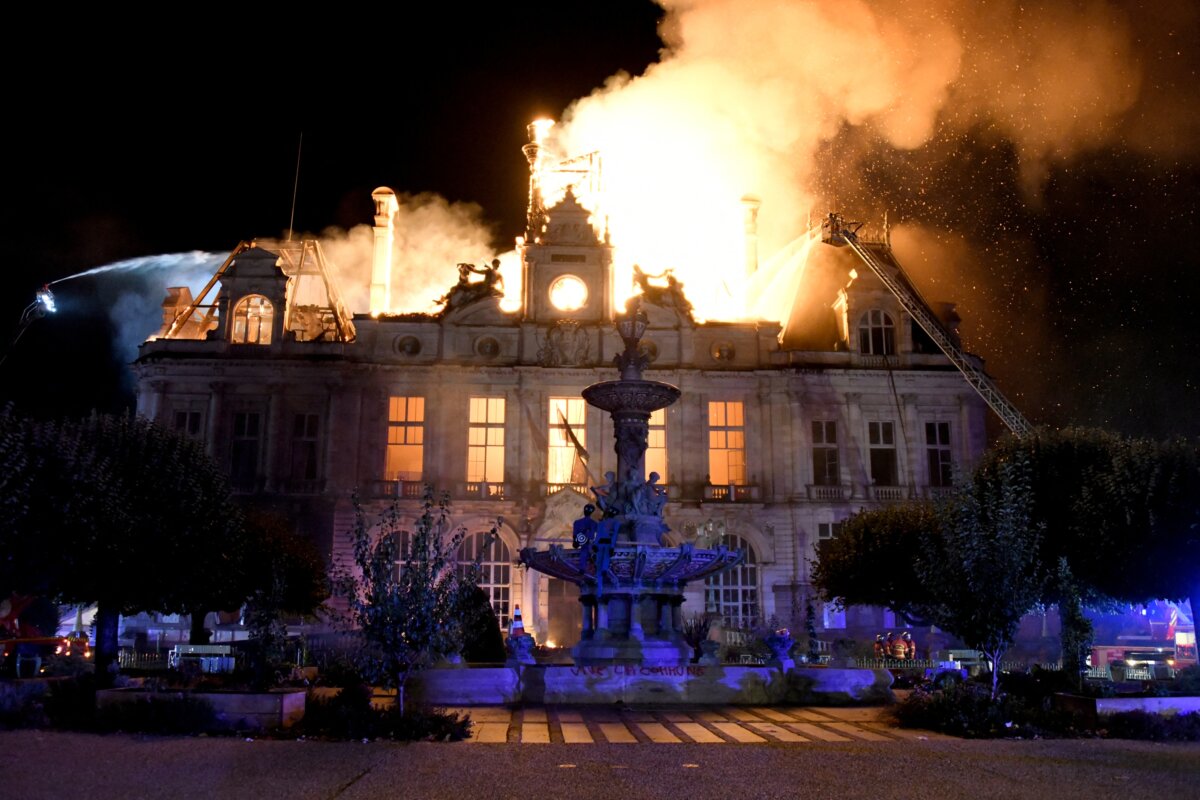
Many people in the world were shocked to see the images from France, the burning buildings, the collapsing pillars, the pillaged shops, and the rampaging hoodlums wrecking monuments of civilization. It’s hard for us to understand how something like this could happen. What takes 1,000 years to create is torn down and destroyed in an overnight frenzy of emotion and violence.
What we see is only the end result. What should concern us more profoundly are the preconditions in place that make any society vulnerable to that sort of violence.
We are all surrounded by physical infrastructure that needs to be guarded and protected against violence. There is a much larger and more important substructure that we do not see that consists of the values, habits, ideals, character traits, and social signaling systems that make for a great and stable civilization. This also needs guarding.
When hoodlums rampage and burn, there is no way to assess the full losses, even once the insurance adjusters are finished with their job, because there is no way to replace much of what is gone. The promise to rebuild is encouraging, but we all know the terrible truth: Much of the loss is permanent. And it hurts us all deeply, unsettling us emotionally and intellectually with the realization that even what we believe to be fixtures of culture and life are vulnerable to the exigencies of human evil.
Just as buildings represent much more than their material properties, so too does this violence suggest the need for a renewed consciousness of the fragility of all the treasures that surround us in our daily lives. We are surrounded by gifts of the ages, smaller and invisible buildings and structures from which we are daily beneficiaries.
In each of our local communities, we find buildings and objects that instantiate the sacrifices and labors of people we knew and did not know. They worked to build the quality of life we now enjoy, digging a little further out of the state of nature into the safety, prosperity, and progress we all enjoy. We are all spoiled by it. We take it for granted. All of us, no exceptions, carry with us a sense of entitlement because of what came before and what we personally had nothing to do with creating.
This past weekend, I was on a beautiful walking trail that ran beside rivers and streams, with bridges and benches along the way. The trail begins with a stone pathway, so carefully created many decades ago, each stone carefully placed and secured to last the ages. There was something humbling about the experience. I did not know those who made this path, but here I was benefiting from the entire space and not paying a dime for the privilege.
This is a small point, but actually we are everywhere surrounded by monuments built by people we did not know and from values and priorities that we too easily take for granted.
The monuments around us are both visible and invisible. The visible forms we see in our skylines and cityscapes, from the tallest buildings in mighty urban centers to the manors and plowed lands in the countryside.
The invisible forms consist of the values we hold, the knowledge passed from generation to generation, the mores and habits that we inherit from—and that are embedded within—cultures, languages, religious stories, philosophical outlooks, bodies of knowledge from specific disciplines, literature, art, commercial practices, and the creative imagination that grants us a sense that our lives are not pointless but rather driven by a sense of direction and achievement.
All of this constitutes the invisible skylines that we did not create but rather inhabit by virtue of having been born at this place and time. It’s our good fortune, but are we even aware of it? What obligations do we have to appreciate what has come before, and how might that impose obligations on what we do with our own lives?
With the burnings and rampages in France, which could now threaten much of Europe, the question rings out: What might have been done better to have prevented this catastrophe? The time to ask the same of all the substructure around us is now, before we inadvertently set fires that cause irreparable damage.
The damage can come in many forms. There is the inactive damage caused by neglect and ignorance, as well as the active form wrought by the arrogance of political ideology that longs to replace what came before with some untested experiment of what could be in the future.
Where is the fire that threatens this invisible substructure? These days, it comes mainly from politics, and the arrogant ideologies that daily threaten to displace what we know to be true with the products of minds who aspire to rule others through the application of power.
The COVID-19-pandemic-era lockdowns were one such case, a crazed science experiment that mandated universal human separation and compulsory idleness in the name of disease control, followed by the forced acceptance of an experimental medical product that turned deeply harmful.
That was an egregious case, but it’s been followed by whole movements of people who are daily making outrageous demands that we, for example, shatter established understandings, abandon the faith of our ancestors, tear up familial ties, surrender private property, abandon industrial techniques it took centuries to develop, turn our backs on what our parents and theirs knew to be true, ignore the discoveries of science, forget the literature that shaped the imaginations of countless generations, disregard once-settled postulates concerning the rule of law and human dignity, and assault all that has come before as hopelessly biased and corrupt.
These people seek to shame us into abandoning common sense and the wisdom of experience in favor of their superior plan. They promise to tear down and rebuild according to a new theory of who we are and how we should live. They can destroy with a word, an edict, an order. If we follow them, and if we allow them to prevail, we will observe many more experiences of pained and irrecoverable loss.
In France today, all major political figures are promising to rebuild. Perhaps so. In time. At astonishing expense. With results that will only be a re-creation and not the real thing, at best. The destruction is too overwhelming, too shocking, too inexcusable for us to believe a political leader can somehow put it back together again. No one can.
The rebuilding we really need addresses that invisible substructure: literacy, the cultivation of habits and manners, respect for tradition, piety toward our ancestors, appreciation of all the sacrifices that have come before, the hard work dating back centuries to bequeath to us peace and prosperity. This is what we have inherited. It must be guarded, cultivated, and passed on to the next generation, along with a profound respect and appreciation for what building a great civilization requires.
The fires and destruction in France should teach us that civilization is more fragile than we want to believe. We dare not take it for granted. The fires come when and from a place we least expect, and the damage is often irreparable.
Views expressed in this article are the opinions of the author and do not necessarily reflect the views of The Epoch Times.
 Friends Read Free
Copy
Facebook
Tweet