Commentary
“Solve all disease” is the mission statement of DeepMind’s associated Isomorphic Labs. Really?
Speaking on behalf of his San Diego business Genyro, Adrian Woolfson said, “Biology is now computable, predictable and therefore designable.” Quoted in the Oct. 17 issue of The Economist, Woolfson’s predictions parallel the notion that artificial intelligence will invent “perhaps, eventually, entirely new living things.” The introductory editorial in the same issue imagines AI “scientists may go on to achieve mastery of biology, gaining the ability to create entirely new organisms from scratch.”
Meanwhile, trying to buy a pair of britches at Men’s Wearhouse today, it took two clerks 10 minutes to figure out the check-out screens to handle my $50 transaction. I’m sure the AI crowd assumes soon those cashiers will be replaced by robots who never make a mistake. Really?
At Staples, computer inventory wouldn’t let headquarters deliver my favorite ink pen, which was unavailable on the rack, because electronic bean counting said six Uniball 207 Impact 0.1 mm black pens were in the store. Where? Nobody could find them. But the Staples inventory computer refused to replace the empty rack for months since nobody could override the computer.
Every day I’m encountering additional glitches like this in systems supposedly immune to human frailty. And these aren’t even AI. Imagine when the backups to the backups to the backups know what they know what they know and have the answer to the answer to the answer.
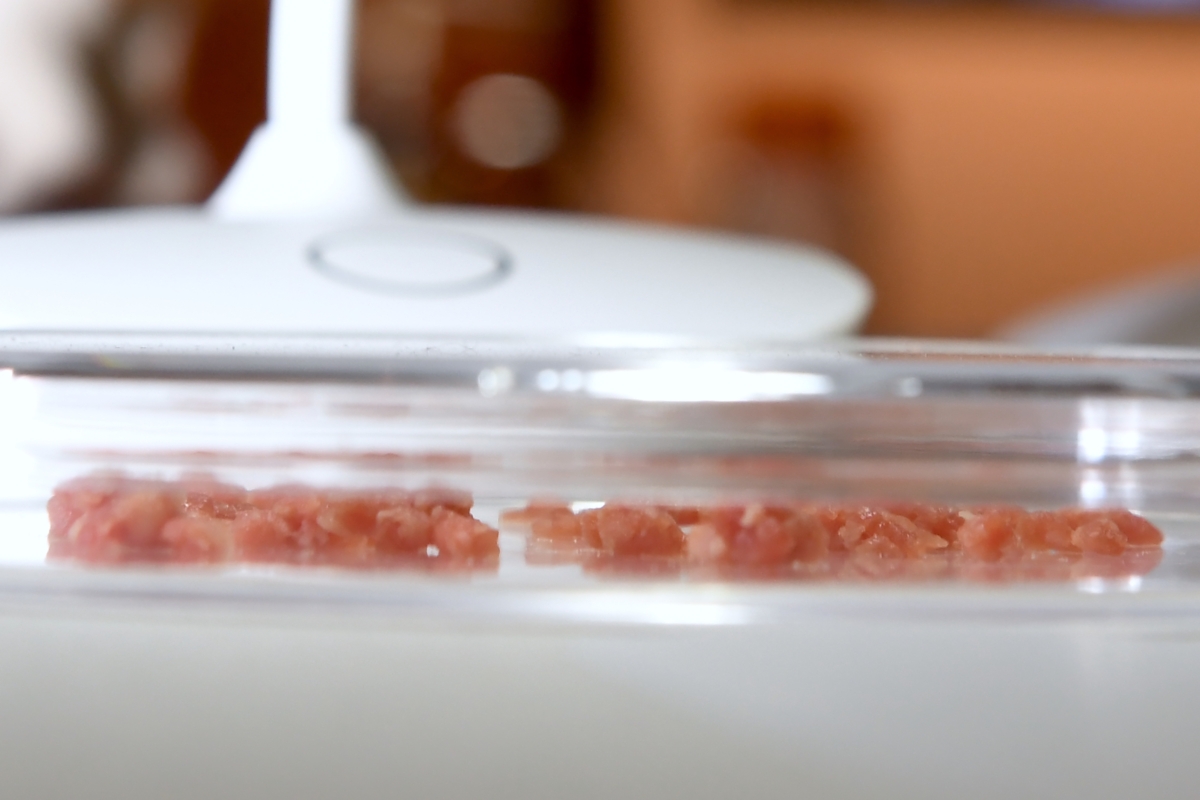
As I read the euphoria of AI proponents, I can’t help but go down memory lane to a mere handful of years ago when venture capital poured billions into cell-cultured fake meat start-ups. I am a full-time non-chemical livestock farmer, and the predictions from these outfits rocked my world. Within 10 years, farmland would drop by nearly 50 percent because it would be obsolete. We just wouldn’t need farmland. That’s what they said.
Cattle prices would drop by 30 percent to 50 percent (depending on how fast the technology came on and how willing consumers were to accept a Jetson world) as these new proteins took over the market. I remember wondering whether it was possible. “Could this actually happen?” permeated my thoughts, and not a little worry. As a mid-sized farmer, I wondered how this would affect my business. How would I adapt? What would happen if my beef dropped by half but property taxes stayed the same? How would I maintain customers and sales in a world where authentic cows evolved from cultural demons to cultural unnecessaries?
If farmland dropped by 50 percent, would taxes drop as much? How would I market authentic beef to people flocking to the artificial scientific techno-glitzy option? I lived through that and watched the whole fad come and go. What happened? Why don’t we see agriculture publications and futurists filling media pages with the same predictions, now about a decade old? Where did all the hubris go?
Interestingly, it met something called biology. Also known as life. Few things could be as exemplary of unintended consequences as fake meat. As it turns out, growing protein in cell cultures is close enough to living organisms that the tissue can get sick and excrete exhaust. What these entrepreneurs didn’t imagine was how difficult it would be to duplicate a body and all its intricate functions.
How do you mimic lungs, heart, and blood vessels? The nearest mechanical component to a circulatory system was air bubbles. That keeps things in the vat and its medium moving around. Bubbles look like movement, but they’re a far cry from veins and arteries. Additionally, these cells make waste. Animals pee and poop. They make snot, tears, mucus. Kidneys and livers purify the blood, filtering out the garbage to be discarded in a number of ways. Imagine an automobile oil filter compared with the complexity of your liver or kidneys. I’d say the oil filter is primitive in comparison.
In short, fake meat ran headlong into mechanical limitations: circulation and filtration. These are things that fearfully and wonderfully made—and complex—living bodies do naturally and efficiently. Even with copious amounts of antibiotics injected into the culture, the fake meat tissue couldn’t be kept well. Waste built up. Infection appeared. As it turns out, the largest functional vat is about the size of a 5-gallon bucket.
Think about the hubris of the hydrogenated vegetable oil folks who thought butter and lard were doomed with the advent of Crisco and margarine. Remember the TV ads about not being nice to fool Mother Nature? Now who’s laughing? It turns out that wasn’t a joke; Mother Nature won with butter and lard. Today, Crisco is gone and margarine almost.
All this brings me back to today’s AI prognostications. I ask a simple question: “What have we done with technological breakthroughs in the past?” We discovered oil and built a food system that carries the average morsel of sustenance 1,500 miles from farm to plate instead of the 40-mile average in 1945. We discovered chemicals and doused the world with DDT, making unhatchable eagle eggs. We found hydrogenated vegetable oil and created circulatory distress. We found high fructose corn syrup and created a nation of diabetics. We found robocallers and now plague every cellphone user with junk calls.
Although I’m certainly not opposed to technology—I’m writing this on a laptop hooked to the internet—I think it behooves us to realize that most of the time neither the most optimistic nor the most pessimistic happens. Seldom are things as bad as the doomsayers predict, which is gratifying. But on the flip side, seldom are things as rosy as the futurists predict.
With as many errors in digitization as humans must fix, you can be assured that the next huge job growth sector will be fixing things AI messes up. How many times do you have to fix your car because some highfalutin computer microchip malfunctioned? Does anyone believe that an AI-dominated existence will be free from hiccups?
Humans have overrun our headlights many times. We invent something we can’t spiritually, emotionally, mentally, or physically metabolize and then spend the next couple of generations fixing the fallout of our inventions. AI promises the same faddish buildup and then reality’s disappointment.
During all this hype, I’m going to keep grazing my cows, making compost, planting vegetables, and making friends out of my customers. I’m convinced that the next guaranteed success for any business is one that is trustworthy and relationally oriented. Trust and personal connections are the two most impoverished equities of our culture. Restoring them will be redemptive indeed.
Views expressed in this article are the opinions of the author and do not necessarily reflect the views of The Epoch Times.
 Friends Read Free
Copy
Facebook
Tweet