
Commentary
When we think of the city of Jerusalem, we think of a great historic city in Israel. Where else could Jerusalem be? Well, in an intensively researched and revealing book written by The Wall Street Journal’s Jonathan Cheng, we find that there is a city in Asia that, at one time, was referred to as the Jerusalem of the East. Perhaps few folks are aware of this Eastern Christendom, and it certainly was a revelation to me.
In his book, “Korean Messiah” (Kim Il Sung and the Christian Roots of North Korea’s Personality Cult, 2026, 735 pages), Cheng delineates how Protestant Christianity made large inroads into North Korea beginning in the late 19th century. Catholicism had already landed in many parts of Asia much earlier, but it experienced tougher sledding, except for greater successes in the Philippines and Vietnam.
When the Methodist and Presbyterian missionaries from the United States arrived in the Hermit Kingdom, Korea had been influenced for a thousand years by Confucian principles imported from China, along with some elements of Buddhism and Taoism. Naturally, there might be resistance to Christianity, which was vastly different from Confucianism and the local shaman nature practices.
Most of the missionaries who arrived in Korea were based in Seoul, but Samuel A. Moffett, William Baird, Horace Underwood, and others began to branch out further to the North. Prior to settling in Pyongyang and establishing a church, Moffett shuttled back and forth between the two political centers.
Cheng noted that Indiana-born and trained Moffett’s diplomatic and persuasive demeanor helped him to gradually spread the gospel to the environs in and around Pyongyang, a scenic city known for its robust trade on its two rivers but also as a city of many vices. He helped to establish about 1,000 churches during his 46 years in Korea.
At this time, the Japanese became the dominant players for control at the dawn of the 20th century and occupied (1910–1945) Korea until their World War II defeat. Christian converts who couldn’t tolerate Japanese oppression fled north to Jilin City in Manchuria and set up missions and resistance groups.
Into this turbulent period, Kim Song-Ju was born in 1912. (In 1930, he changed his name to Kim Il Sung, which translates as “becoming the sun.”) His parents were highly involved in the Christian church and schools, and he attended a Christian school. As with all religious movements, some were interested and then fell away, while others fully embraced the faith. There were also smaller numbers that actively or passively opposed the missionaries, as they favored national liberation for survival over personal conversion.
Cheng noted that by the time Kim was a teenager, Pyongyang was filled with scores of churches and schools and was often referred to as the Jerusalem of the East. It had the largest concentration of Christians in Asia. In addition to spiritual revivals and humanitarian work, the missionaries brought capitalism into Korea, along with literacy and greater equality for women.
When U.S. President Woodrow Wilson articulated his views on justice and liberty for all people at the Paris Peace Conference (1919), Korean church and nationalist leaders, at first, were hopeful that free nations would help them evict the Japanese from their land.
However, their hopes were dashed when Wilson didn’t come to their aid, so they drafted their own declaration of independence, and brutal Japanese persecution followed. By the late 1930’s, the Japanese had replaced churches with Shinto shrines and temples and imposed their culture on Korea in an attempt to erase the Korean identity.
The author pointed out that this was a turning point for the missions and many Koreans. Out of despair, many turned to the revolutionary-minded Chinese and Russians for help. Kim IL Sung, and other nationalists, studied Marxist-Leninism and fell in with Mao Zedong and Soviet Stalinism. Some turned to Christian nationalism.
Kim honed his political skills in China, and after the Japanese World War II defeat, he was installed with Soviet assistance as the first supreme leader of North Korea in 1948. By then, the North and South were separated by the 38th parallel. Syngman Rhee became the first South Korean president. Kim gained total control of the North by 1956.
In 1950, with Chinese and Soviet backing, Kim initiated a war against the free South, which allied itself with the United States. It ended in an uneasy truce in 1953, and a Demilitarized Zone was set up. Ironically, the zone became one of the most fortified and tense borders in the world.
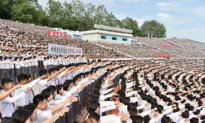
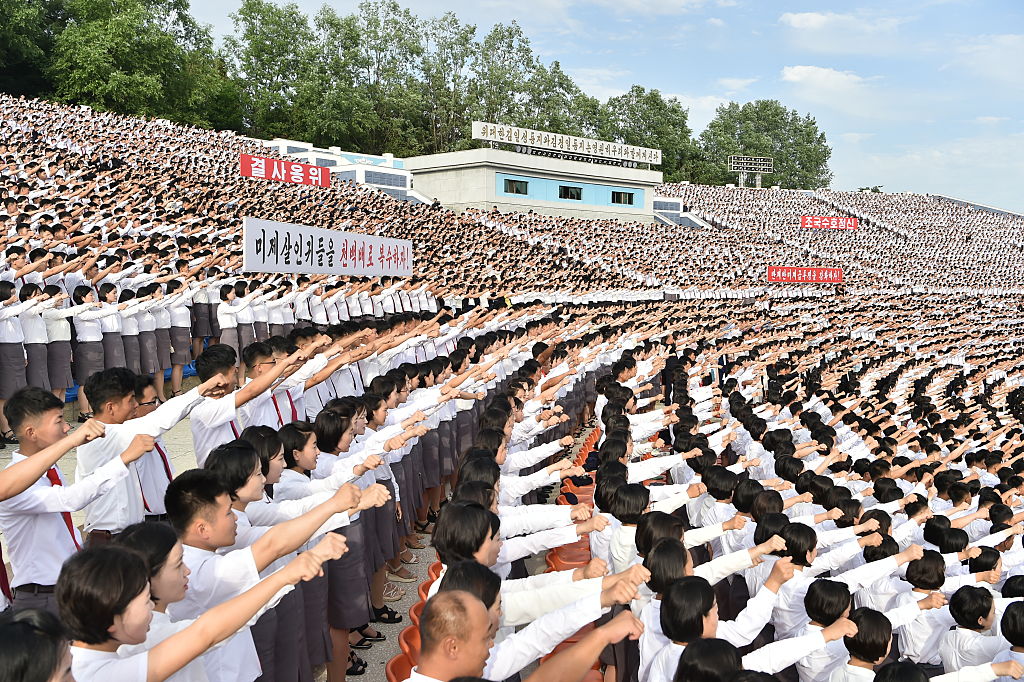
During the 1950’s, Kim’s concept of Juche (self-reliance) on steroids turned the North against all foreign influences except China and the Soviet Union. It continues to be extremely difficult for anyone to enter the North, to report events, or for citizens to leave North Korea to experience the wider world.
Kim had long ago cast aside Christian principles of divine redemption. Instead, he fused biblical passages with communism and Confucianism to glorify his own personality by forcefully indoctrinating the masses. The practice of self-criticism, purges, public repentance, and Kim worship became routine to reinforce Kim’s elevation as a divine leader.
He governed with absolute power from 1956 to 1994, then was succeeded by his son Kim Jong Il, who ruled from 1994 to 2011. The current supreme leader, Kim Jong Un (2011–present), took over the reins from his father and retains centralized power in an isolated regime with nuclear weapons. In a twist of fate, foreign despots have been replaced by three homegrown false Messiahs who fail to meet the people’s basic needs. Unlike East and West German unification, efforts at the reunification of the Korean peninsula have all failed.
The author asserted that several historians believe that the Kim hereditary dynasty has been largely manipulated by communist China and Russia and that the Kims have largely been stooges for those powerful regimes. Many of the alleged exploits against the Americans and Japanese in Kim Il Sung’s memoirs are either embellished or fabricated to enhance his resume as a type of god-king, known as Kimilsungism.
Although Kim softened his stance against Christianity in old age and twice successfully invited Billy Graham to preach in Pyongyang, it might have been a ploy to burnish his global image. Moreover, the attempts to export Kimilsungism abroad have met with limited success in Africa, Asia, and Latin America.
Unfortunately, the second Jerusalem faded away, and most Christians fled to the Republic of Korea. The Christians who remained have had to teach state-approved lessons that deify the Kim regime. Shrines and statues devoted to Kim Il Sung are omnipresent. While North Korea has been shrouded in atheism and paranoia for nearly 80 years, the South has experienced economic growth, freedom of choice, and religious pluralism.
For folks who are interested in political and religious dynamics in the Korean peninsula, Cheng’s highly researched book is a fascinating read and is highly recommended. It has almost 200 pages of citations and notes and sheds light on the stark contrast between North and South Korea. It also details the tragic suffering endured by Koreans because of foreign interventions and the totalitarian lockdown engineered by the Kim dynasty in the North. We ought to be always grateful that we can pursue our dreams in a democratic republic.
Views expressed in this article are the opinions of the author and do not necessarily reflect the views of The Epoch Times.
 Friends Read Free
Copy
Facebook
Tweet