
The country is still processing the 2026 midterm elections, which some observers have called a “blue tsunami,” allowing Democrats to make inroads in some of the reddest states and districts.
Even the most bullish forecasters for Democrats capped their predictions at around 255 House seats. If current leads hold, Democrats could take as many as 261 House seats, reducing the Republican conference to just 174.
To achieve these historic gains, Democrats needed wins in districts that national strategists had dismissed. According to polling, issues such as the economy and the state of U.S. democracy were top voter concerns.
Here are the 10 most surprising gains that Democrats made in the House.
Tennessee-04
In Tennessee’s Fourth Congressional District, the race remains uncalled and stands on the cusp of flipping. This race was never supposed to be so close.
After Tennessee Republicans redrew the map, the entire state’s House delegation—with the possible exception of the state’s Ninth Congressional District—was expected to vote Republican.
Few had ever heard the name Victoria Broderick, a Democratic candidate in the fourth district.
In 2024, incumbent Rep. Scott DesJarlais (R-Tenn.) received 70 percent of the vote there, while Broderick—who also ran that year—received just 26.8 percent.
With 99 percent of the vote counted, Broderick leads with 48.9 percent to DesJarlais’s 48.7 percent.
Alabama-02
Incumbent Rep. Shomari Figures (D-Ala.) was expected to lose his job this year.
Republicans in the state, following a green light from the Supreme Court, redrew Figures’s district with new boundaries that favored Republicans.
Common wisdom said Figures had little chance in the district after losing a large chunk of his Democratic-friendly constituency, and most had largely written off the race despite some positive signals in pre-election polling for Figures.
Figures ultimately won the race by 7.6 percentage points, boosted by higher-than-normal black voter turnout and the wave environment.
South Carolina-01
Since 2020, Democrats in South Carolina’s First Congressional District have kept their fingers crossed that a Democrat would one day win back the Charleston-based seat, despite the district’s Republican leanings.
In 2018, during a blue wave year, former Rep. Joe Cunningham (D-S.C.) flipped the seat before being unseated by Rep. Nancy Mace (R-S.C.) in 2020.
Following a failed bid for the Republican gubernatorial nomination in South Carolina, Mace couldn’t run for reelection, leaving the race open.
Rep.-elect Nancy Lacore (D-S.C.)—a former naval officer—defeated Republican Jenny Honeycutt by about 1.1 percentage points, receiving 49.7 percent of the vote.
Sen.-elect Annie Andrews (D-S.C.) received some of her highest vote totals in the South Carolina Lowcountry, winning a 4.5-percentage-point statewide victory that may have helped push Lacore over the finish line.
North Carolina-09
The Tarheel State had the most pronounced shift of any congressional delegation in the country, with its membership moving from 10 Republicans and four Democrats to a dominant 11-seat Democratic majority, if current leads hold.
Democrats were boosted by Sen.-elect Roy Cooper (D-N.C.) at the top of the ticket, a popular former governor who trounced former Republican National Committee Chairman Michael Whatley by nearly 20 percentage points.
 People line up to cast their ballots at a polling location during the midterm elections in Charlotte, North Carolina, early on Nov. 3, 2026. (A.M. Stewart/AFP via Getty Images)
Hudson led the broader House Republican campaign strategy, making his defeat a particularly striking loss for the GOP.
Rep.-elect Richard Ojeda (D-N.C.) defeated Hudson by around 2.2 percentage points.
Another race remains too close to call in North Carolina’s Fifth Congressional District, held by Rep. Virginia Foxx (R-N.C.). Democrat Chuck Hubbard leads by 335 votes, a 0.1 percentage-point margin.
Indiana-05
Incumbent Rep. Victoria Spartz’s (R-Ind.) Indianapolis-based seat wasn’t seen by observers as facing much threat, despite a strong campaign from Rep.-elect JD Ford (D-Ind.).
Ford ultimately defeated Spartz by 3.4 percentage points.
In 2024, Spartz had defeated her Democratic opponent by 18.6 percentage points, representing a nearly 22-point swing this year.
Ohio-10
Ohio’s House races brought many surprises on Election Day, including the defeat of incumbent Rep. Mike Turner (R-Ohio) in the state’s Tenth Congressional District.
Turner, a former chairman of the House Intelligence Committee, was expected to survive, representing a seat that voted for President Donald Trump by seven percentage points in 2024.
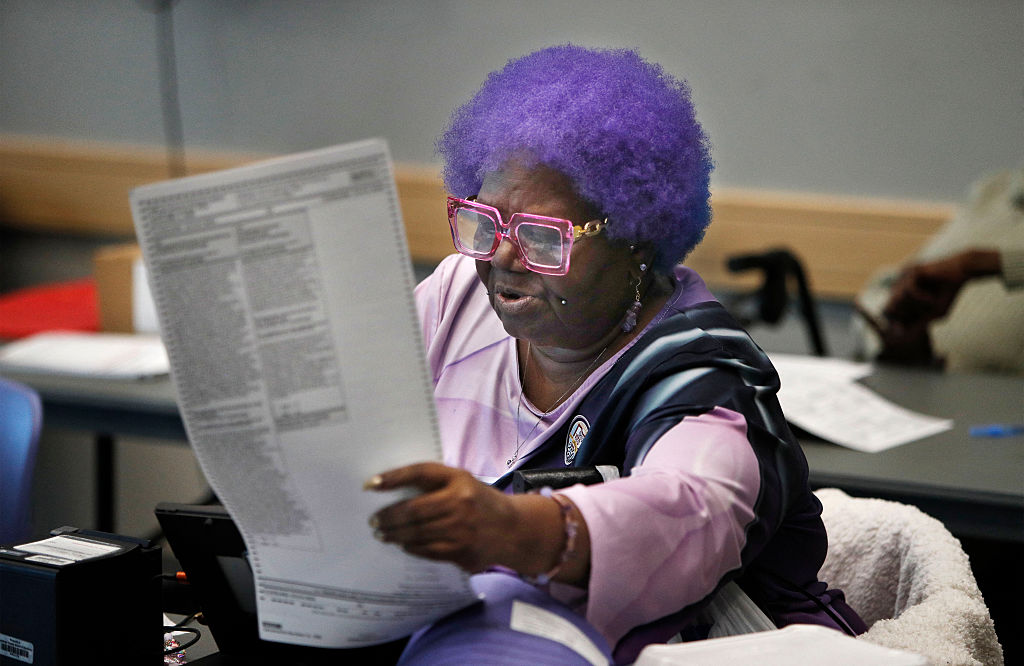 A poll worker prepares a ballot at the Collinwood Recreation Center voting center in Cleveland, Ohio, on Nov. 3, 2026. (David Maxwell/AFP via Getty Images)
A similarly surprising—but lower-profile—defeat for Republicans came in the GOP-favoring 15th Congressional District, where incumbent Rep. Mike Carey (R-Ohio) was unseated by Rep.-elect Don Leonard (D-Ohio).
Iowa-02
While the First and Third Congressional Districts in Iowa had long been viewed by observers and strategists as potential flip opportunities for Democrats, a win in the state’s red-leaning Second Congressional District was seen as a long shot.
Rep.-elect Lindsay James (D-Iowa) ultimately flipped the seat by 3.9 percentage points in the open race.
With James’s victory, Iowa’s congressional delegation will be dominated by Democrats, who are set to control three of the state’s four House seats and one of the state’s two Senate seats.
Once seen as a quintessential swing state before shifting to the GOP camp during the Trump era, the results in this and other midterm races indicate that Iowa will be a top target for both parties in 2028.
Missouri-02
Missouri—now encircled by a wall of purple and blue states—also produced an election-night surprise in its Second Congressional District.
The state has flown under the radar this cycle, as no major statewide offices were on the ballot.
Still, Rep.-elect Fred Wellman (D-Mo.) flipped the Republican-leaning, suburban St. Louis district by 4.9 percentage points. He defeated incumbent Rep. Ann Wagner (R-Mo.).
The result could draw greater attention to the state in upcoming election cycles as analysts and strategists assess whether Missouri could trend toward more purple voting habits.
Colorado-04
The race in Colorado’s Fourth Congressional District remains too close to call, but if current leads hold, Rep. Lauren Boebert (R-Colo.) is on track to lose her seat.
The conservative House lawmaker was a former ally of Trump, but has broken with him over the past two years. The strongest break came in 2025, when Boebert joined a handful of other Republicans to back a measure by Rep. Thomas Massie (R-Ky.) to force the release of files related to sex offender Jeffrey Epstein.
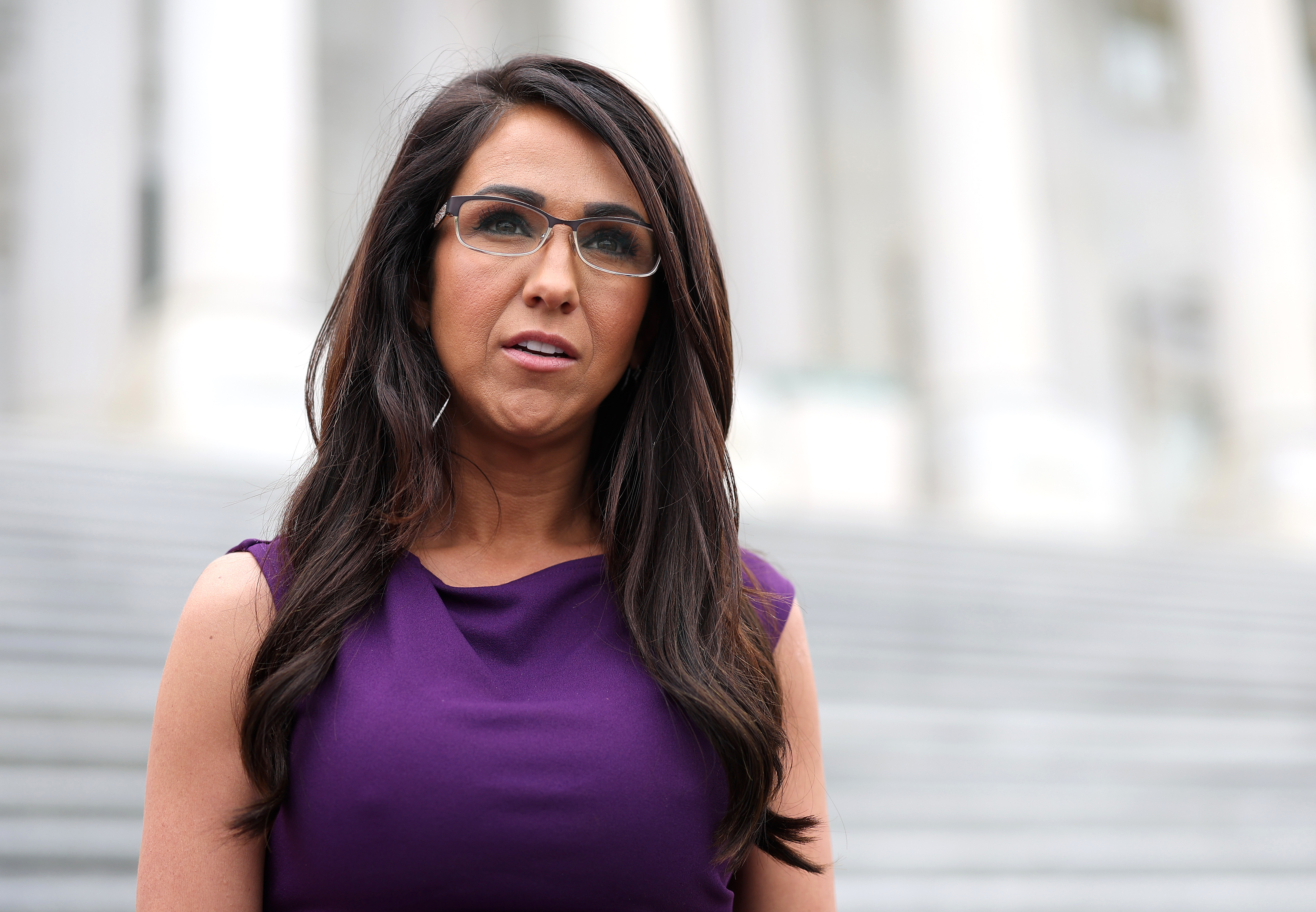 Rep. Lauren Boebert (R-Colo.) speaks with reporters as she leaves the U.S. Capitol on May 17, 2024. (Kevin Dietsch/Getty Images)
With 98 percent of the vote counted, Democratic challenger Eileen Laubacher leads by 0.9 percentage points, a difference of less than 3,500 votes.
Boebert has not conceded the race and dismissed a projection from CNN that she would lose the race, telling a reporter, “The fat lady ain’t sung yet.”
Other surprises in Colorado included Democratic pickups in the state’s Fifth and Eighth Congressional Districts.
Montana-01
Rep.-elect Sam Forstag (D-Mont.) on Nov. 3 became the first Democrat elected to the U.S. House from Montana in 32 years, winning the seat currently held by retiring Rep. Ryan Zinke (R-Mont.).
Forstag, a former smokejumper and labor union leader, won the open seat by 3.9 percentage points, handily defeating Republican Aaron Flint.
Though Montana is commonly seen as solidly red, the state has shown swing-voting tendencies. Between 2006 and 2024, the state elected and re-elected former Sen. Jon Tester (D-Mont.) to three terms before Tester was defeated in 2024.
 Friends Read Free
Copy
Facebook
Tweet