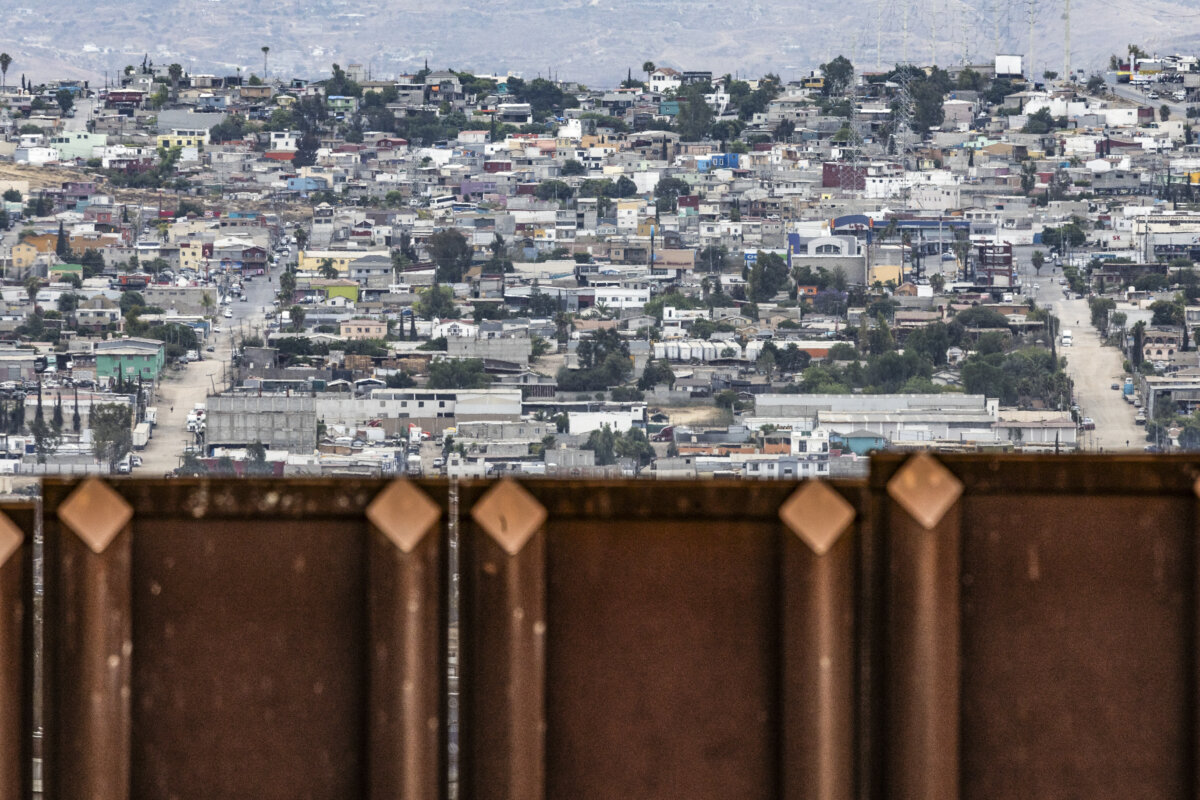

The U.S. Supreme Court on Friday agreed to take up a case challenging whether President Donald Trump’s administration has the authority to bar asylum applications from people who cross into the United States from the southern border.
Right after he took office on Jan. 20, 2025, Trump signed a proclamation restricting people who cross the southern border without authorization from seeking asylum, one of a series of immigration restrictions that the president rolled out soon after he was sworn in. It has remained in place amid litigation.
In agreeing to take up the case, the Supreme Court is likely to render a decision on it at the end of its term in June or July 2027.
The Trump administration, in court filings, has written that it wants to overturn lower court decisions that found the proclamation illegal.
Trump’s asylum policy is one of a number of measures his administration has taken as part of a crackdown on illegal immigration that the president has pursued since returning to office last year. Under Trump’s proclamation, people caught crossing the southern border illegally are barred from pursuing asylum claims.
The solicitor general, on behalf of the Trump administration, filed a petition to the Supreme Court that seeks to overturn a U.S. Court of Appeals for the District of Columbia Circuit ruling against the policy.
The Trump administration argued that it can categorically deny asylum to people covered by the proclamation and should not have to accept applications destined to be rejected.
“This ongoing influx of illegal aliens across the southern border of the United States has placed significant costs and constraints upon the States, which have collectively spent billions of dollars in providing medical care and related human services, and have spent considerable amounts on increased law enforcement costs associated with the presence of these illegal aliens within their boundaries,” Trump’s January 2025 proclamation said, in part.
Trump’s proclamation barred people from invoking provisions under the Immigration and Nationality Act to allow them to remain in the United States, including by seeking asylum, according to the August petition. Homeland Security guidance implementing the proclamation allowed agents to summarily remove violators, and only people who could produce a fear of torture could receive an exception, with limited screening under the United Nations’ Convention Against Torture.
In opposing the proclamation, lawyers for the Refugee and Immigrant Center for Education and Legal Services, wrote to the high court in September that Trump or other presidents have “no statutory authority to create new asylum eligibility bars.”
“And while the Attorney General and [Department of Homeland Security] Secretary do have such authority, neither the Proclamation nor the Guidance purports to be an exercise of that authority. For good reason: The Proclamation and Guidance transparently violate the statutory limits on that authority,” it said.
In June, the Supreme Court handed Trump a victory by backing the federal government’s authority to turn away asylum seekers when officials deem U.S.–Mexico border crossings too overburdened to handle additional claims.
In September, the court let the administration resume deporting illegal immigrants to countries other than their own without offering them the chance to show the harms they may face, bolstering a tool his administration has used for rapid expulsions. The justices are due to hear arguments over the legality of that policy on Dec. 9.
Reuters contributed to this report.
 Friends Read Free
Copy
Facebook
Tweet