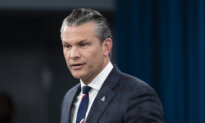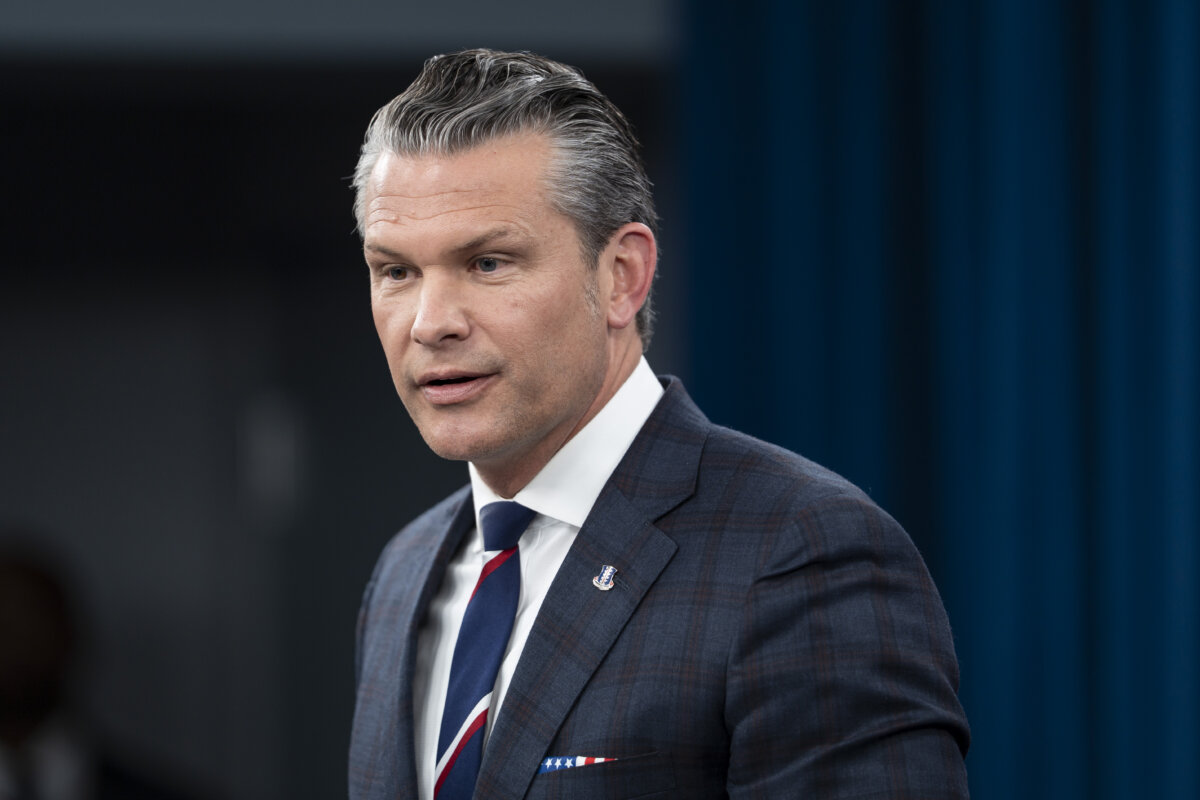

War Secretary Pete Hegseth will visit Bogota on Wednesday to deliver military equipment and discuss security cooperation, Colombia’s Defense Minister Jorge Eduardo Mora said.
Mora told Colombia’s Congress Tuesday that Hegseth will hand the military a Hercules C-130 transport plane during the stop. Mora said he believes that two more planes are on the way. The partners also plan to discuss how Washington can continue helping Colombia restore security, he said, after decades of internal armed conflict against drug trafficking and guerrilla groups.
Hegseth was in Miami late Tuesday. He posted pictures on X from his visit to U.S. Southern Command, which oversees American military operations in Latin America.
“The idea here is to be kinetic, to kill the enemy,” Hegseth said from the command’s headquarters.
The Pentagon did not immediately respond to a request for comment on Hegseth’s scheduled travel to the region.
The United States is Colombia’s main ally in its fight against narco- and illegal armed groups. The groups’ decades-long insurgency in the country has killed about 450,000 people and displaced millions.
A Hemisphere-First Strategy
Trump launched the “Shield of the Americas” on March 7 at a summit with Latin American allies from his Doral golf resort in Florida. He announced a military partnership, the Americas Counter Cartel Coalition, the Shield’s operational/military component, and said its aim was to “eradicate the criminal cartels plaguing our region.”
Seventeen countries signed on at the March launch. Left-leaning governments, among them Brazil, Mexico, and Colombia under President Gustavo Petro, did not take part. Colombia later joined in August under its new president, Abelardo de la Espriella, bringing the total to 19 members.
The White House said the United States will train and mobilize partner militaries to help dismantle the cartels.
The administration’s national security strategy, released in December 2025, made the Western Hemisphere its top priority. The document called it a “great American strategic mistake of recent decades” to let outside competitors—primarily China, along with Russia and Iran—take hold in the region.
Trade between China and countries in the region surpassed $540 billion in 2025. The administration compared its policy to the Monroe Doctrine of 1823, which was aimed at keeping European colonial powers out of the Americas. The White House later embraced the label “the Donroe Doctrine,” a play on words for Donald Trump, for its model based on that approach.
Pressure on Cuba
The Trump administration has highlighted Cuba as a “hostile country” in the hemisphere, with President Donald Trump saying in March that under the Donroe Doctrine, the United States “will not allow hostile foreign influence to gain a foothold in this hemisphere.”
More recently, in a Nov. 12 radio interview, Trump said that he wants to resolve the Cuba situation before his term ends in January 2029. Asked about a possible week-long military campaign there, he said he would consider it.
A week earlier, on Nov. 5, the administration announced new sanctions on eight entities and two individuals tied to the Cuban government’s foreign military support and illegal revenue networks.
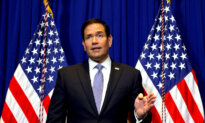
“The United States will not tolerate subversive communist networks in our hemisphere,” Secretary of State Marco Rubio said in an X post.
Washington restricted oil shipments to Cuba, cutting off subsidized Venezuelan oil, after a Jan. 3 operation in Venezuela led to the capture of leader Nicolás Maduro. Cuba has since entered a severe economic and energy crisis.
 Friends Read Free
Copy
Facebook
Tweet