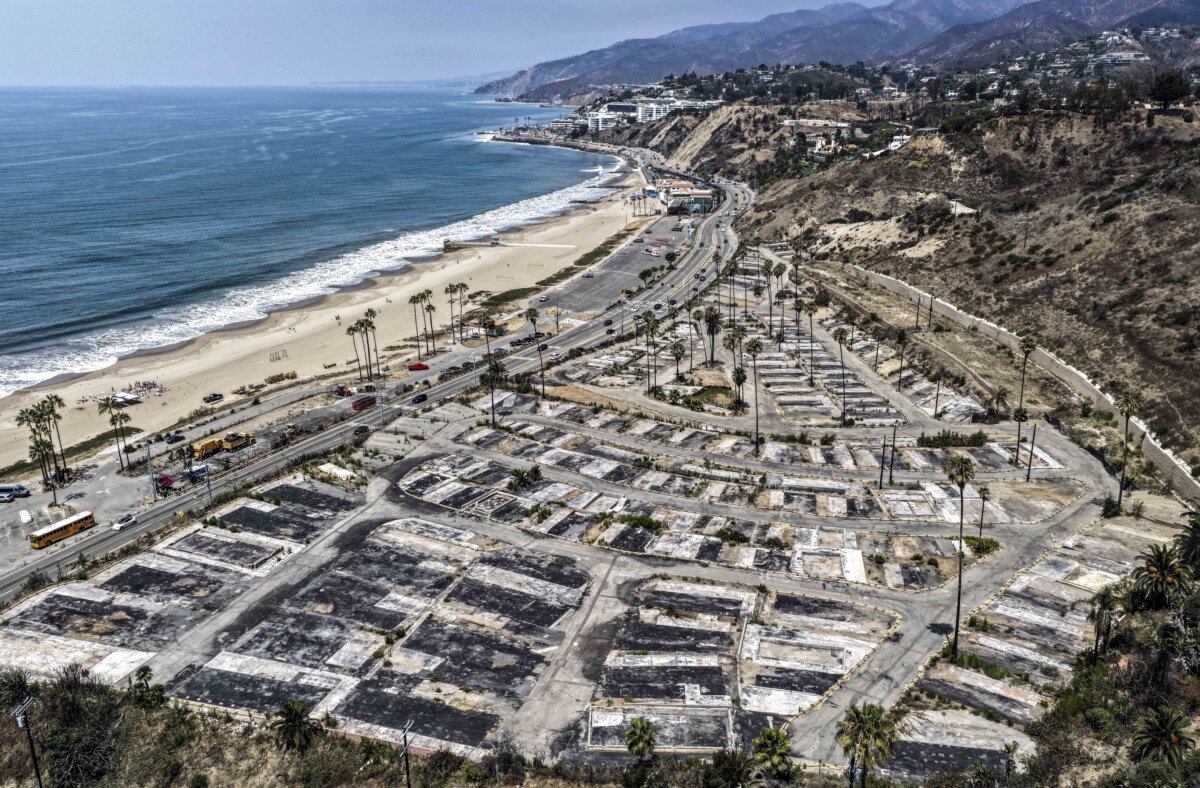
LOS ANGELES – After nearly two weeks of presented evidence, a jury began deliberating in the retrial of a man accused of sparking the initial flame that would lead, a week later, to the catastrophic inferno that claimed 12 lives and reduced thousands of homes to ash in the wealthy coastal enclave of the Pacific Palisades.
“The facts you heard, the data, the evidence, it proves the defendant started this fire,” Assistant U.S. Attorney Mark Williams told the court in closing arguments on Nov. 18. “He admitted he was alone, admitted there were no fireworks. He was angry that night. He set the fire and watched it burn. Then he slowly walked away.”
Jonathan Rinderknecht, 31, a dual U.S.-French citizen, has pleaded not guilty to a revised indictment charging him with two counts of arson related to federal property damage in the January 2025 Palisades Fire.
His retrial began Nov. 4, after jurors in a first trial deadlocked 10-2 in favor of acquittal in June, leading U.S. District Judge Anne Hwang to declare a mistrial.
Prosecutors allege Rinderknecht, motivated by “revenge against society,” on New Year’s Eve 2024 climbed a favorite hiking trail near the upscale enclave where he used to live and used a lighter to start the Lachman Fire in the first moments of Jan. 1, 2025.
Firefighters contained the 10-acre brush fire within hours, but federal investigators say it lay dormant for nearly a week, smoldering in the roots of a single tree before hurricane-force winds whipped it into the devastating Palisades Fire on Jan. 7, 2025.
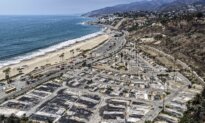
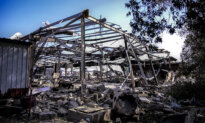
One of the most destructive fires in modern U.S. history, the Palisades Fire burned for 24 days across 23,000 acres, killing 12 and incinerating more than 6,000 homes.
While the government’s case relies on the theory of a “holdover” fire, the updated indictment separates the two federal arson charges; the first relates to the Lachman Fire only; the second applies to both the Lachman and Palisades Fires.
Federal prosecutors have amassed a constellation of circumstantial evidence—thousands of videos and photos, ChatGPT prompts and other digital records, as well as witness accounts, geolocation data, detailed fire scene investigation and behavioral analysis—that they say points to Rinderknecht alone.
Investigators identified Rinderknecht as a person of interest by matching geolocation cellular data, local security cameras, and Flock police camera networks identifying his vehicle and license plate, as well as the defendant’s own 911 call records.
Defense attorneys don’t dispute Rinderknecht was in the general area when the Lachman Fire was first reported, but deny he started it, arguing fireworks were the more likely cause and that he called 911 in good faith to report the fire.
“Not one person in this trial saw the Lachman Fire start,” Steve Haney, attorney for the defendant, said in his closing statement Nov. 18.
In lieu of direct evidence, he said, the government has offered “fragments” that don’t prove guilt beyond a reasonable doubt.
“That’s what you’ve seen throughout this trial—suggestions that, when you look closely, amount to nothing.”
Defense attorneys say the government failed to prove its case against Rinderknecht, a former Uber driver—despite obtaining 40 search warrants and combing through every aspect of his life—relying instead on an investigation tainted by confirmation bias and shoddy scene work.
“Defense counsel keeps referring to the government’s evidence as ‘fragments,’ Assistant U.S. Attorney Danbee Kim countered on Nov. 18.
“What he’s talking about is circumstantial evidence, and circumstantial evidence is not a dirty word.”
‘Timing and Cameras’
In a video played for the jury, a home security camera picked up a faint flickering of light reflected on a Plexiglass basketball backboard in the first moments of Jan. 1, 2025. The flicker soon grew into flashes, as the Lachman Fire spread across the hill.
It was a relatively minor piece of evidence, but ominous, in a cinematic sort of way—something a director might use to storyboard a pivotal moment before a big reveal.
Investigators used it to corroborate a timeline of when they believe the fire started—between 12 and 12:10 a.m.—and where the defendant was in relation to it.
“His phone data put him there. He was there when the fire started,” Matthew Beals, a senior special agent and Certified Fire Investigator with the Bureau of Alcohol, Tobacco, Firearms and Explosives told the jury on Nov. 12.
Investigators say fire surveillance cameras, which capture still images at intervals, in the adjacent hills picked up the first signs of the Lachman Fire at 12:12:01.
At 12:12:31, Rinderknecht placed the first of more than a dozen calls to 911, which investigators say shows geolocation data putting him around 20 feet from where they believe the fire originated, just south of a clearing at the top of a popular hiking trail that locals call the “Hidden Buddha” hill.
Records show Rinderknecht took screen recordings of his 911 calls and asked ChatGPT during one of the calls whether he would be responsible for accidentally lighting a fire with a cigarette, which prosecutors suggest was an attempt to create an alternate alibi.
“Is that someone who’s making an alibi? Or is that someone who’s finding out if they accidentally started a fire?” Haney asked. “Be careful what you believe, be careful what you see, because everything can be looked at differently.”
Among the 9,000 photos and videos he reviewed, Haney asked Beals on Nov. 12, there is “not one single piece of evidence showing my client starting the fire?”
“Not in and of themselves, no,” Beals acknowledged.
But as the prosecution points out, none of those photos and videos show evidence of fireworks, either, and Rinderknecht repeatedly told investigators he didn’t see any fireworks or other people on the hill that night.
“The problem for the defense,” Assistant U.S. Attorney Danbee Kim said Wednesday, “is timing and cameras. You know the only road that leads up to the Hidden Buddha trailhead is flanked by four gates with cameras facing the road. Those cameras captured only the defendant.”
The neighborhood cameras were helpful, Beals said, because they were on continuous loop and allowed investigators to scan the footage for signs before fire surveillance cameras in the Santa Monica Mountains picked up the Lachman Fire’s initial glow and eventual spread.
“Not seeing any bursts of illumination prior to the fire was helpful in considering fireworks as a potential cause. It was also helpful to see the roadway to see if anyone was there prior to the fire,” he said.
No one was there, he added, except the defendant.
Cross-examining a prosecution witness about the home security footage, Haney scoffed when he asked, “the investigative value was that you can see a flicker?”
Haney also dismissed footage pulled from a guard shack near a trailhead leading up to the clearing near where investigators locate the origin of the fire, noting it doesn’t even show the relevant side of the hill.
“That’s not evidence of anything,” he said during his closing statements. “That’s not evidence beyond a reasonable doubt.”
Haney, a talented pugilist better known for representing NBA all-stars, effectively sowed seeds of doubt in the first trial by pointing to the fact that the fire scene along with any potentially exculpatory evidence was disrupted by public access to the area, water dropped by firefighters—and a second fire that re-burned it.
Prosecutors also highlighted the defendant’s state of mind. “You saw a glimpse into the mind of an arsonist; you saw evidence of his anger,” Williams told the jury Nov. 18.
Digital records uncovered in the investigation reveal that Rinderknecht was at least fixated on a tableau pitting the world’s rich and powerful against the rest of society and the environment, and related feelings of loneliness and helplessness.
They also revealed fraught interpersonal relationships, and what prosecutors say was an obsession with fire. Uber passengers who rode with him around the time of the fire testified about vitriolic, threatening rants and erratic behavior.
Haney has argued that none of this makes him an arsonist—“evidence of the man, not evidence of the act,” he told the jury Wednesday.
Some jurors who voted to acquit in June said they were turned off by what they saw as the government’s gratuitous attack on Rinderknecht’s character and personal struggles.
“I did not appreciate them demeaning his character because I myself have overcome a lot of depression and anxiety in my life,” juror Syrena, 49, told the media when the jury deadlocked on June 25.
She added that it angered her to see the government “trying to judge someone off of little bits and parts and pieces of their life.”
Prosecutors presented much of the same evidence in the second trial, but took a lighter touch when it came to behavioral profiling.
Without direct evidence in either direction—an incriminating video showing Rinderknecht starting the fire, or an exculpatory one showing fireworks started it—jurors are left to parse the technical details of a complex investigation, a cascade of digital clues and suggestive testimony, and decide which narrative—Rinderknecht as an aggrieved arsonist, or a convenient scapegoat—resonates.
To convict, they must decide he is guilty beyond a reasonable doubt.
Jurors will reconvene Thursday morning.
 Friends Read Free
Copy
Facebook
Tweet