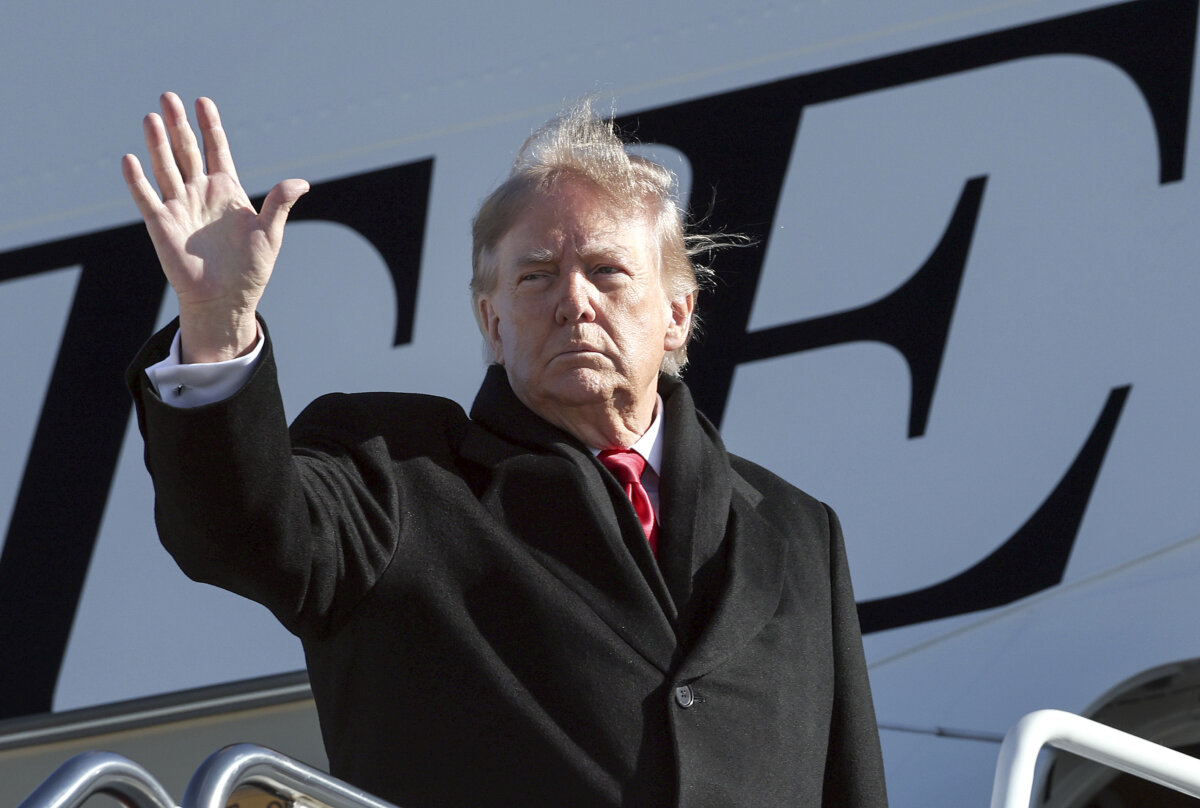
A planned meeting between U.S. President Donald Trump, Chinese leader Xi Jinping, and Russian President Vladimir Putin in Shenzhen, China, on Nov. 19 is unlikely to produce substantive agreements, as the three leaders have conflicting strategic interests, analysts told The Epoch Times.
The meeting, scheduled during the Asia-Pacific Economic Cooperation (APEC) events, could touch on the war in Ukraine, Iran, nuclear arms control, and AI. However, analysts say the summit may serve primarily as a diplomatic exercise, with each leader seeking political advantages while avoiding commitments that could undermine his interests.
Trump is expected to push for a new nuclear arms control framework that includes China, following the expiration of the New START treaty between Washington and Moscow in February. Russia, meanwhile, hopes to improve its international standing and advance negotiations to end the war in Ukraine on terms acceptable to Moscow.
China is unlikely to agree to nuclear restrictions, according to Shen Ming-shih, a research fellow at Taiwan’s Institute for National Defense and Security Research.
Shen told The Epoch Times the three countries have fundamentally different security interests, making a binding agreement difficult. He noted that China’s nuclear arsenal remains smaller than those of the United States and Russia, giving Beijing little incentive to limit its weapons development.
A July 6 commentary by Epoch Times columnist Stu Cvrk, political commentator and retired U.S. Navy captain, said China’s nuclear arsenal could exceed 1,000 warheads by 2030, up from more than 600 currently, despite Beijing’s stated policy of not using nuclear weapons first.
U.S.-based Chinese author and political commentator Chen Pokong also told The Epoch Times that the meeting is unlikely to produce meaningful agreements and could carry political risks for both Trump and Xi.
He said Putin stands to benefit most because the meeting would give him an opportunity to sit alongside the leaders of the world’s two other major powers, helping him project an image of renewed international legitimacy despite Western sanctions.
Putin could also discuss Ukraine directly with Washington and Beijing without Ukrainian representatives present, which Chen described as a diplomatic win for Moscow.
For Trump, the outcome depends largely on whether Xi agrees to join nuclear arms control negotiations. If Beijing refuses, Chen said, the meeting could instead serve to legitimize Putin’s international position without delivering a significant achievement for Washington.
Trump also faces domestic political constraints over Ukraine. Chen said Trump would be unlikely to accept an agreement that sacrifices Ukrainian interests, particularly after Republicans suffered significant losses in the recent midterm elections.
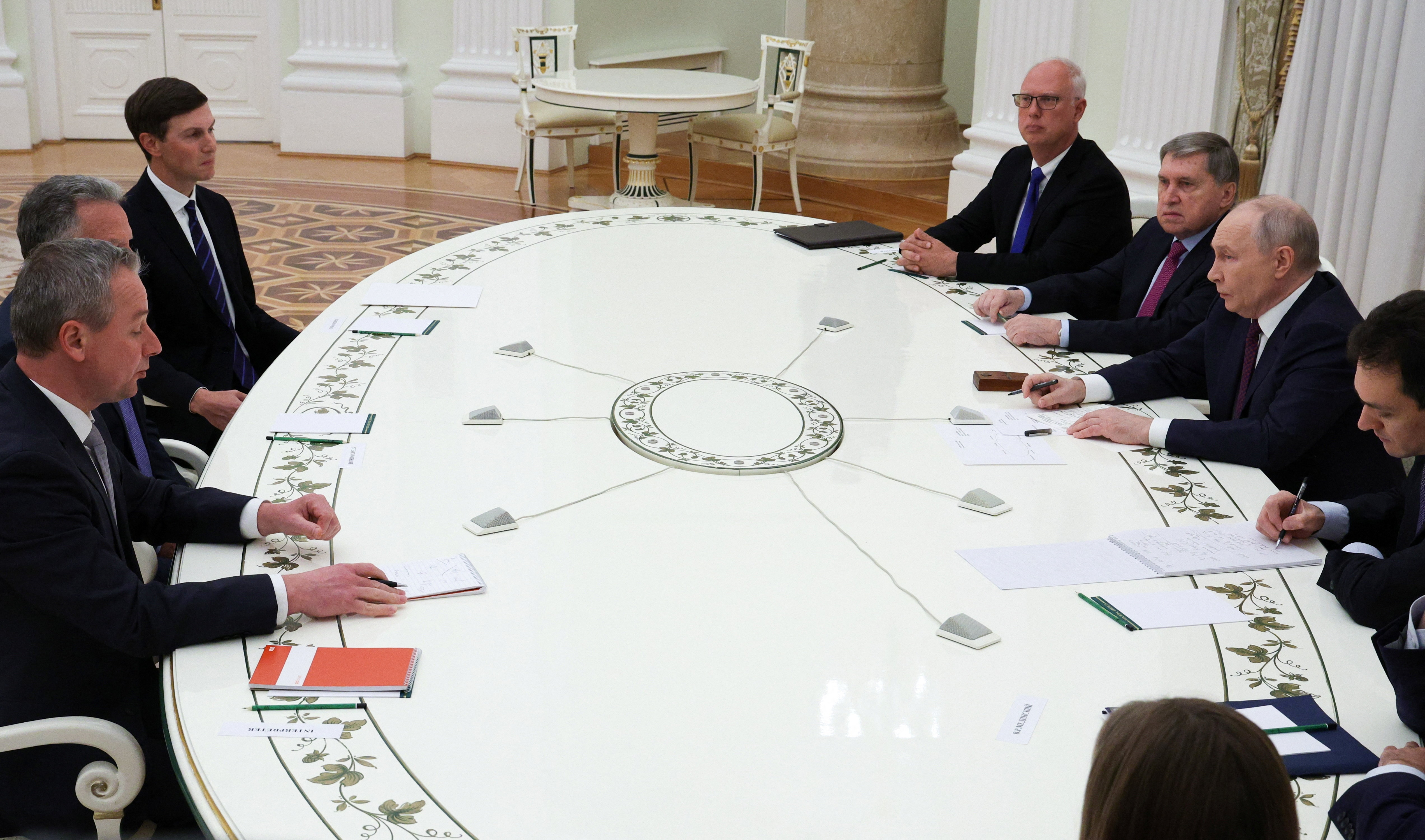 Russian President Vladimir Putin, Kremlin foreign policy adviser Yuri Ushakov and Russian presidential envoy Kirill Dmitriev attend a meeting with U.S. Special Envoy Steve Witkoff and Jared Kushner, U.S. President Donald Trump’s son-in-law, at the Kremlin in Moscow, on Nov. 12, 2026. (Sputnik/Vyacheslav Prokofiev/Pool via Reuters)
Beijing Faces Competing Demands
The Chinese Foreign Ministry formally announced on Nov. 16 that Xi would meet Trump and Putin in Shenzhen on Nov. 19. The White House announced the arrangement on Nov. 13, and a Kremlin spokesperson confirmed it the next day with Russian state media TASS.
Shen said Beijing’s later announcement reflected its caution about the meeting. Xi wants to use the Shenzhen summit to demonstrate China’s status as a major power, but risks being portrayed as aligning with Russia against the United States or participating in a great-power arrangement that sidelines smaller countries.
Chen said Xi will face competing demands from Trump and Putin. Moscow may seek Beijing’s support on Ukraine, while Washington is likely to press China to participate in nuclear arms control negotiations.
Xi could gain international approval by cooperating with Washington, Chen said, but doing so could create political difficulties within the Chinese Communist Party (CCP). Supporting Putin, meanwhile, could further damage Beijing’s international standing, particularly with European countries, Chen said.
Shen said Trump could raise unexpected proposals in front of the press, which he said could include demands for China’s participation in nuclear negotiations or cooperation on Iran.
Beijing, as the host, may therefore seek to tightly control the meeting’s duration and public statements, Shen said, which would likely lead to the three countries releasing separate statements after the meeting, rather than issuing a joint statement. Such a potential outcome would reflect an absence of consensus, he said.
Analysts Reject Comparisons With Yalta
The planned summit has drawn comparisons with the 1945 Yalta Conference, where the United States, Britain, and the Soviet Union discussed the postwar international order. Ukrainian President Volodymyr Zelenskyy has warned against a possible “Yalta 2.0,” in which major powers determine the future of smaller countries without their participation.
Chen rejected the comparison, saying that the geopolitical circumstances are fundamentally different. Unlike the temporary wartime alliance among the United States, Britain, and the Soviet Union, today’s three countries lack a common strategic objective and share little political trust.
Shen similarly said the Yalta Conference took place as World War II was approaching its conclusion, with the participating countries already allied against Nazi Germany. The Shenzhen meeting, by contrast, is an informal gathering amid unresolved conflicts and competing interests.
 British Prime Minister Winston Churchill (L), U.S. President Franklin Delano Roosevelt (C), and leader of the Soviet Union Joseph Stalin (R) pose at the start of the Conference of the Allied powers in Yalta, Crimea, on Feb. 4, 1945. (STF/AFP/Getty Images)
Trump’s Philippines Visit
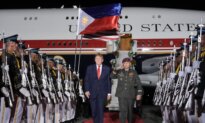
Before traveling to Shenzhen, Trump is scheduled to visit Manila on Nov. 17 for two days, attending a Quad leaders’ summit and a special U.S.-ASEAN summit.
The White House said these meetings aim to ensure a free and open Indo-Pacific.
Edgard D. Kagan, a researcher at the Washington-based think tank Center for Strategic and International Studies, said at a press briefing that holding the Quad meeting before Trump’s China visit sends a message to Beijing about Washington’s important regional partnerships and its efforts to strengthen ties with India.
Chen described Trump’s Philippines visit as a demonstration of U.S. support for Manila amid tensions with Beijing in the South China Sea. He said the Quad and U.S.-ASEAN engagements also signal that Washington remains closely connected to its regional partners.
Shen said the meetings would reinforce U.S. security commitments to Indo-Pacific allies while giving Trump additional diplomatic leverage ahead of his discussions with Xi and Putin.
Tang Bing and Luo Ya contributed to this report.
 Friends Read Free
Copy
Facebook
Tweet