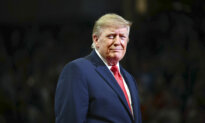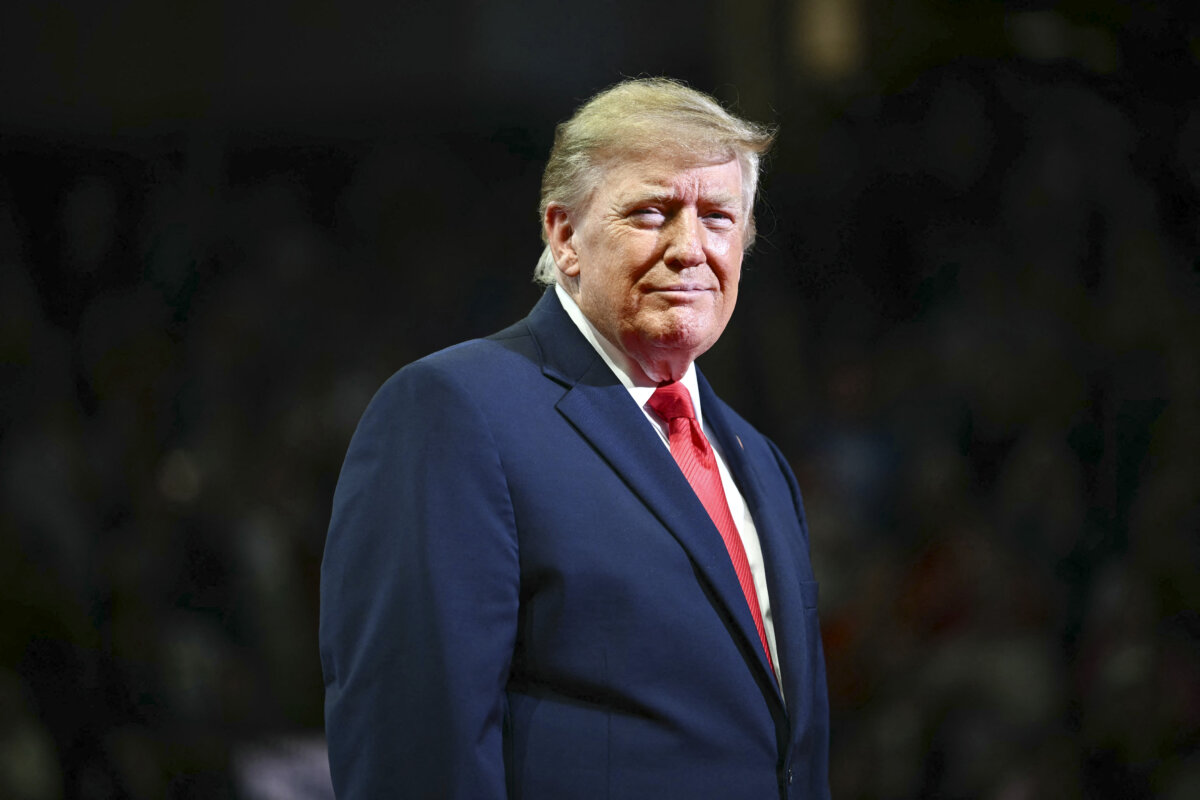

A historic meeting is set for next week between U.S. President Donald Trump, Russian President Vladimir Putin, and Chinese Communist Party leader Xi Jinping.
The White House said on Friday that the discussions are expected to be a sidebar gathering of the three leaders during the Asia-Pacific Economic Cooperation (APEC) summit in Shenzhen, China.
The meeting between the three countries with the largest nuclear arsenals in the world could include talks on nuclear stockpiles.
Trump has also signaled that such a meeting would be an opportunity to discuss the U.S. war with Iran. Officials confirmed Friday that Trump intends to bring up American military action against Iran while steering away from the Russia–Ukraine War.
Kremlin spokesman Dmitry Peskov said that any potential agreements reached during the APEC summit next week cannot be enforced worldwide on other countries.
“It’s clear that a meeting between the leaders of countries such as Russia, China and the United States is extremely significant,” Peskov said. “However, let’s not forget that the vision for a global order is that no one tries to impose any particular view of global order, and it should be based entirely on mutual benefit and mutual respect.”
Although next week’s talks may not include discussion of the Russia–Ukraine War, two days of peace negotiations in Abu Dhabi, United Arab Emirates, were held this week between Russian, U.S, and Ukrainian delegations. Those discussions finished on Nov. 11 with Russia and Ukraine agreeing to a prisoner exchange.
U.S. envoys Jared Kushner and Steve Witkoff then met with Putin at the Kremlin on Nov. 12 to discuss the five-year conflict.
Speaking from Moscow, Kushner addressed the negotiations in Abu Dhabi, saying the two sides “agreed on many of the principles, but are still apart on some of the ways to accomplish” peace.
The special envoy welcomed the prisoner exchange in a post on X.
“Today we achieved an important humanitarian breakthrough, with Ukraine and Russia agreeing in principle to what will be the largest prisoner exchange of the war,” Kushner wrote. “This will reunite families, build trust, and create momentum toward peace.”
After the discussions with Putin in Moscow on Nov. 12, Kushner and Witkoff traveled to Dublin to meet with Ukrainian President Volodymyr Zelenskyy.
Zelenskyy told reporters in Dublin on Nov. 12 that he had very little knowledge about the substance of the U.S.–Russia talks.
“If someone in America is making a decision that basically treats Ukrainian territory as if it is not Ukrainian, then this tells us where things are going,” Zelenskyy said. “We need to be clear and never recognize Russia’s occupation of Ukrainian territory in any way.”
The Ukrainian leader also thanked Kushner and Witkoff for “intensive communication.”
The same day, Putin reiterated his position that the idea of sending European troops into Ukraine as part of a security guarantee after a ceasefire agreement would be “absolutely unacceptable,” and he would consider them threats.
“In other words, the war would resume immediately,” Putin said.
The APEC meeting next week overlaps with the Association of Southeast Asian Nations (ASEAN) summit being held in the Philippines from Nov. 15 to Nov. 17.
There are 11 member nations of ASEAN: Indonesia, Malaysia, the Philippines, Singapore, Thailand, Brunei, Vietnam, Laos, Burma, Cambodia, and Timor-Leste. Other nations that also attend include the United States, China, Russia, Japan, and India.
Trump is scheduled to hold a special summit with ASEAN on Nov. 17 while meeting Philippine President Ferdinand Marcos Jr.
Chris Summers and Reuters contributed to this report.
 Friends Read Free
Copy
Facebook
Tweet