



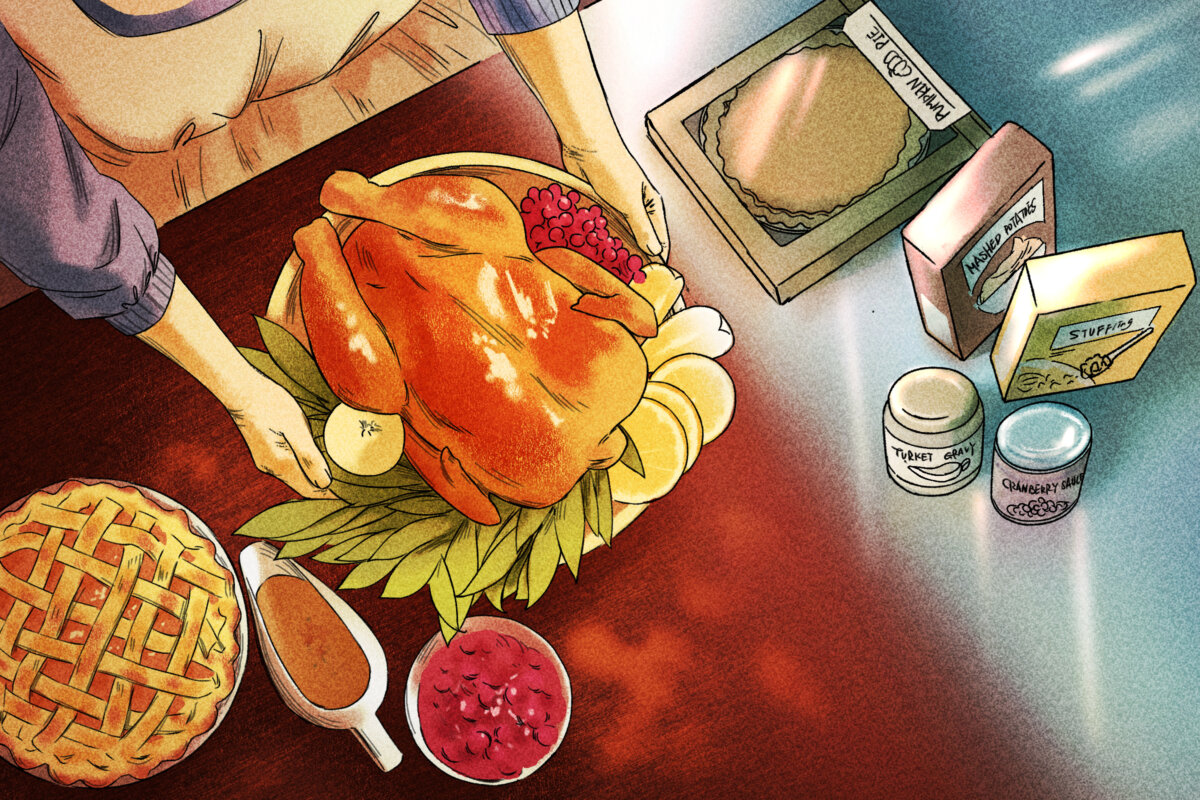
For Jennifer Gaily, Thanksgiving meant a 10-course meal her Irish grandmother prepared entirely from scratch. The spread included everything from turnips and sweet potatoes to homemade pumpkin, apple, and pecan pies.
“She would make mashed potatoes just for me. One pot of five pressure-cooked potatoes, whole milk, salt, and an entire stick of butter! I ate the whole thing,” Gaily, who lives in New Jersey, told the Epoch Times.
Families like Gaily’s see Thanksgiving dinner as the quintessential American meal, but the memories surrounding it often begin before everyone gathers around the table—in the kitchen, watching grandma peel potatoes, tear bread for stuffing, simmer cranberries, or roll out pie dough. In the background, there was the clanking of pots and pans, football announcers, and aromas drifting from the kitchen as guests grew hungry.
Certain dishes, and the people who make them, become part of lifetime memories. Some recipes have been family favorites “for the past 100 years,” Nanette Gremillion of Louisiana told The Epoch Times.
Yet somewhere along the way, we went from transforming basic ingredients and classic dishes at home to swapping in prepared foods that require little more than assembly—boxes, cans, and ingredient lists we can’t pronounce, including emulsifiers, preservatives, and additives.
Every year, millions upon millions of deli-prepared entrees, boxed stuffing mixes, jars of gravy, and cans of jellied cranberries are sold during Thanksgiving. Instacart’s analysis of Thanksgiving shopping from 2025 found that one in four orders containing a whole turkey also included boxed stuffing.
Canned cranberry sauce was also more than twice as likely to appear in carts as fresh cranberries. During the first week of November 2025, consumers spent nearly $19.5 million on stuffing mixes, $8.9 million on cranberry sauce, and $13,196,544 on frozen pies, according to retail scanner data from Circana.
Thanksgiving didn’t necessarily stop being homemade—the definition of homemade changed.
What’s lost when Thanksgiving comes out of a box?
Grandma’s Recipes vs. Boxed and Canned Versions
“The gap is widest with boxed stuffing, instant mashed potatoes, and jarred gravy,” Sarah Otto, a nutritionist, told The Epoch Times.
Because these products are designed to last longer on store shelves, they often contain more sodium, flavor enhancers, and additives such as emulsifiers and thickeners than you wouldn’t typically use when cooking at home.
[shortcut_anchor id=”anchor_1794575504620″ label=”Stuffing”]1. Boxed vs. Homemade Stuffing[/shortcut_anchor]Boxed stuffing mixes may be convenient but can also be high in sodium.
“Making homemade stuffing provides more opportunities to add whole grains, vegetables, nuts, and herbs—and this increases fiber and nutrient density,” Lauri Wright, an associate professor and registered dietitian nutritionist at the University of South Florida College of Public Health, told The Epoch Times.
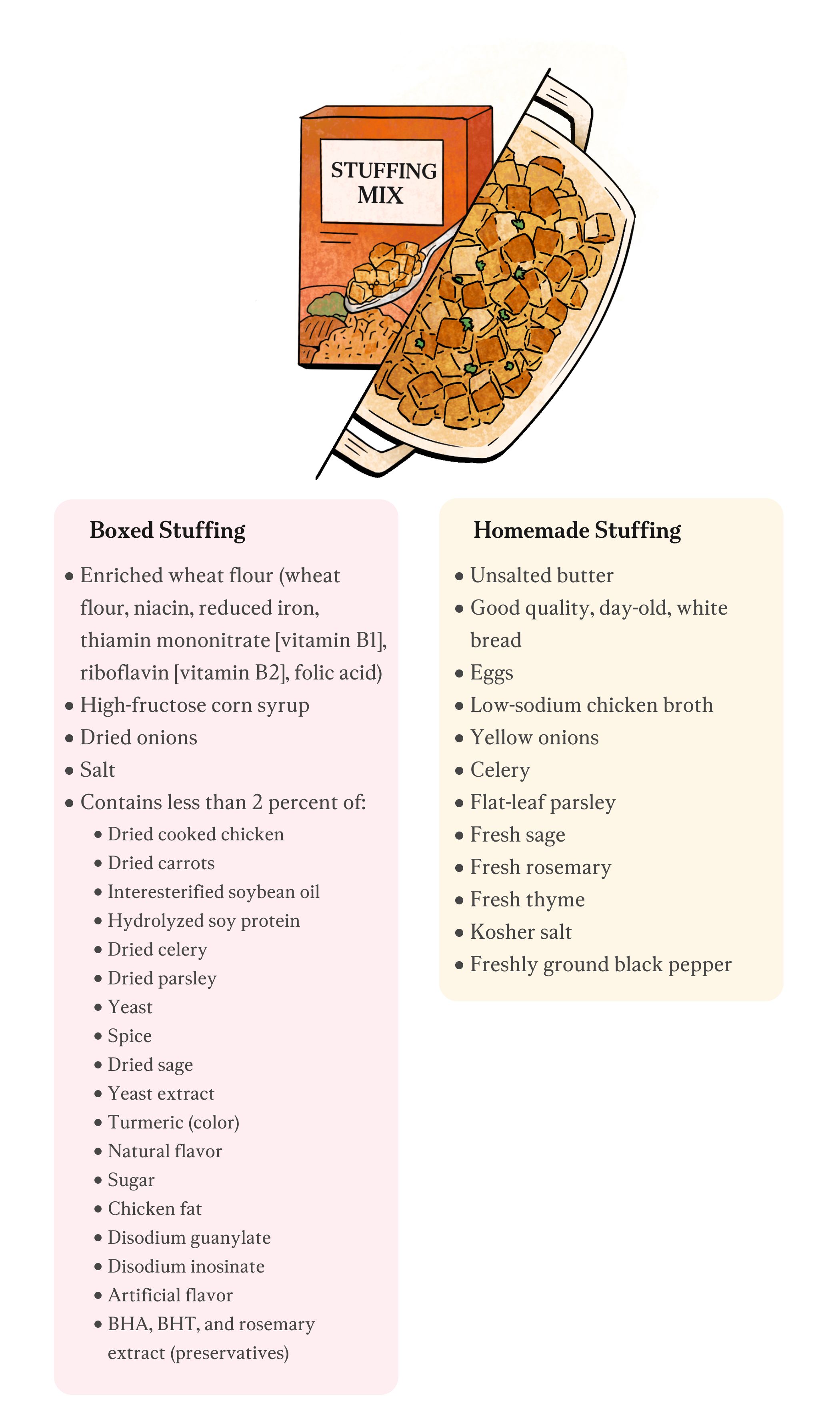
“Buy a good loaf from a bakery or use plain bread cubes. Add sautéed onions, celery, butter, sage, and some good stock. It’s simple, and it’s delicious,” Steve DiFillippo, chef and owner of Davio’s Northern Italian Steakhouse, told The Epoch Times.
If you don’t want to start from scratch, “I would instead start with a boxed stuffing mix and add sauteed onions, celery, mushrooms, and extra herbs. Use low-sodium broth and consider replacing some of the mix with whole-grain bread. This is a simple way to boost nutrition,” Wright said.
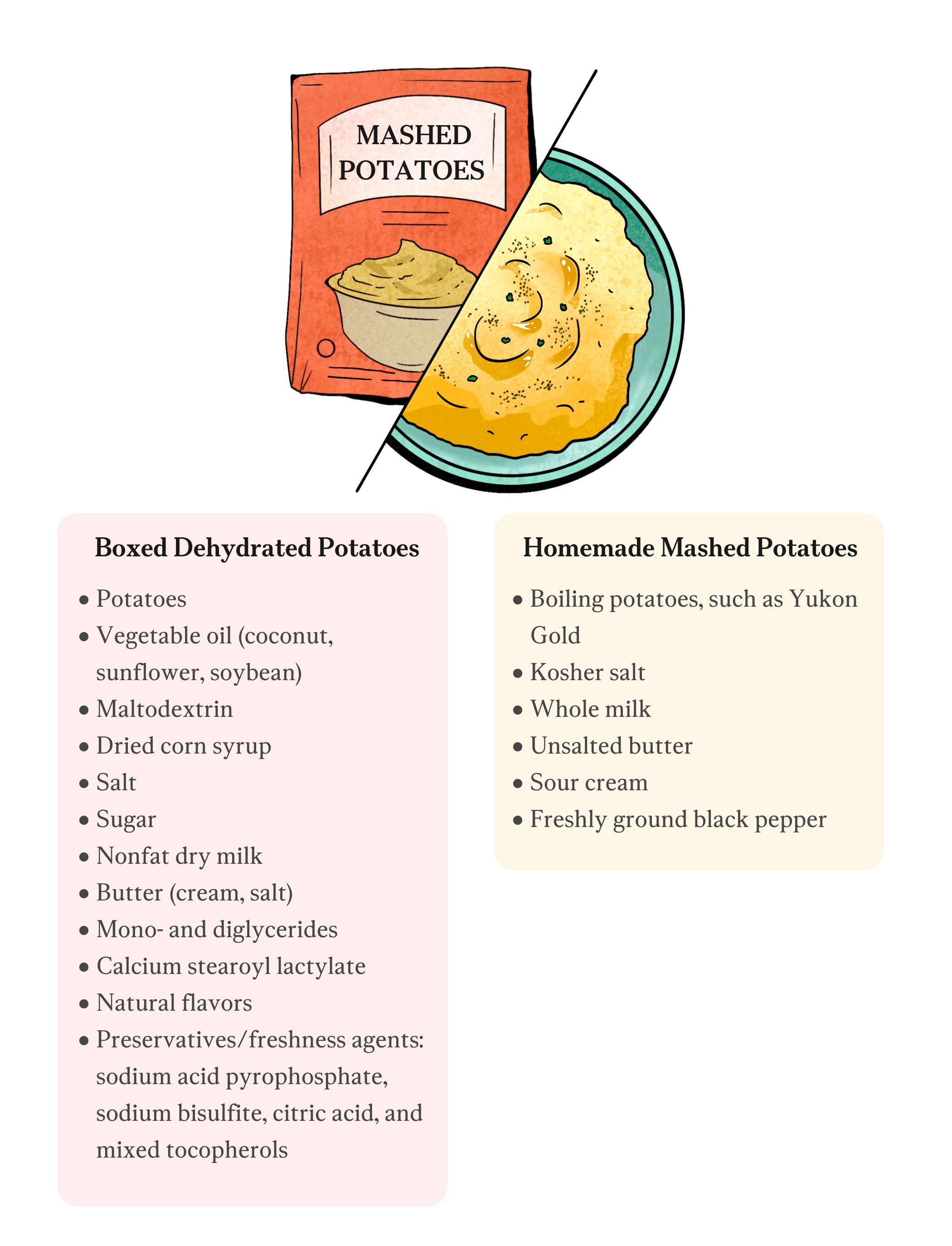
[shortcut_anchor id=”anchor_1794575585986″ label=”Mashed Potatoes”]2. Boxed Dehydrated Potatoes vs. Homemade Mashed Potatoes[/shortcut_anchor]Dehydrated potatoes in and of themselves retain many of the nutrients in fresh potatoes, including potassium, although some vitamin C may be lost during processing.
“Plain instant potatoes can be nutritionally comparable to homemade potatoes, with the biggest differences coming from what gets added,” Wright said.
However, the majority of options that line supermarket shelves for Thanksgiving contain a laundry list of flavorings and additives in an attempt to achieve a “homestyle” and “buttery” flavor.
It may take some due diligence and label sleuthing to find 100 percent plain dehydrated potato flakes, but it’s worth comparing the ingredient lists. Here’s how the ingredients of one flavored boxed option stacks up against a homemade version.
“That’s one less thing to worry about. You can even make the mashed potatoes the day before and reheat them with a little warm milk and butter. Just don’t overmix them,” he said.
If you want to go with store-bought, aim for plain and add the flavor yourself. You can also replace some of the butter or cream with milk or plain Greek yogurt for creaminess and additional protein.
[shortcut_anchor id=”anchor_1794575895801″ label=”Gravy”]3. Canned vs. Homemade Gravy[/shortcut_anchor]Canned and jarred gravies typically contain 220 mg to more than 350 mg of sodium per a quarter cup serving, depending on the brand.
“I recommend reduced-sodium packaged gravy or making your own using low-sodium broth. Adding herbs, garlic, and black pepper provides flavor without relying on additional salt,” Wright said.
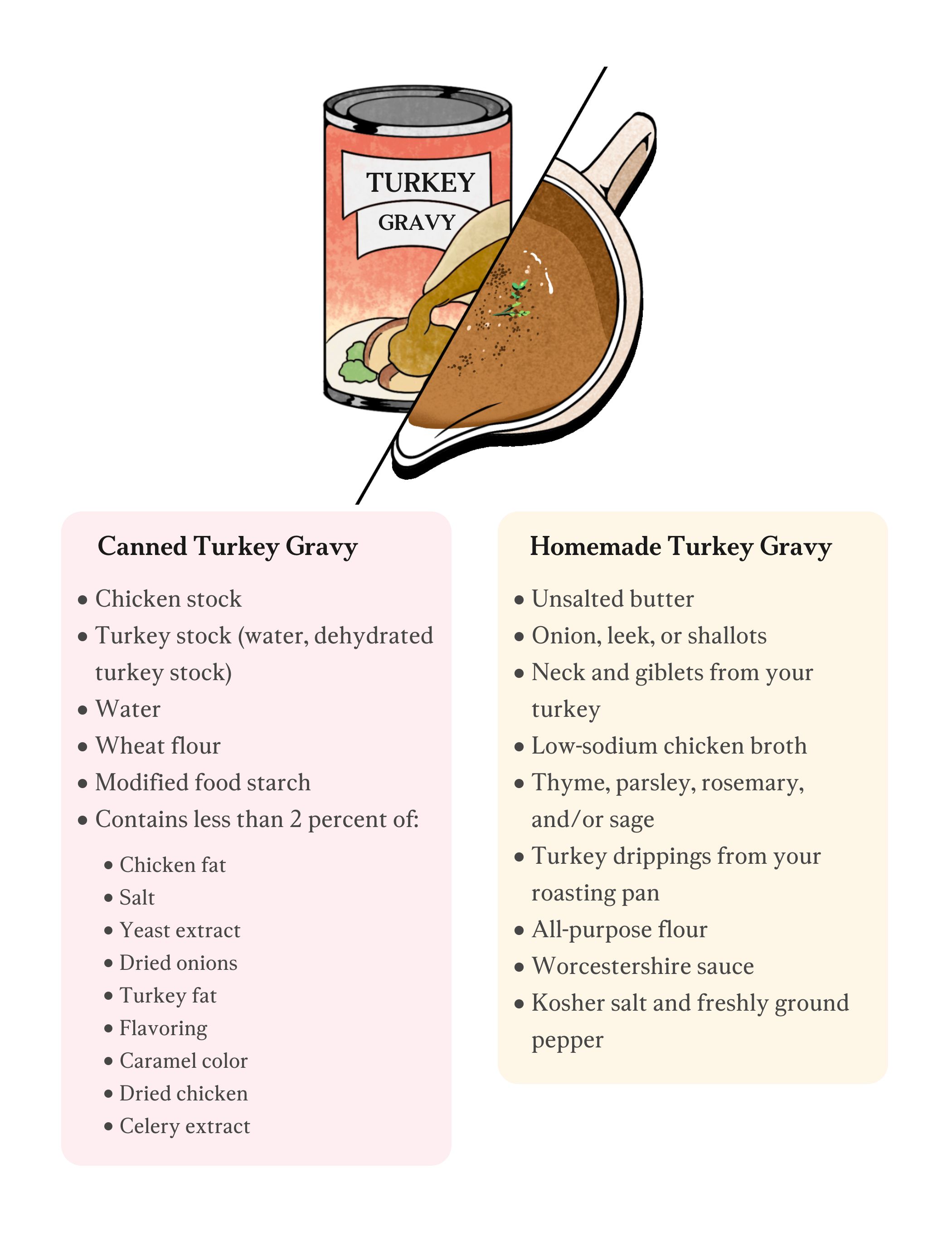
“That’s where all the flavor is. Add them to your stock and make a simple gravy,” he said.
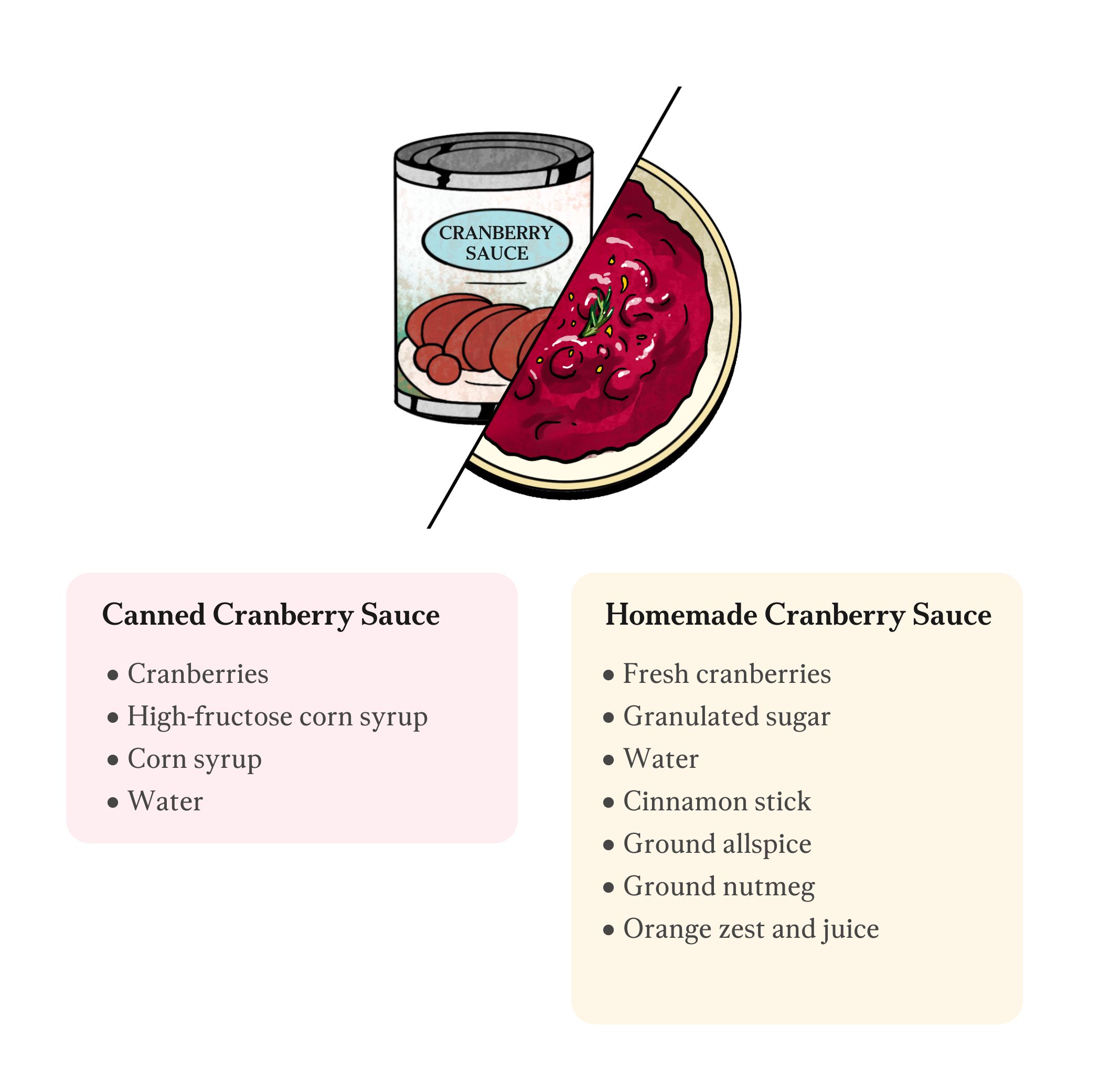
[shortcut_anchor id=”anchor_1794575948224″ label=”Cranberry Sauce”]4. Canned Cranberry Sauce vs. Fresh Cranberries[/shortcut_anchor]“Fresh and unsweetened frozen cranberries provide fiber and beneficial plant compounds, including polyphenols,” Wright said.
Canned cranberry sauce also contains cranberry-derived compounds, but many varieties include added sweeteners. Making cranberry sauce at home gives you more control over the amount and type of sweetener you use, along with the other ingredients. It can take about 15 minutes and can be made ahead of time, DiFillippo said.
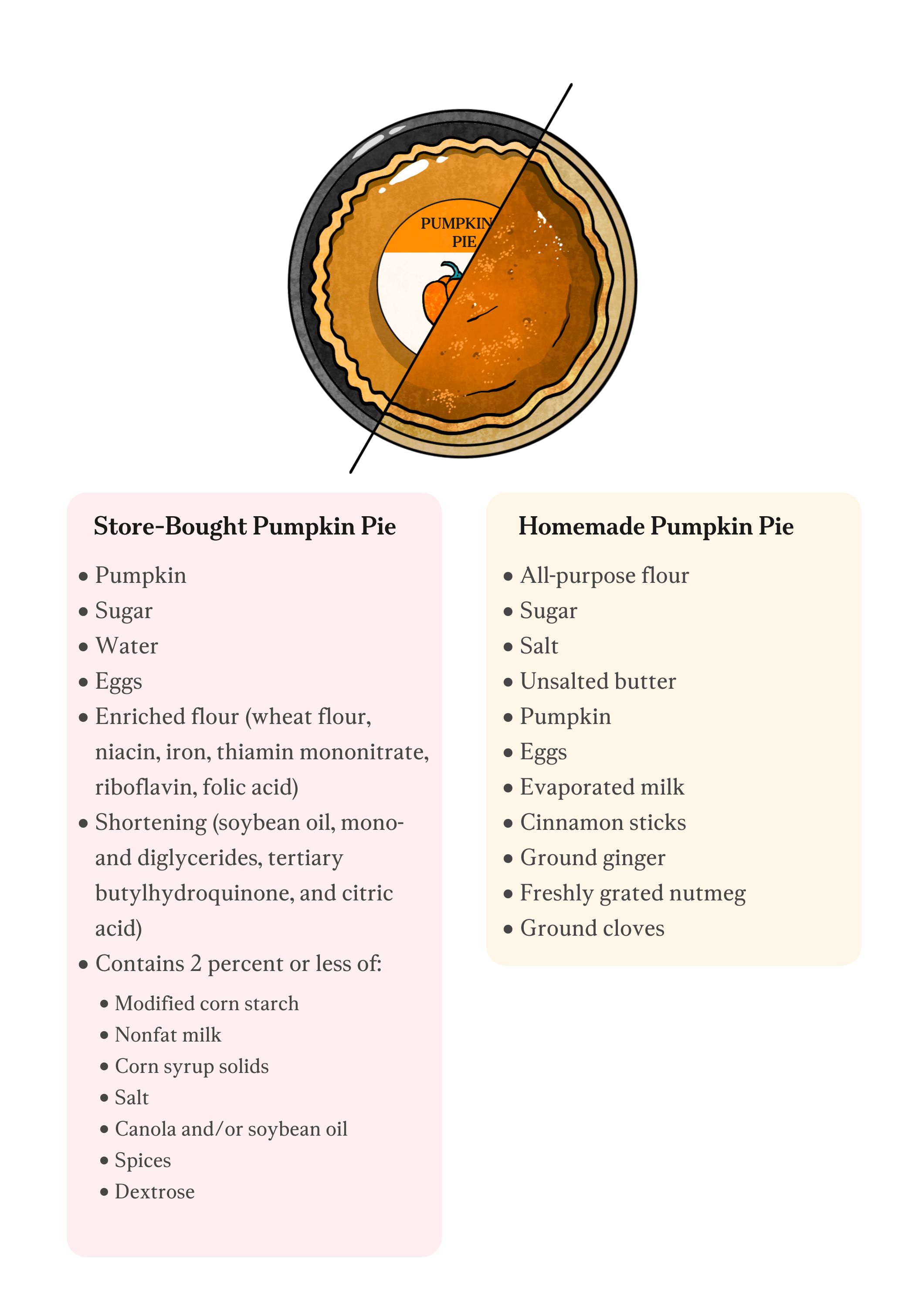
[shortcut_anchor id=”anchor_1794576007085″ label=”Pumpkin Pie”]5. Store-Bought Pumpkin Pie vs. Homemade Pumpkin Pie[/shortcut_anchor]“Both homemade and store-bought pumpkin pies can contain significant amounts of added sugar, saturated fat and calories,” Wright said.
A pie’s nutritional value depends more on its ingredients and the recipe than whether or not it was store-bought or homemade.
Pumpkin provides beta-carotene, a plant pigment the body converts into vitamin A. When baking at home, you can adjust the amount of sugar and choose the ingredients that go into the crust and filling.
The shift toward convenience cooking gained traction mid-century, when frozen food went from being considered a luxury reserved for affluent housewives to being more widely advertised as an affordable dinner option. One dish in particular shines a light on this transition.
Green bean casserole was created in 1955 by Dorcas Reilly, a home economist and recipe developer working in Campbell’s Soup Company’s test kitchen in Camden, New Jersey.
“It was invented to be quick and easy—a ‘fancy’ meal that a housewife could make with just the cans and other ingredients she had around the house,” Mike Davis, who holds a doctorate in American history and is an adjunct professor at Lees-McRae College told The Epoch Times.
What began as a practical recipe became a Thanksgiving tradition that still holds roots today. The dish also highlights the ways home cooks embraced convenience foods and made them part of traditions.
“A generation of American women took what Dorcas Reilly gave them and made it their own,” Davis said.
[shortcut_anchor id=”anchor_1794576159336″ label=”Cutting Back”]How to Cut Back on Packaged Foods[/shortcut_anchor]For some people, like Denise Dixon of California, preparing a homemade meal is an honor and a meaningful expression of love for her precious people.
“I know how much they appreciate the thought and effort that goes into it,” she told The Epoch Times.
But making a memorable Thanksgiving meal doesn’t mean you have to make everything from scratch.
“My rule for Thanksgiving is: Make the important things yourself and be smart about the rest. The holiday should still be enjoyable,” DiFillippo said.
Taking a few shortcuts in the kitchen is perfectly fine if it gives you more time to enjoy the holiday with your family.
“Grandma Rita’s one cheat was Pillsbury rolls. She felt they were just as good at the time,” Gaily said.
A few simple adjustments to your holiday meal can make convenience foods more nutritious, while prepping ahead can take some of the pressure off cooking day.
Add Instead of Subtract
“One of my favorites is to add more vegetables rather than simply taking ingredients away. This improves nutrient density while preserving the flavors and traditions people enjoy, especially around the holidays,” Wright said.
Frozen vegetables are often just as nutritious as fresh and can be more economical.
“Add a simple roasted vegetable dish or a fermented side like sauerkraut to bring fiber and variety to a meal that’s mostly starch,” Otto said.
What to Look for on Food Labels
If you are going with store-bought, Chad Larson, a naturopathic physician, recommends scanning labels for sodium, added sugar, saturated fat, and fiber.
“Compare the amounts of the same serving size shown on the packages. See how to prepare the food, since added liquids, fats, and solids can make a big difference in the nutritional value,” Larson said.
“Look at the whole plate,” Otto said. “How much fiber, how many vegetables, and how much sodium and added sugar across the meal—rather than treating any single dish as good or bad.”
Thanksgiving comes just once a year—the extra effort to make it special is worth it.
Article Illustrations: Lumi Liu/The Epoch Times