Commentary
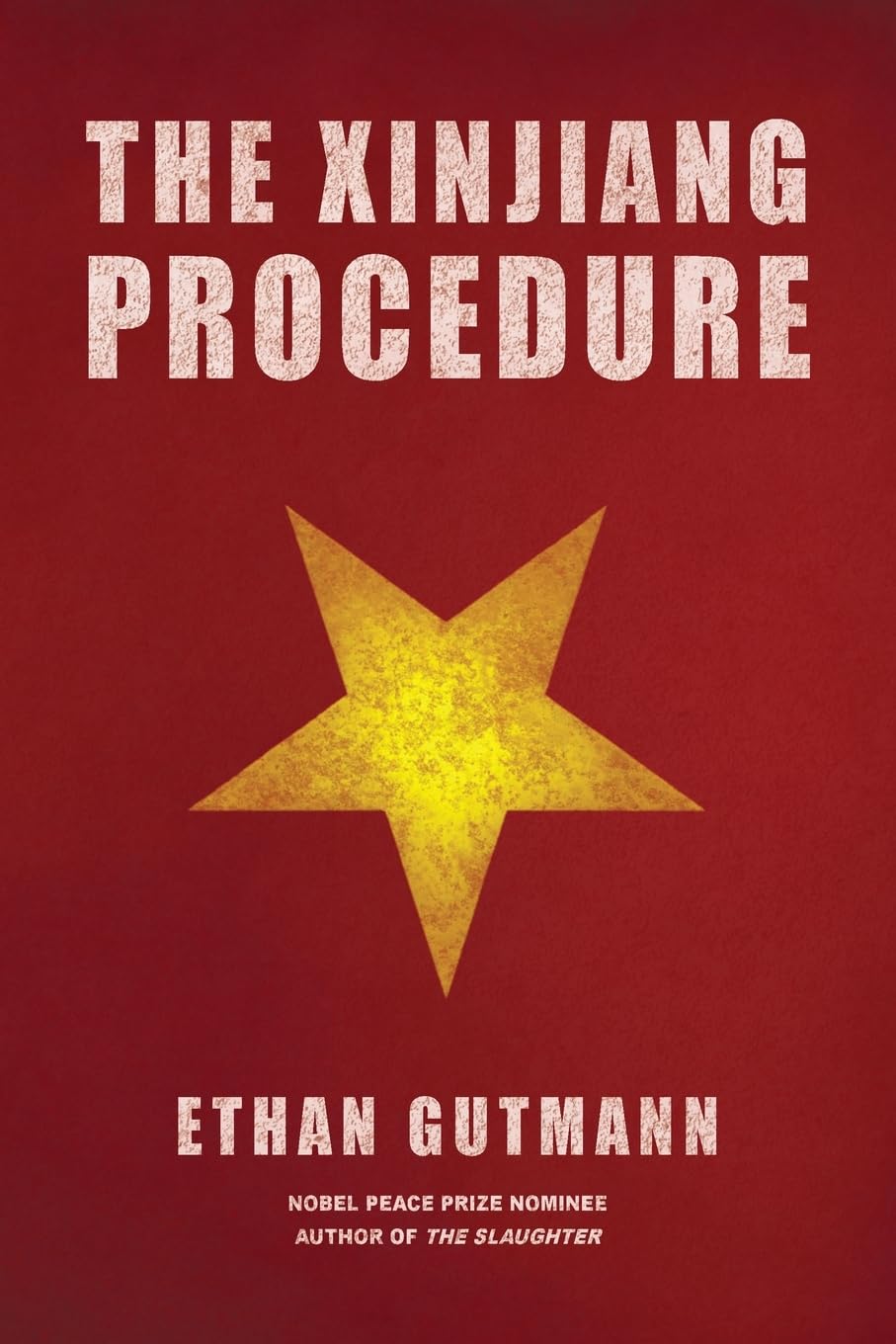
I opened Ethan Gutmann’s book “The Xinjiang Procedure” with great respect and laser focus. This book spotlights documented, critical evidence about China’s Uyghur organ harvesting and delivers keen insights into the Beijing regime’s shocking crimes against humanity. However, I couldn’t finish the first chapter in my first reading. It broke me emotionally. I hate how fragile I feel in the face of this. I hate that I couldn’t continue to read.
It was midnight. I tried to build a wall, a thick solid wall between myself and the woman in the story while reading what she had gone through in a Chinese prison. But I failed. The wall collapsed and I slipped to the other side, the side filled with inhuman ugliness.
As a researcher, I’ve read many stories from Uyghur refugees’ testimonies. I also personally interviewed several female camp survivors about rape cases, dozens of parents of forcibly disappeared Uyghur children, and victims who escaped from Chinese prison for the chapter about Uyghur genocide in my book “East Turkistan’s Right to Sovereignty: Decolonization and Beyond,” and for my other research papers. All of it is terrifying—too brutal to bear. But none of the stories attacked my soul like this one. Her first name is Rukiye, she was born in the city where I was born into a culture of Uyghur women and an attitude very familiar to me; even her name is the same as mine.
During the interview Gutmann conducted, her answers to his questions, as well as the attitude, hesitation, courage, and language style she used, are telling me that this is real, not some imagined horror story. The author used an inviting, narrative approach to reduce the pressure. At the same time, he asked her to recall events in reverse order—a technique used by seasoned experts in lie detection and asked about details that showed surprising understanding of her story. Her memory was naturally affected by trauma, but her truth and raw emotion were laid bare. Her story had a very clear core consistency over time. Details and causal links are coherent.
I cannot emphasize enough that this woman’s experience is a harsh reality and something that’s happening to many Uyghur women in Chinese prisons, detention centers, and re-education camps in China’s colonized East Turkistan.
Overwhelmed, I couldn’t continue to read. My stomach felt the turbulent pain of rage and, at 3:17 a.m., I vomited in the washroom. My chest tightened, refusing to let me breathe normally. This is not just some story I read—it is something that invades me. I know if I continue, I won’t be able to think, sleep, or eat.
Rukiye’s story doesn’t leave me. It replays in my mind over and over. It shakes me, disturbs me, makes me feel like I’m losing control of my own thoughts. And with that comes anger, it rises in me—a violent, helpless rage, born from knowing I can do nothing.
If this is what it does to me, someone who only reads Rukiye’s story, then what does that say about the woman who lived it? I silently raised my hand and saluted her and my tears didn’t stop when I prayed for her. She is not just a survivor from Chinese hell, she is someone far greater than that. There is a strength in her that feels almost divine and untouchable.
I recall what Ehtan Gutmann said to me in his message. He is right: By telling her story in all its nakedness to the world, we hope to resolve a portion of her trauma. My goal in writing a review is therefore to explain how this naked story might impact each human being and awaken rage against injustices and genocidal torture.
I gathered my courage and opened “The Xinjiang Procedure” again. I must finish reading this book and write my journey, analyzing evidence to learn and remember always what is happening to my home country to find ways to fight for freedom and justice.

“The Xinjiang Procedure” investigates new or very little-known evidence of victims of the Chinese regime’s forced organ harvesting scheme. Gutmann studied the facts and timeline of organ harvesting and provided evidence-based information. Among the facts he presents, the most shocking is China’s organ harvesting where the donor does not survive and “killing on demand” is disturbingly common. This is, in essence, the butchering of one human being for the benefit of another, a grim reality of humans acquiring another human’s organs on an on-demand basis. And as the on-demand market grows among wealthy patients from Gulf countries for so-called “halal” organs from China, more Uyghur Muslims are subjected to this system—their lives sacrificed to sustain it. Another fact is this: China is the only nation-state in today’s civilized world to carry out such state-sponsored organ harvesting, and readers will realize, despite the Chinese Communist Party’s denials, that it is undeniably real and utterly barbaric.
Clearly, rape and organ harvesting are not random acts of cruelty but are institutionalized crimes, sponsored by the Chinese Communist Party state, which enables, organizes, and sustains the crimes through prison systems and affiliated networks. Through Rukiye’s story, Gutmann exposes the link between rape and organ harvesting.
The CCP’s “rape” and “organ harvesting” both constitute severe violations of human dignity and bodily integrity through torturous means for the purpose of exploiting the body with intent to destroy specific ethnic or religious groups.
Gutmann writes powerfully that, although rape may sometimes be a survivable crime for the victim, perpetrators in cases like Rukiye’s may threaten death by rape. Rukiye held out against them, cheating death in rape and being bypassed for organ harvesting.
Acts of killing and acts of causing serious bodily or mental harm to members of a group with intent to destroy because of race, religion, and/or ethnicity is defined as genocide. These acts are clearly stated in Article II (a) and Article II (b) of the 1948 United Nations Convention on the Prevention and Punishment of the Crime of Genocide. The fatal consequences for victims of rape and organ harvesting, including death and serious bodily and mental harm, presented in the book compel readers to recognize China’s primary intent is to “destroy” a population; the word “genocide” doesn’t need to appear.

“The Xinjiang Procedure” is not merely current, first-person evidence about China’s crime of organ harvesting. It also presents the CCP’s other criminal procedures implemented to control and destroy Uyghurs and other Turkic Muslims in East Turkistan, including slave labor, and China’s transnational repression and hunting process of Uyghur refugees from Kyrgyzstan and Tajikistan. The book relies on detailed, personally collected evidence and first-hand witness testimonies from the Uyghur diaspora—well-documented proof that can bring the case of China’s genocide and other crimes against humanity to the International Court of Justice.
Gutmann combined various interviewing techniques and cross-checked examination to ensure the credibility of witness testimonies. Important information from international human rights lawyer and researcher David Matas and the late lawyer and politician David Kilgour are also included in the book to add to the specific information about the number of institutions, annual number of transplant organs in China, type of transplant centers, and estimation of number of Uyghurs harvested for their organs annually.
“The Xinjiang Procedure” can be read by a wide audience, including any human being that stands for justice, lawmakers, politicians, human rights activists and researchers, organ transplant surgeons, medical practitioners, and students.
As an investigative journalist, Gutmann traveled Central Asia to explore leads, gather evidence, collect testimonies, and expose horrific crimes. He investigated how the CCP tried to build confidence in the entire medical system through fast-tracked, supposed quality-control practices guaranteed to assure patients about organ transplants. He documented why and how the Transplantation Society, an international NGO, has always avoided the issue of Falun Gong, Chinese Christians, Tibetans, and East Turkistan Muslims. He wanted his book to impact people to act, lobbying the U.S. Congress and international bodies for many years to condemn China’s organ harvesting practices.

When I heard that “The Xinjiang Procedure” was published, I sent a text message congratulating Gutmann and expressing my admiration for his hard work. He thanked me, but it was clear that he was far less concerned with receiving recognition for his efforts than with seeing his work produce meaningful results for innocent victims. What mattered most to him was bringing the evidence to light and securing an open hearing in the U.S. Congress in the hope of prompting action against horrendous crimes committed by the Chinese party-state.
Later I learned that a bill to combat systemic forced organ harvesting in China was passed by the U.S. Senate with unanimous consent. This is a significant step toward turning evidence of forced organ harvesting into concrete accountability, including sanctions against those implicated in the practice. It wouldn’t have happened without the extensive research provided in “The Xinjiang Procedure.” This news sent healing light to my pained heart and lifted my spirit. That night, I prayed long and thanked God that, even in the face of immense suffering inflicted by powerful states, there are people like the author of this book who refuse to remain silent and continue to fight for justice. And there are many “living shahid” like Rukiye Parhat who can courageously and continuously fight.
“The Xinjiang Procedure” is a truly impressive work. I say this not only because this book gives voice to Uyghurs and I am Uyghur, but also because the author amassed hard evidence about genocide and crimes against humanity that could hold perpetrators accountable. Survivors like Rukiye Perhat serve as living proof of this. Her survival from a Chinese hell stands as a powerful act of resistance.
“The Xinjiang Procedure” and Rukiye Perhat have already defeated the perpetrators more decisively than a deadly bullet ever could.
Views expressed in this article are the opinions of the author and do not necessarily reflect the views of The Epoch Times.
 Friends Read Free
Copy
Facebook
Tweet