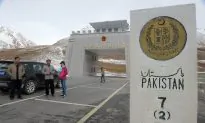
Establishing Kabul’s passageway buys a potential transit route into Central Asia, a foothold in Afghanistan’s mineral sector, and—most sensitively—a channel for direct influence along the narrow Wakhan Corridor that touches China’s Xinjiang region.
His work has contributed to Western coverage of China’s Xinjiang region, where Uyghurs face severe repression by the Chinese Communist Party. We spoke with his lawyer and a witness for more.
Zhou Fengsuo, co‑founder of Humanitarian China, a U.S.
“My father has lived in Xinjiang for over 30 years,” Ms. He said. “We’ve never experienced something big like this. We don't know what's going on in recent years.”
It elicited global human rights condemnation of genocide and forced labor in the Xinjiang region. China ignored these criticisms, which eventually became sanctions against goods produced in Xinjiang.
This is mainly because most manufacturing takes place in China, particularly in the provinces of Xinjiang and Jiangsu, where coal dominates local energy supply.
“Canada is deeply concerned by the human rights violations in Xinjiang and Tibet and against those who practise Falun Gong,” said Joly in a Dec. 10, 2024, news release by Global Affairs Canada.
The ban applied to all products manufactured in Xinjiang since June 2022 under the Uyghur Forced Labor Prevention Act (UFLPA).
Congress enacted the UFLPA in 2021 in response to mass forced labor in Xinjiang.
We quickly turned our attention to the Chinese entities peddling goods from Xinjiang.
Unfortunately, the prevalence of the use of forced labor in Xinjiang continued. Then Congress stepped in.
Lawmakers recommended that CATL be added to the list in 2024, highlighting the battery maker’s ties to paramilitary organizations that carried out the Chinese regime’s genocide of Uyghurs in Xinjiang.
In the last days of Trump’s first term, the State Department declared the repression of Uyghur Muslims in Xinjiang a genocide, and a number of other nations followed suit.
Despite that YouTube is banned in China, Beijing continues to use the platform to spread state-approved narratives, particularly on sensitive issues such as Taiwan and Xinjiang.
In 2021, the United States enacted the Uyghur Forced Labor Prevention Act, which restricts imports linked to forced labor in China’s Xinjiang region, including cotton products.
Earlier this week, a third seat on the top decision-making body fell vacant after the leadership expelled Ma Xingrui, former Xinjiang Party chief, for serious corruption.
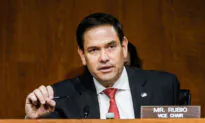
On human rights in China, Rubio's work has resulted in significant U.S. laws in the area, including addressing the CCP’s genocide of the Uyghur people in Xinjiang and the erosion of Hong Kong’s democracy and its rule of law.
The Chinese regime’s persecution of Uyghurs in the Xinjiang region began in 2014, with the implementation of Chinese leader Xi Jinping’s "counterterrorism" campaign, according to the tribunal’s report.
The CCP persecutes Uyghurs and other minorities in Xinjiang, and the United States signed into law the Uyghur Forced Labor Prevention Act in 2021, prohibiting goods made with forced labor from entering the country.
Under the UFLPA, businesses are banned from importing products from companies on the list and anything mined, produced, or manufactured wholly or in part in Xinjiang, unless they can prove that no forced labor is involved.
The emphasis on "sinicization of religion," as highlighted by Xi during his visits to Xinjiang, underscores the broader goal of aligning all religious practices with state-sanctioned Chinese characteristics.
“In China, the Chinese Communist Party is exploiting Uyghurs, ethnic Kazakhs, ethnic Kyrgyz, and members of other ethnic and religious minority groups in Xinjiang through a government policy or pattern of widespread forced labor, including through mass
Separately, they source a large volume of natural stone from the Xinjiang Autonomous Region and Quanzhou in China, where 54 percent of all quartz is mined using forced labor.
Under the UFLPA, all goods that come wholly or partly from China's Xinjiang region or made by an entity on the UFLPA Entity List are presumed to be forced labor products and banned from entering the United States, with the onus on the importers to prove
The CCP has persecuted the Uyghur minority in the Xinjiang region for years, conducting mass surveillance and forcing them into slave labor. There is also emerging evidence of forced organ harvesting from the group.
The Chinese officials named by U.S. authorities are Hu Lianhe, the vice head of the Xinjiang Work Coordination Small Group of the Central Committee that has been instrumental in implementing Beijing’s Xinjiang policies, and Gao Qi, the deputy chief of
Communications Commission on imports of Chinese drones, and the Department of Homeland Security’s decision to add 43 Chinese companies to the Uyghur Forced Labor Prevention Act Entity List, banning their imports over alleged links to forced labor in Xinjiang