Huawei's Chief Financial Officer MengWanzhou, who was arrested on U.S. fraud charges in Vancouver last December, will challenge Washington's extradition request at hearings that are set to begin next January.
The company's chief financial officer, MengWanzhou, daughter of Huawei's founder, was arrested in Canada in December at the behest of U.S. authorities for her role in the alleged fraud. Meng has said she is innocent and is fighting extradition.
News analysis
Soon after MengWanzhou, the chief financial officer of Huawei, was arrested by the Canadian authorities in Vancouver, the Chinese regime prioritized her release.
Huawei’s chief financial officer MengWanzhou, who faces extradition to the United States over allegations of skirting Iran sanctions, recently submitted an article to Japan-based magazine Nikkei Asian Review, defending Huawei’s funding to top universities
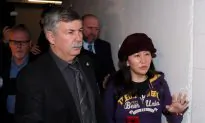
Huawei Chief Financial Officer MengWanzhou at a parole office, in Vancouver, on Dec. 12, 2018. (The Canadian Press/Darryl Dyck)
In a 13-count indictment, the U.S.
Huawei Chief Financial Officer MengWanzhou in 2021 entered into a deferred prosecution agreement, which included signing a statement of facts admitting that she had falsely told a bank executive that Huawei had sold its Skycom shares and that Skycom
The talks are the first China–Canada military discussions since 2018, when relations worsened between Beijing and Ottawa after Canada’s arrest of Huawei executive MengWanzhou on an American extradition request in December 2018, followed by China’s detention
The last China-Canada Defence Coordination Dialogue was held in China in April 2018, prior to relations souring over Canada’s arrest of Huawei executive MengWanzhou on a U.S. extradition request and the subsequent detention of Canadian citizens Michael
This case follows the 2018 arrest of senior executive MengWanzhou in Canada. Wanzhou was repatriated to China after reaching a plea deal with U.S. prosecutors.
The last time such an event was held was in April 2018 in China, before Ottawa-Beijing relations soured over Canada's arrest of Huawei executive MengWanzhou on a U.S. extradition request in December 2018, and China's subsequent detention of Canadian
September 7, 2026By Omid Ghoreishi, Paul Rowan Brian
However, in the aftermath of Canada arresting Huawei executive MengWanzhou on a U.S. extradition request in December 2018, China changed Schellenberg's sentence to a death sentence, and also detained Canadian citizens Michael Kovrig and Michael Spavor
In late 2018, Canada arrested Huawei executive MengWanzhou on a U.S. extradition request alleging she engaged in fraud.
McGregor said there is a pattern of Canadian authorities often appearing “reactive” on intelligence and security matters.
But she changed her views following the CCP’s conduct in the aftermath of the MengWanzhou affair, saying it served as the last straw showing that the regime isn’t changing its tactics.
October 22, 2025By Carolina Avendano, Omid Ghoreishi
In 2019, Beijing imposed a three-year ban on Canadian canola imports following the arrest of Huawei executive MengWanzhou in Vancouver just months earlier.
The previous government of Justin Trudeau was building deeper ties with China after it came to power in 2015, but pulled back on engagement following the MengWanzhou affair.
Trudeau had also sought closer ties with Beijing at the time, but engagement with China came to a stop after Canada executed a U.S. extradition warrant in late 2018 against Huawei executive MengWanzhou.
Correction: An earlier version of this article incorrectly stated that MengWanzhou, Huawei’s chief financial officer, had been extradited to the United States. Meng was held in Canada under a U.S. extradition request.
Schellenberg was originally sentenced to 15 years in prison in 2018 on drug trafficking charges, but his sentence was changed to death in late 2018 after Canada arrested MengWanzhou, a senior executive at Huawei, on a U.S. extradition request.
It took place amid strained trade relations marked by tariff disputes, as well as fragile diplomacy following the MengWanzhou affair in 2018 and recent revelations of China’s foreign interference and escalating transnational repression operations in
(Mark Ralston/AFP via Getty Images)Other Censored Topics
Other topics flagged for removal or filtering included rumors about Chinese Foreign Minister Wang Yi owning property in Canada, commentary on the case of Huawei executive MengWanzhou, and satirical
The two were detained in 2018 for more than 1,000 days by the Chinese regime in a retaliatory move for the arrest of Huawei executive MengWanzhou in Vancouver as the result of a U.S. extradition warrant request carried out by Canadian law enforcement
The increased engagement from the Trudeau Liberals ground to a halt after Canada executed a U.S. extradition warrant in late 2018 against Huawei founder's daughter MengWanzhou.
The regime put bans on several Canadian imports in 2019 after the arrest of Huawei executive MengWanzhou in Vancouver on a U.S. extradition request in December 2018.
Diplomatic relations between the countries have been deteriorating since 2018, when China arbitrarily detained Canadians Michael Spavor and Michael Kovrig in apparent retaliation for the detention of Huawei executive MengWanzhou in Vancouver.
As part of the long-running federal investigation into Huawei's business dealings, Huawei’s chief financial officer, MengWanzhou, also the daughter of the company’s founder, Ren Zhengfei, was previously charged and detained in Canada for nearly three