There are concerns over Beijing growing influence in the Asia-Pacific after China-based technology and telecommunications giant Huawei announced it would be investing US$100 million (AUS $136 million) into building up its portfolio of startups in the
The sanctions list includes Huawei, SMIC, and many critical technology companies such as state-owned supercomputing centers across China.
In addition, on Feb. 7, the U.S.
The situation for Huawei has been exacerbated by sanctions imposed by the Trump administration. The latest blow is the administration’s move to block chip suppliers from selling semiconductors produced using U.S. technology to Huawei.
Huawei has seen multiple sanctions from countries such as Australia, New Zealand, and Japan. Most recently, the U.S. Department of Commerce barred U.S. firms from selling technology to Huawei, citing national security concerns.
The Trump administration lands a heavy blow on China's Huawei—halting the shipment of billions of dollars worth of goods and technology.
And President-elect Joe Biden announces new picks for top posts.
The United States is again warning the UK about using technology from China's Huawei for its 5G telecommunications networks, saying it would be a threat to the country's national security.
Its collaborators include Huawei and the Chinese Ministry of Public Security's Third Research Institute, which is responsible for technical surveillance and digital forensics, according to the report.
Rebuking Washington’s push to shun Huawei, the company’s executives have expressed that the United States will fall behind in 5G technology by banning the company from its network.
U.S.
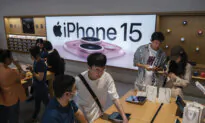
"If Huawei hadn't been sanctioned by the U.S. for its technology, Apple would have suffered even more.”
The tech giant's China woes will likely deepen as the CCP moves further left and continues decoupling from the rest of the world, Mr.
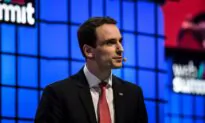
He also singled out Chinese technology giant Huawei at the 2019 Web Summit as an example of the Chinese Communist Party (CCP) "extending its authoritarianism abroad."
Department of Defence categorized a number of Chinese technology companies and organizations, including Hikvision and Chinese telecom equipment company Huawei, as being owned or controlled by the Chinese military.
Meng Wanzhou, executive board director of Chinese technology giant Huawei, attends a session of the VTB Capital Investment Forum "Russia Calling!" in Moscow, Russia, on Oct. 2, 2014.
In the push to dominate this domain, the CCP has identified core technologies, including satellite GPS, internet infrastructure, and semiconductors, with Huawei playing a key role in this agenda.
The concern is that if Huawei buys up and builds factories and facilities under other company names, it may find ways around the U.S. trade rules. This may allow it to purchase American technology and chipmaking equipment unnoticed.
Chinese technology corporations, including U.S.-blacklisted Huawei and ZTE, manage the island’s telecommunications infrastructure.
In 2024, direct flights between China and Cuba were established, and 27,000 Chinese visitors flew to the island.
The Trump administration in May effectively banned the use of Huawei gear in U.S. telecom networks and restricted the company's purchases of American technology.
President Donald Trump signed the Defense Authorization Act, according to which the U.S. government and government contractors are banned from using Huawei and ZTE technologies.
Over $5 million of that money was from contracts with Huawei, a technology company listed by the federal government as one that is denied sensitive technology because it is a danger to national security.
The declaration builds upon increasingly tough action taken by the Trump administration against Huawei, the world's largest maker of telecom gear, and other Chinese technology firms that pose security risks.
For the previous-generation technology 3G, China’s Ministry of Commerce claims that Huawei helped to build more than 50 networks in 36 countries, including Ghana, Kenya, Nigeria, Tanzania, Uganda, and Zambia.
Department of Commerce announced a new export rule to block Chinese telecommunications giant Huawei from obtaining semiconductors made with U.S. technology.
Huawei is facing international scrutiny over its ties with the Chinese regime and allegations that Beijing could use its technology for spying, which Huawei denies.
In a sign of how troubled Brussels has become by recent developments, the parliamentarians also adopted a separate non-binding resolution expressing "deep concern" over allegations that Chinese telecom giant Huawei uses 5G mobile technology for mass surveillance
Repressive regimes worldwide that seek to replicate a "China model" and import the regime's "digital authoritarianism" are using Chinese technology companies such as Huawei and ZTE to implement and deploy such technology, according to the report.
Czech President Milos Zeman has long pushed for closer ties with Beijing and firmly supported Chinese technology giant Huawei as it came under global scrutiny amid allegations that its equipment could be used by Beijing to spy on customers.
And Huawei is technology that the Chinese government, maybe they fund indirectly or directly, but it's hosted in China. And what they're doing is they're taking that technology and putting it around the world, all over the world.
Huawei is at the forefront of developing 5G technology—the next generation of lightning-speed wireless communications, and has been aggressively expanding its 5G business, boasting contracts with 30 countries as of late February.
Europe's mobile industry would face higher costs and delays to faster networks if authorities imposed a blanket ban on Huawei equipment, particularly the radio technology deployed on mobile towers, Read said.