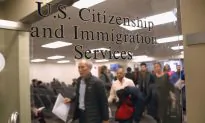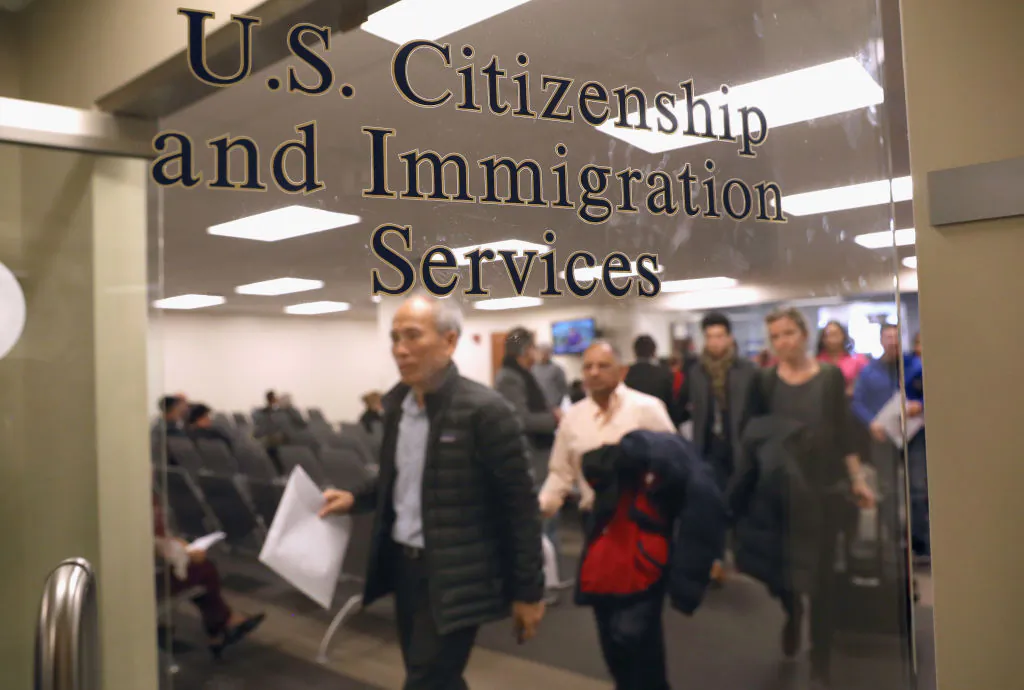
A federal judge on Oct. 27 temporarily blocked the Trump administration from enforcing a rule that would reduce the period of time refugees have to challenge the termination of their legal status.
The rule, issued by U.S. Citizenship and Immigration Services (USCIS) on Oct. 14, shortened the notice period for revoking refugee status from 30 days to 10 days. The agency stated that the change is aimed at restoring integrity to the immigration system, mitigating national security risks, and preventing fraud.
U.S. District Judge Julia Kobick ordered the administration on Oct. 27 to halt enforcement of the rule until Nov. 6.
“The individuals to whom such [Notices of Intent to Terminate] were issued shall not be required to respond to the [notices],” Kobick said in a two-page ruling.
The judge also barred the administration from terminating refugee status over an individual’s failure to respond to a revocation notice during the period.
The order followed a lawsuit filed by refugee advocacy groups and four refugees from Afghanistan, Ethiopia, Colombia, and Iraq, who claimed that the new rule would hinder refugees from obtaining lawful permanent residency in the United States.
The plaintiffs said the judge’s ruling would provide “critical protection” for refugees who fled persecution and had undergone extensive vetting to rebuild their lives in the United States.
“No one should face the threat of losing their lawful status and being returned to danger without a meaningful opportunity to defend themselves,” they said in a statement issued by legal organization Democracy Forward, which represents the plaintiffs.
USCIS spokesperson Zach Kahler called the lawsuit a “frivolous attempt” to interfere with the Trump administration’s efforts to enforce the country’s immigration laws.
The new rule could impact about 186,000 refugees, according to a Department of Homeland Security (DHS) notice published in the Federal Register on Oct. 14. The DHS estimated that about 113,000 refugees have received initial work authorization but their applications for permanent residency are still pending.
The plaintiffs have accused the administration of violating the Immigration and Nationality Act and the Administrative Procedure Act by attempting to subject refugees to mass re-vetting and placing a blanket hold on their adjustment of status without congressional authorization.
According to the lawsuit, the administration issued a memo in November 2025 directing immigration officials to put on hold all pending adjustment of status applications filed by refugees admitted between Jan. 20, 2021, and Feb. 20, 2025, and to re-vet those refugees.
The DHS stated in its notice that the extended 30-day notice period for revoking refugee status had enabled ineligible immigrants more time to retain immigration benefits for which they did not qualify, undermining the integrity of the U.S. immigration system and national interests.
Deputy Secretary of State Christopher Landau said on Aug. 24 that the asylum system was meant to provide safe harbor for individuals fleeing persecution based on race, religion, nationality, or political opinion, but that it had become overwhelmed by what he said were “bogus asylum claims.”
“The system has long been swamped by frivolous asylum claims, meaning that it takes years to adjudicate whether applicants are actually entitled to asylum—during which time they can typically work, have children, and otherwise put down roots in our country,” he said in a post on X.
Reuters contributed to this report.
Correction: A previous version of this article misstated the category of refugees with pending applications for permanent residency. The Epoch Times regrets the error.
 Friends Read Free
Copy
Facebook
Tweet