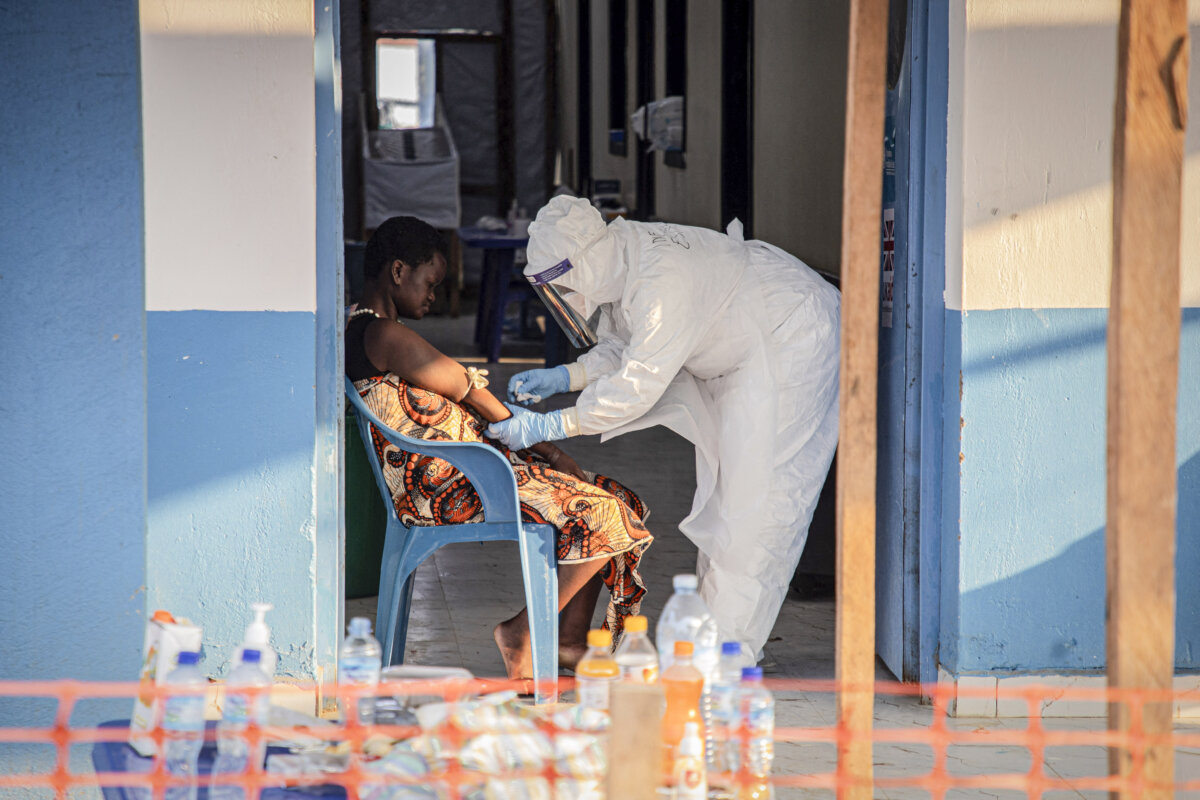

Canada has extended its travel and immigration restrictions tied to the Ebola outbreak for another two months in response to the ongoing Ebola outbreak in the Democratic Republic of Congo, which has recorded nearly 8,000 confirmed cases.
The measures were set to expire at midnight on Sept. 28 but will now remain in place until Nov. 27, the government said in an updated notice on its website.
As of Sept. 23, the World Health Organization had reported 7,890 confirmed cases and 3,799 deaths in the Democratic Republic of Congo.
Residents of Uganda, South Sudan, and the Democratic Republic of Congo have not been permitted to travel to Canada since May. Immigration documentation, including valid visas and authorized travel permits, continues to remain in a state of suspension for individuals from all three countries.
International travellers who do not hold citizenship from any of the three countries but have been in the Democratic Republic of the Congo over the past 21 days are restricted from boarding Canadian-bound flights or passing through Canada in transit. Those who visited South Sudan and Uganda are asked to isolate for 21 days, the Public Health Agency of Canada said.
Canadian citizens or permanent residents visiting any of the three African countries can return home but also must undergo a 21-day quarantine upon arrival.
The border measures were first announced in May ahead of the FIFA World Cup. Canadian government officials, including Health Minister Marjorie Michel and Immigration Minister Lena Diab, described them as a precautionary safety measure aligned with those taken by the United States and Mexico, who were serving as co-hosts for the tournament.
Outbreak Impact
The World Health Organization (WHO) has described the outbreak as the fastest-growing in history, noting that it is on track to be the deadliest, with a fatality rate of 48 percent.
The WHO said last week that the south African country is running out of health workers to contain the rare Bundibugyo virus, a strain for which there is no known treatment or vaccine.
Health Canada gave biotechnology company Moderna the go-ahead to begin a clinical trial for a vaccine designed to combat the Bundibugyo strain of the Ebola virus this summer. The authorization makes Canada the second country to authorize a Phase I clinical trial for a Bundibugyo virus vaccine candidate after the United Kingdom.
Although the outbreak is currently concentrated in the Democratic Republic of Congo, a handful of deaths have also been reported in neighbouring Uganda.
The Ugandan outbreak was officially declared over by the WHO on Aug. 27, after 42 consecutive days went by without a new confirmed case.
The Public Health Agency of Canada has confirmed there are no domestic cases of the disease. A spokesperson for the Public Health Agency of Canada said it is important to “remain vigilant” due to the severity of the disease.
Ebola is caused by a group of viruses that damage blood vessels and prevent blood from clotting normally. It spreads through bodily fluids like blood, vomit, and semen. People are only infectious when they are symptomatic.
 Friends Read Free
Copy
Facebook
Tweet