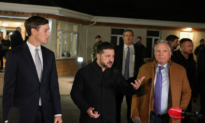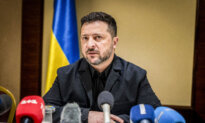
Ukrainian President Volodymyr Zelenskyy said Europe’s full negotiating team joined Ukraine and the United States for the first time on Monday to discuss next steps toward ending the war.
Zelenskyy said on Nov. 16 that the European team included representatives of five members of the “Coalition of the Willing” that backs Ukraine: France, Germany, Italy, Poland, and the UK, as well as representatives from the European Commission and the European Council. A NATO representative was also present, he said.
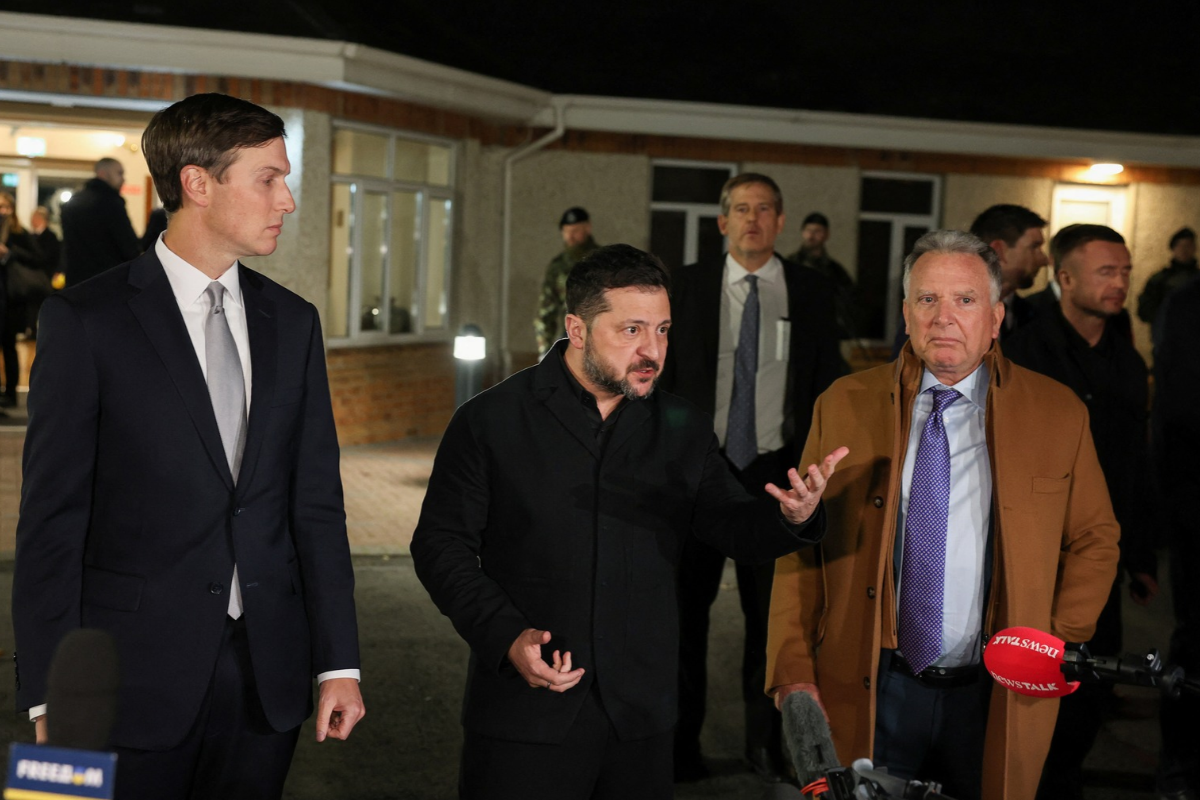
The Ukrainian president said that U.S. envoys Steve Witkoff and Jared Kushner joined the discussion online.
The talks came less than a week after trilateral discussions between Ukrainian, Russian, and American officials in Abu Dhabi, United Arab Emirates.
“Diplomatic efforts are actively underway, and we hope they will not be in vain,” Zelenskyy said. “Our team is working as constructively as possible. We need a dignified end to the war and guaranteed security for Ukraine.”
He said that discussions were “not easy,” but did not elaborate further. He added that future concrete joint steps in the negotiation process will be worked out in Berlin at the next “Coalition of the Willing” meeting.
Zelenskyy has been pushing for European representation in negotiations with Russia, saying it is important for guarantees and prosperity. Ukraine is also a candidate country for EU membership.
European Council President António Costa said on Friday that leaders had agreed that the European team for peace negotiations would include EU representatives and the “Coalition of the Willing.”
“We need to integrate all of us. And for this it’s essential to have a team and to speak with only one voice,” Costa said on Nov. 13.
French President Emmanuel Macron said on Nov. 12 that “without Europeans, there is no support for Ukraine.”
“At the end of the day, we will be the ones to define and decide for our future security as Europeans,” he added.
Russia Has Not Yet Agreed: Kremlin
A senior Kremlin aide said on Nov. 16 that Moscow had not yet agreed to let European representatives participate in the next round of talks.
“What is currently being discussed is holding the next round [of talks] in a trilateral format. These talks resumed in Abu Dhabi several days ago, and it was agreed that they would continue,” Yuri Ushakov told reporters on Monday.
“The date has not yet been agreed, and the expansion of the format—some people are talking about it—but it has not been agreed with us.”
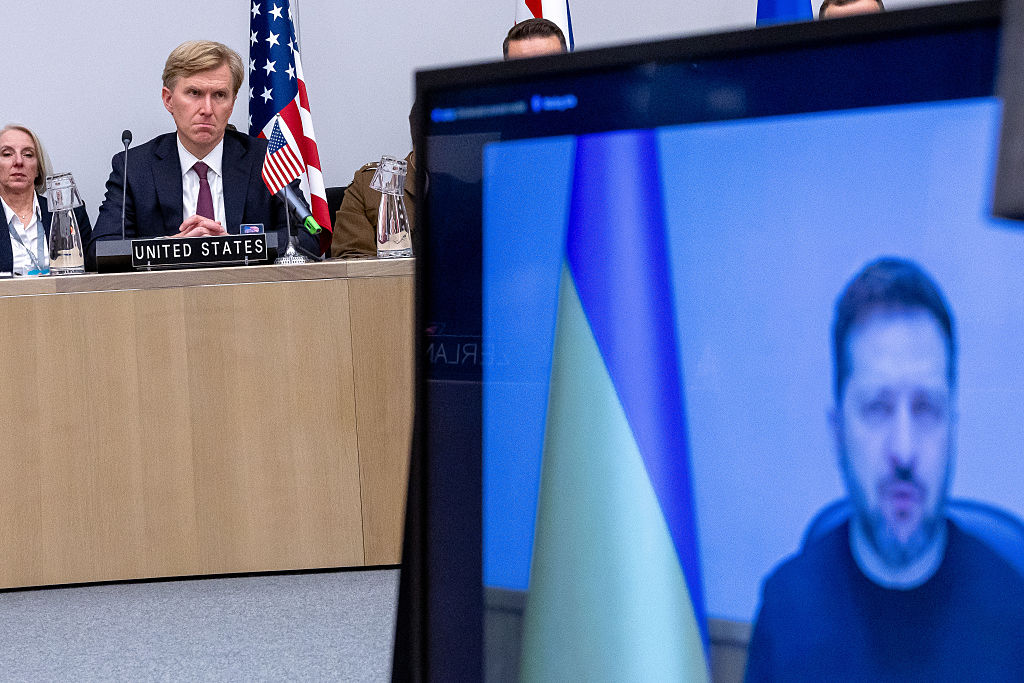 Ukrainian President Volodymyr Zelenskyy addresses a meeting of the Ukraine Defence Contact Group as U.S. Under Secretary of War for Policy Elbridge Colby listens at NATO Headquarters in Brussels, Belgium, on Nov. 17, 2026. (Omar Havana/Getty Images)
“In particular, it may be necessary to hold another round, or perhaps more than one round, of trilateral talks,” he said.
The Kremlin aide said that Europe’s involvement would depend on Moscow receiving a clear signal from Europeans about what they wanted and what constructive contribution they could make toward a settlement in the war.
Witkoff and Kushner held trilateral negotiations with the Ukrainian and Russian delegations in Abu Dhabi last week before traveling to Moscow for direct talks with Russian President Vladimir Putin, and then on to Dublin to meet with Zelenskyy.
During the meeting in the Kremlin between the Russian and U.S. delegations on Nov. 12, Putin said he was ready to work with European representatives.
“We would very much like you, gentlemen, and the American administration as a whole to work with your European allies so that they finally make up their minds about what they want: peace or war in Ukraine. And we are, of course, ready to work with them,” Putin said, according to a Kremlin transcript.
Kushner also said in a Nov. 12 post on X that Ukraine and Russia had “agreed to expand the next round of negotiations to include our European partners.”
Kremlin spokesman Dmitry Peskov said on Nov. 13 that Europe must first show it is ready to contribute to the peace process before joining the next round of negotiations.
“Once we understand their genuine intention and readiness to contribute to the peace process, then it will be possible to make a decision on holding dialogue on a Ukrainian settlement in an expanded format,” Peskov said.
He added that Moscow would be open to some form of contact with Europe before any European participation in peace negotiations.
Ukraine, Russia Continue to Trade Attacks
Attacks have continued despite the peace talks.
Ukraine struck a bridge linking Russia and Crimea in a drone and missile attack in retaliation for Russian strikes on Ukrainian infrastructure, Zelenskyy said on Tuesday.
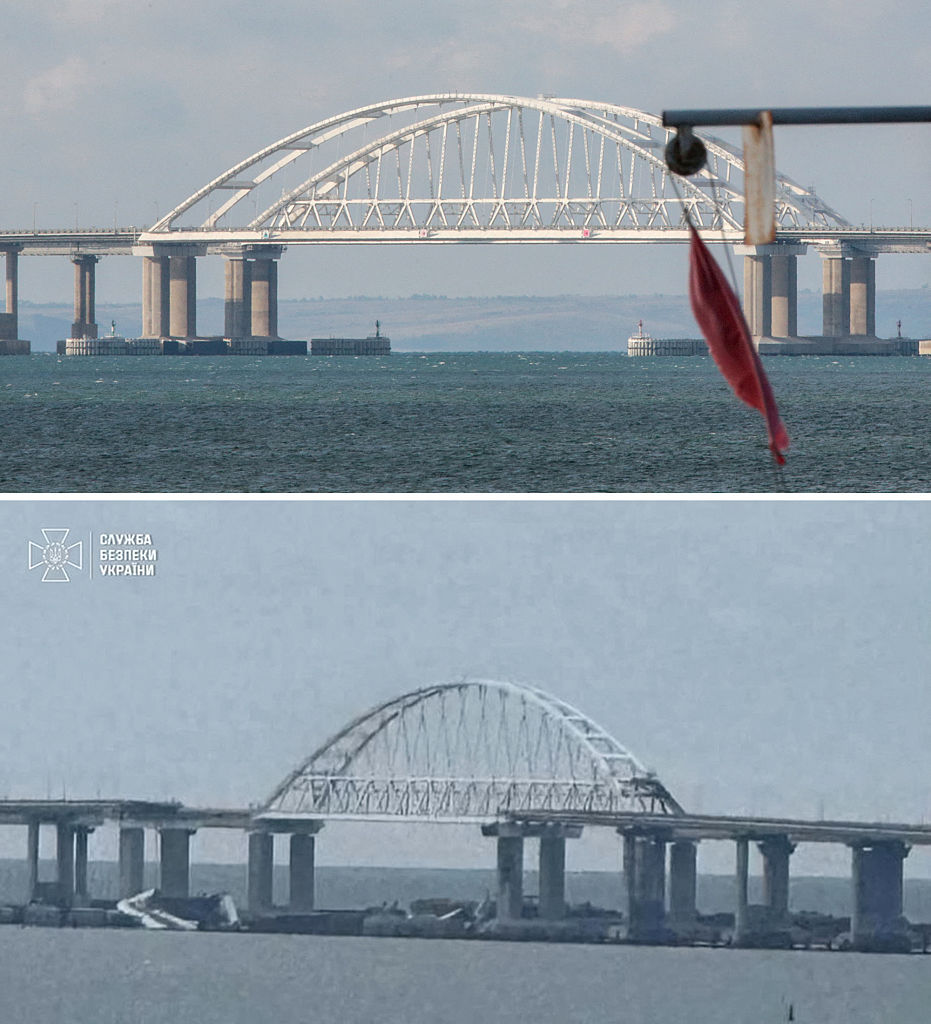 (Bottom) A grab taken from a video released on Nov. 17, 2026 by the Ukrainian Security Service showing the damaged Crimean bridge after a strike and (Top) a view of the bridge taken on Oct. 14, 2022. (Ukrainian Security Service/AFP via Getty Images)
Peskov said on Tuesday that a repair plan would be prepared, making the bridge “even better than before.”
The bridge is strategically important because it provides Russia with a direct transport link to Crimea without passing through mainland Ukraine.
Ukraine has repeatedly said the bridge is a legitimate military target because it helps sustain Russian military operations.
Kyiv Mayor Vitali Klitschko said on Monday that Russia struck the city’s North and South bridges, an assertion later confirmed by Moscow, and partially damaged the metro system. The attacks caused some power and water outages and prompted transport restrictions, he said.
Russia said its forces had struck transport, military, and energy facilities in Kyiv, Zaporizhzhia, Cherkasy, and Dnipropetrovsk, along with port infrastructure and a cargo ship.
Reuters contributed to this report.
 Friends Read Free
Copy
Facebook
Tweet