
The Saskatchewan government has introduced legislation to establish additional safeguards for people seeking medical assistance in dying (MAID), following a commitment in its Oct. 27 throne speech.
The proposed Medical Assistance in Dying Additional Safeguards Act would prohibit MAID in Saskatchewan for anyone under 18, people whose sole underlying medical condition is a mental illness, and individuals who lack the capacity to make their own health-care decisions.
The Saskatchewan Party government said the legislation also responds to concerns raised by health-care providers about the need for stronger conscience protections for professionals who choose not to participate in MAID, saying the bill would strengthen those protections.
“The Medical Assistance in Dying Additional Safeguards Act will help ensure that vulnerable individuals receive appropriate care, treatment and supports while maintaining a safe and responsible MAID program,” the province said in a Nov. 9 release.
Although the federal Criminal Code governs MAID eligibility, provinces are responsible for delivering health care and can establish additional safeguards within their health-care systems, the government said.
Saskatchewan’s MAID program operates under a centralized model, with the Saskatchewan Health Authority overseeing assessments and provisions across the province.
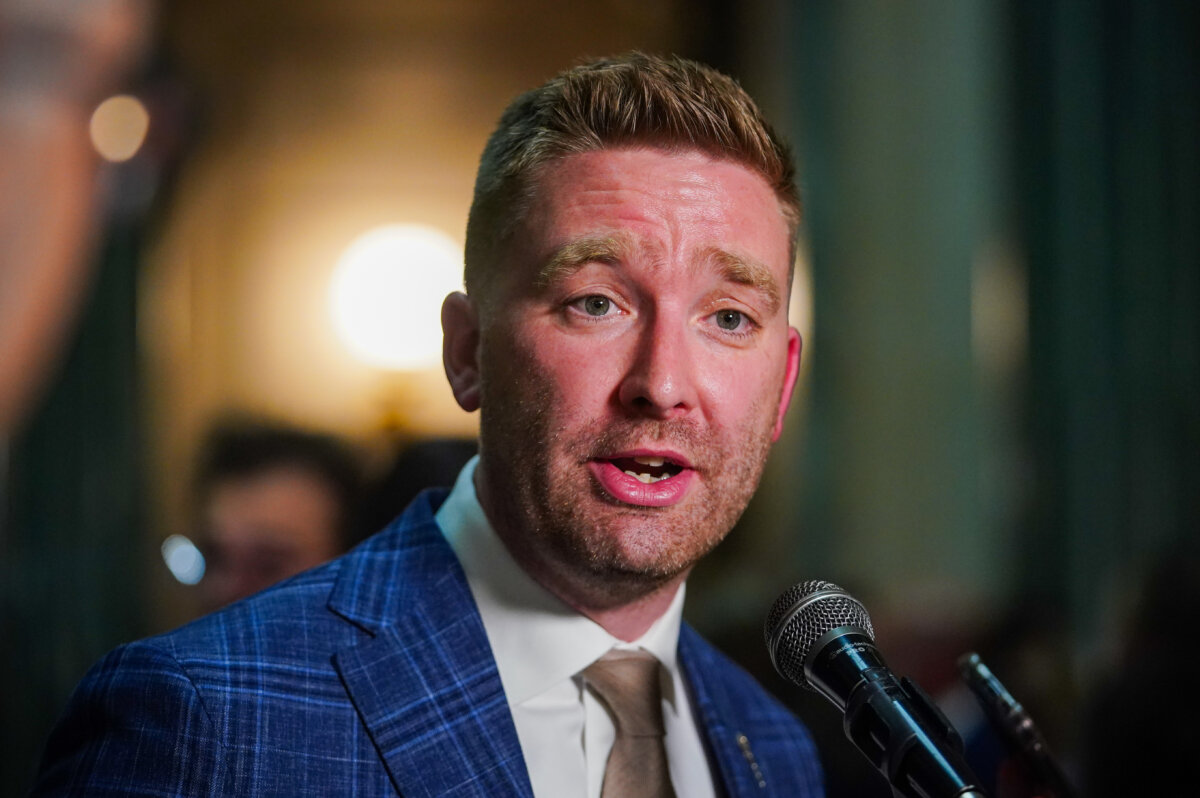
Saskatchewan’s Health Minister, Jeremy Cockrill, told reporters in Regina that the province felt it was important to establish its own guardrails.
“Regardless of what happens with that [federal] piece of legislation, we viewed these pieces as really significant,” Cockrill said, adding he’s heard from health-care workers who want stronger wording in provincial legislation.
Nicole Sarauer, the Opposition NDP’s house leader, told reporters she would consult health-care workers about the proposed legislation and would examine the legislation with stakeholders to better understand the government’s objectives. She also questioned why the province needed the additional rules when similar restrictions already exist in federal law.
Canada legalized MAID in 2016 for eligible adults whose natural deaths were reasonably foreseeable. Parliament expanded eligibility in 2021 to include people whose natural deaths were not reasonably foreseeable, subject to additional requirements.
Federal law currently prohibits MAID for people under 18 and those who lack the capacity to make health-care decisions. It also excludes people whose sole underlying medical condition is a mental illness, although that restriction was scheduled to expire on March 17, 2027.
The federal government introduced Bill C-41, the MAID Safeguards Act, on Oct. 27. The proposed legislation would make the exclusion for people whose sole underlying medical condition is a mental illness indefinite. It would also allow certain adults diagnosed with an incurable condition that is expected to cause a loss of decision-making capacity to make advance requests for MAID.
Under the proposed framework, eligible adults could specify the circumstances in which they would want MAID provided after losing the capacity to consent. The requests would be subject to additional guidelines, including requirements that the person experience intolerable suffering when MAID is provided. Provinces and territories would decide whether to permit advance requests within their health-care systems.
The Canadian Press contributed to this report.
 Friends Read Free
Copy
Facebook
Tweet