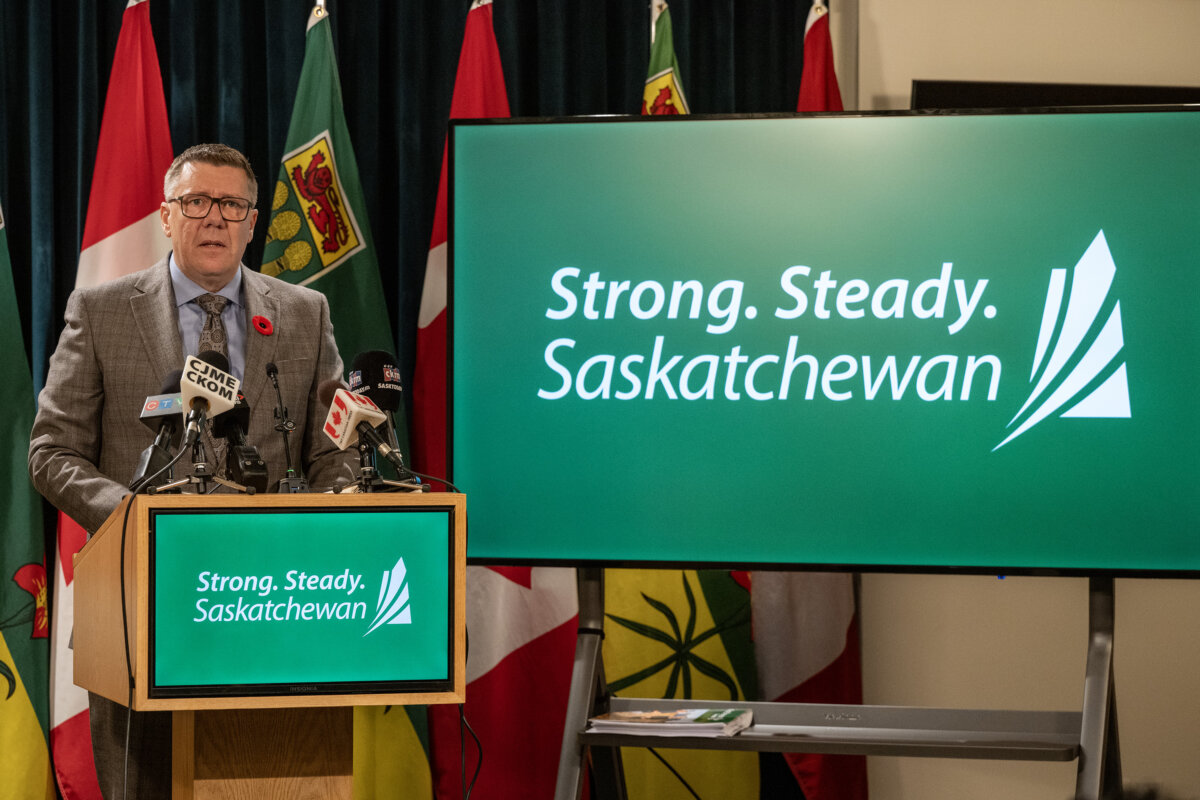

Saskatchewan Premier Scott Moe’s government is promising further personal income tax cuts in 2027, expanded health-care services and addictions treatment, and new public safety legislation during the legislative session.
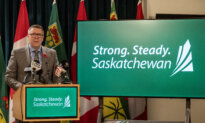
The Saskatchewan Party government outlined its priorities in the Oct. 27 throne speech, which Lt.-Gov. Bernadette McIntyre delivered to open the third session of the province’s 30th legislature. The speech, titled “Strong. Steady. Saskatchewan,” focused on affordability, economic development, health care, public safety, education, and agriculture amid international trade uncertainty.
“While the current trade disputes are increasing the cost of living for everyone, Saskatchewan continues to be the most affordable place to live in Canada,” the speech said.
The government said it would further reduce personal income taxes in the 2027 budget, marking the third year of its four-year affordability plan. Previous reductions mean a family of four now pays no provincial income tax on its first $65,000 of income, which the government says is the highest tax-free threshold in Canada.
The speech did not specify how much additional tax relief residents could expect next year.
The government also highlighted an increase in the maximum benefit under its Graduate Retention Program to $24,000. It said more than 93,500 graduates have received over $925 million in tuition tax credits since the program began.
Ahead of the throne speech, NDP House Leader Nicole Sarauer called on the government to do more to address affordability, including eliminating the provincial sales tax on children’s clothing and certain grocery items. The NDP has also advocated rent control.
“It’s getting more and more expensive for people to live their daily lives, whether it’s gas, groceries or property taxes,” Sarauer said on Oct. 25, while also expressing concern about overcrowded hospitals, lengthy wait times, and the need for more family doctors.
Health Care
The government pledged to reduce health-care wait times, expand services, and allow more health care professionals to practise to the full extent of their training.
The province said more than 7,500 doctors, nurses, and other health-care professionals have joined Saskatchewan’s healthcare system since 2022, while more than 1,000 medical, nursing, and allied health training seats have been added.
The government’s Patients First Health Care Plan includes 50 measures aimed at improving access to primary care, diagnostics, and surgeries. Under the plan, 54 nurse practitioners have been contracted to provide primary care services to more than 43,000 patients.
The province said it remains on track to perform 450,000 surgeries over four years, reporting more than 100,000 surgeries and procedures in 2025–26.
The government also intends to introduce legislation expanding the scope of practice for additional health-care professions while announcing further measures under the Patients First plan.
The government also intends to introduce the Safer Homes for Seniors Act to improve oversight and accountability in personal care homes.
Another proposed law, the Medical Assistance in Dying Additional Safeguards Act, would prohibit assisted dying for minors and people whose sole underlying medical condition is a mental illness.
Addictions and Public Safety
The government announced plans to add another 250 addictions treatment spaces, bringing the province’s total to 1,250. Of the 500 new treatment spaces previously promised by March 2027, 412 are already operating, according to the throne speech.
The province also plans facilities for people with complex needs in North Battleford and Prince Albert, including those with serious addictions and behavioural challenges.
Meanwhile, the government intends to introduce the Protection of Economic Infrastructure Act to address occupations and illegal activities disrupting critical infrastructure and transportation routes.
The proposed Mandatory Testing and Disclosure Act would allow first responders and victims of crime who reasonably believe they have been exposed to hepatitis B, hepatitis C, or HIV to apply to a court for mandatory testing of the source individual.
The government also plans to require hospitality businesses and ride-sharing platforms to report reasonable suspicions of human trafficking to police.
A proposed Prevention of Deceptive AI Act would prohibit the misuse of AI-generated voices and images involving elections, consumer transactions and privacy.
Economy and Investment
The throne speech emphasized Saskatchewan’s role as a supplier of food, fuel, and fertilizer amid global economic uncertainty. The government said more than 60 major projects worth over $100 billion are planned or underway.
Among the largest is Bell Canada’s artificial intelligence data centre development near Regina, which the government said has grown from an initial $12 billion investment to more than $50 billion.
The province also highlighted new uranium mine approvals, potash development, and investment in critical minerals. It reiterated support for an east-west oil pipeline and greater interprovincial electricity connections, including cooperation with Alberta and the Northwest Territories on nuclear energy development.
Education and Agriculture
The government highlighted plans to build 24 schools and undertake four major school renovations across the province. It also cited $16.3 million for 50 additional specialized classroom spaces this fall, bringing the total to 108 across the province’s 27 school divisions.
In agriculture, the government announced a comprehensive review of the Saskatchewan Farm Security Act, focusing on farmland ownership protections.
Opposition Reaction
Opposition NDP Leader Carla Beck criticized the throne speech, saying the government had failed to adequately address affordability, health care, child poverty, and education.
“I see nothing in today’s throne speech that will address those problems, or the countless other challenges people are facing,” Beck said in an Oct. 27 statement.
“This speech reads like a government that has been in power for far too long. They’re entitled, arrogant, and out of touch. We deserve so much better.”
Beck also criticized the government’s support for the proposed AI data centre outside Regina, saying thousands of residents had raised concerns.
NDP health critic Meara Conway accused the government of recycling previous health-care commitments instead of proposing new solutions.
“What this throne speech shows is that the Sask. Party has run out of ideas, to the point where they’re virtually just copying and pasting the same Patient First Plan they put forward in 2007,” Conway said.
 Friends Read Free
Copy
Facebook
Tweet