As Canadians prepare to mark Remembrance Day, some veterans are sharing their memories of fighting overseas, recalling the perils of combat and the fallen friends left behind, and imparting the importance of teaching younger generations about the sacrifices of war.
World War II
Jim Parks, 101, was not yet 16 when he enlisted in Winnipeg in September 1940, although he told recruiters he was 18. His older brother had joined five months earlier.
“My dad had been in World War I, and he said, ‘Don’t come running home if things get tough,’” Parks said. “I think he didn’t mind [me joining] either, just one less mouth to feed.”
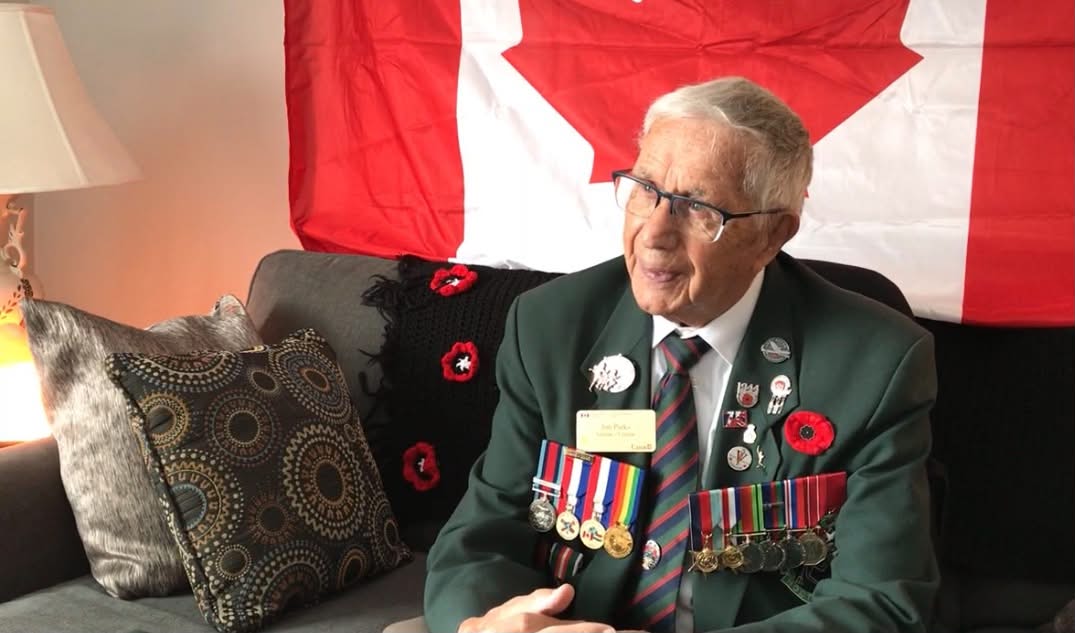 Veteran Jim Parks speaks about his experiences during World War II in September 2024. He is now 101 years old. (Courtesy of Zach Dunn)
Parks initially served with the Queen’s Own Cameron Highlanders of Canada before transferring to the Winnipeg Rifles—nicknamed “The Little Black Devils”—in June 1941. He was then sent to England, where he guarded the coast and trained for nearly three years with other soldiers preparing to invade Europe.
Parks recalled that the army expected a casualty rate of 30 percent when soldiers eventually stormed a beach under enemy fire.
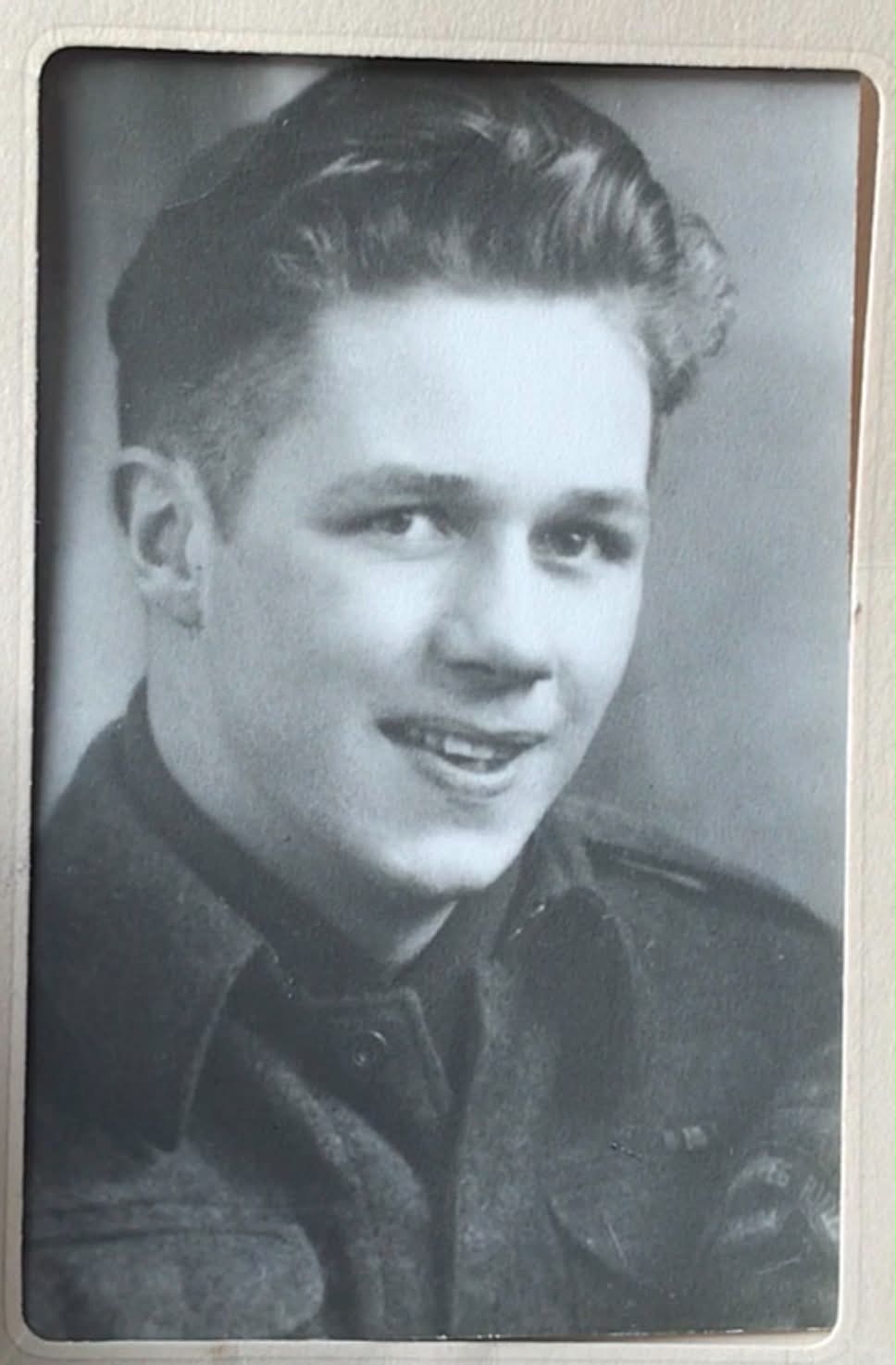 Veteran Jim Parks joined the Canadian Army as a teenager in September 1940. (Courtesy of Zach Dunn)
The Winnipeg Rifles landed on Juno Beach in Normandy, France, on June 6, 1944, known as D-Day. Parks served in a mortar unit that went in before the infantry to provide cover with smoke bombs.
He recalled that the landing was noisy, especially with bullets striking the landing craft. The situation deteriorated when their transport hit an underwater mine, forcing the mortar carriers to drive off the ramp into the water, where they sank. The soldiers then had to swim through nine feet of water to reach the beach.
“It was pretty touch and go, when I think about it,” Parks said.
After the Canadians cleared Juno Beach, at a cost of 359 killed, Parks and others moved the bodies so Allied tanks would not drive over them. They then advanced inland and fought German units, including the fanatical 12th Hitler Youth Division.
“They always put their best troops against the Canadians … [because] Canadians had a reputation,” Parks said, noting that the soldiers “just kept going” regardless of the obstacles.
He recalled narrowly escaping capture during one battle and being buried in a foxhole after an artillery shell exploded nearby. A friend pulled him out by his helmet.
“The shell disoriented me,” the veteran said.
As the war neared its end in May 1945, Parks recalled being ordered to stop firing and remain hidden. After hostilities ceased, his unit began accepting German surrenders in the Netherlands.
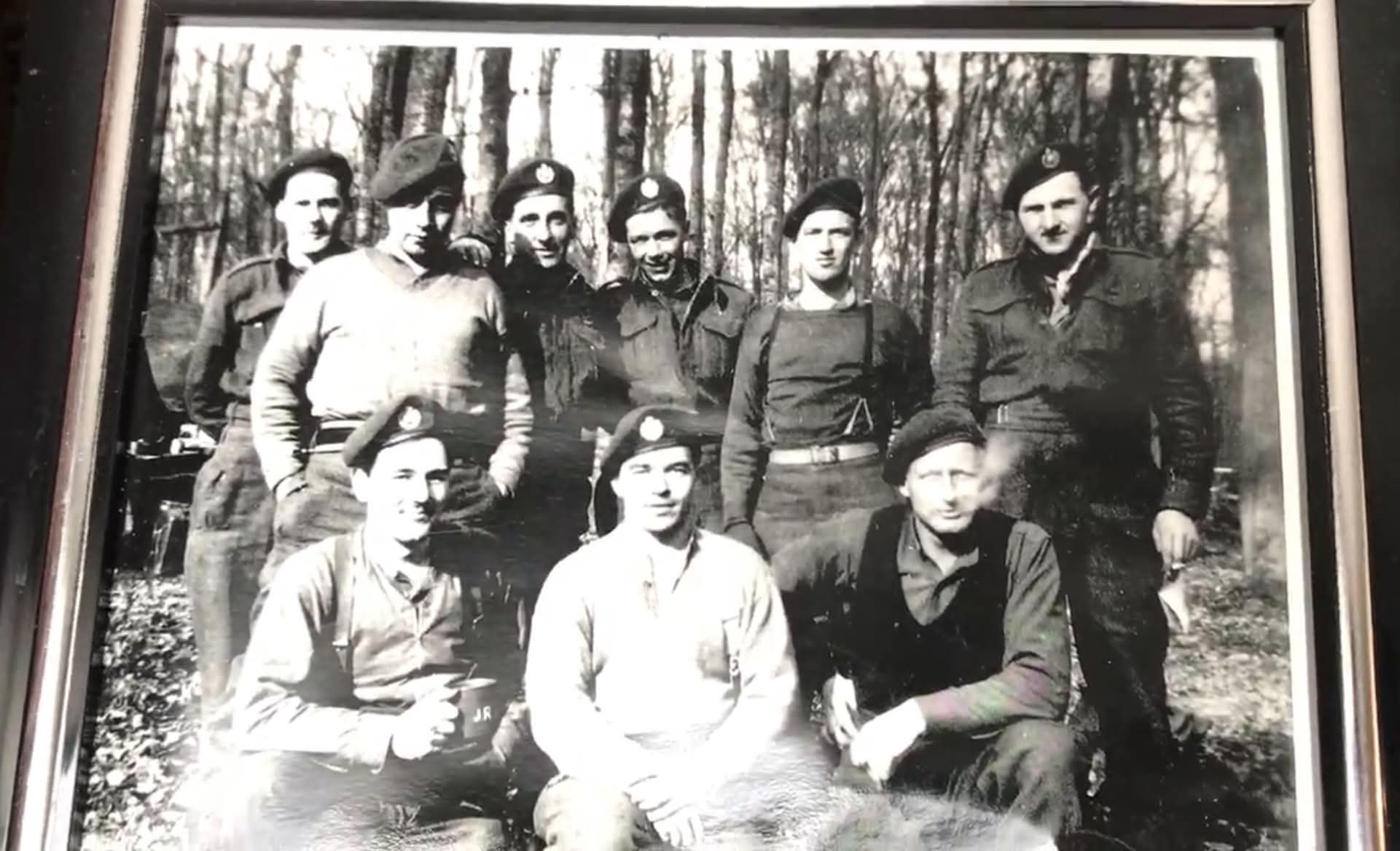 Jim Parks (C back) poses with other members of the Winnipeg Rifles in Germany’s Reichswald Forest in March 1945. (Courtesy of of Zach Dunn)
One German soldier who surrendered wore a large grey coat stuffed with cans and jars of food stolen from Dutch civilians. The Canadians confiscated the food before sending him to headquarters.
“Those memories stay with you,” Parks said, noting that maintaining a sense of humour helped preserve his sanity, especially after seeing many friends killed and buried in Europe.
After the war, Parks joined the Winnipeg Fire Department before moving to Ottawa to work for the Department of Finance. He said he and other veterans dealt with their battle stress by sharing combat stories over a beer at the pub.
Parks returned to France in 1994 for the 50th anniversary of D-Day, where he met a French nurse who had cared for Canadian soldiers wounded during the failed Dieppe Raid in August 1942. The soldiers had nicknamed her “The Angel of Rouen.”
He said today’s young people should learn more about Canada’s military history beyond what they are taught in school.
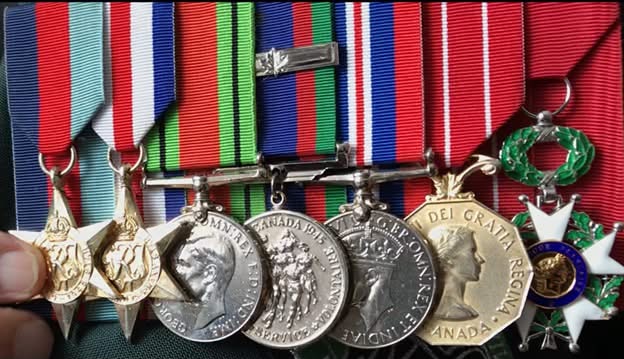 Some of the medals that veteran Jim Parks received after serving in World War II. (Courtesy of Zach Dunn)
Afghanistan Mission
Retired warrant officer Corey Nowell joined the military in 1998 at age 24, seeking a more meaningful career after working several jobs. He initially served in air defence artillery before becoming a drone operator during Canada’s mission in Afghanistan.
Nowell deployed to Kandahar in 2008–09, where his unit operated surveillance drones to gather intelligence and support Canadian and allied troops on the ground. He said the mission was about protecting fellow soldiers, not seeking recognition or glory.
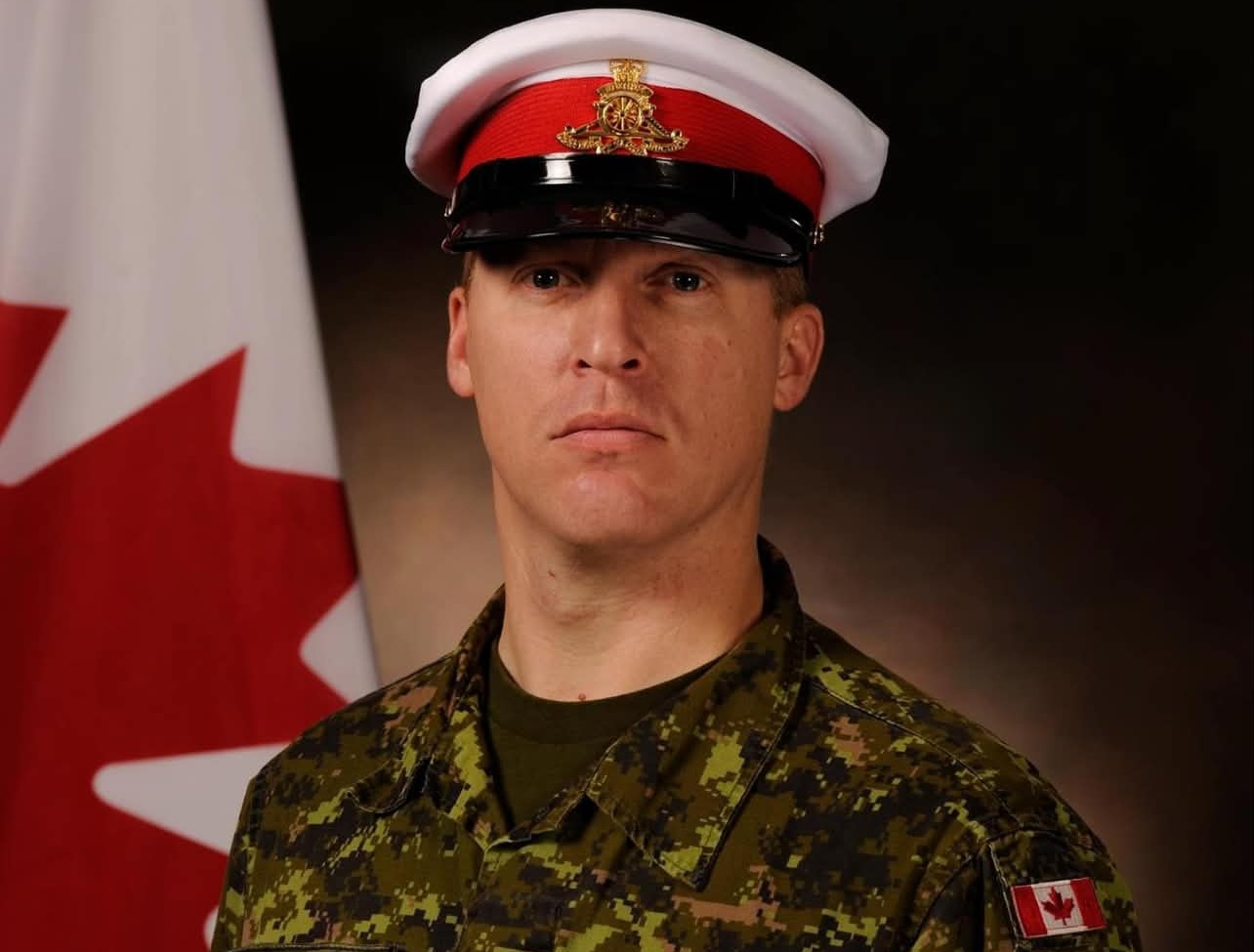 Cory Nowell served in the Canadian Armed Forces from June 1998 to September 2020. (Courtesy of Cory Nowell/CAF)
Nowell told The Epoch Times that adjusting to civilian life after deployment was difficult because everyday activities seemed less meaningful than the work he had performed overseas.
“It took me … quite a difficult time when I first got back because everything seemed irrelevant,” he said.
Nowell retired in 2020 after 22 years of service. He said veterans can maintain a sense of purpose by staying active, supporting family members, and checking in regularly with former comrades. He also expressed concern about whether today’s military has enough experienced leaders to prepare younger personnel for combat, although he welcomed investments in air defence capabilities.
Nowell said he attends Remembrance Day ceremonies annually and thinks about fellow service members who have died, including those he lost after returning to Canada. He encourages Canadians to acknowledge veterans’ contributions, particularly in communities without a significant military presence.
“A simple thank you goes a long way,” he said.
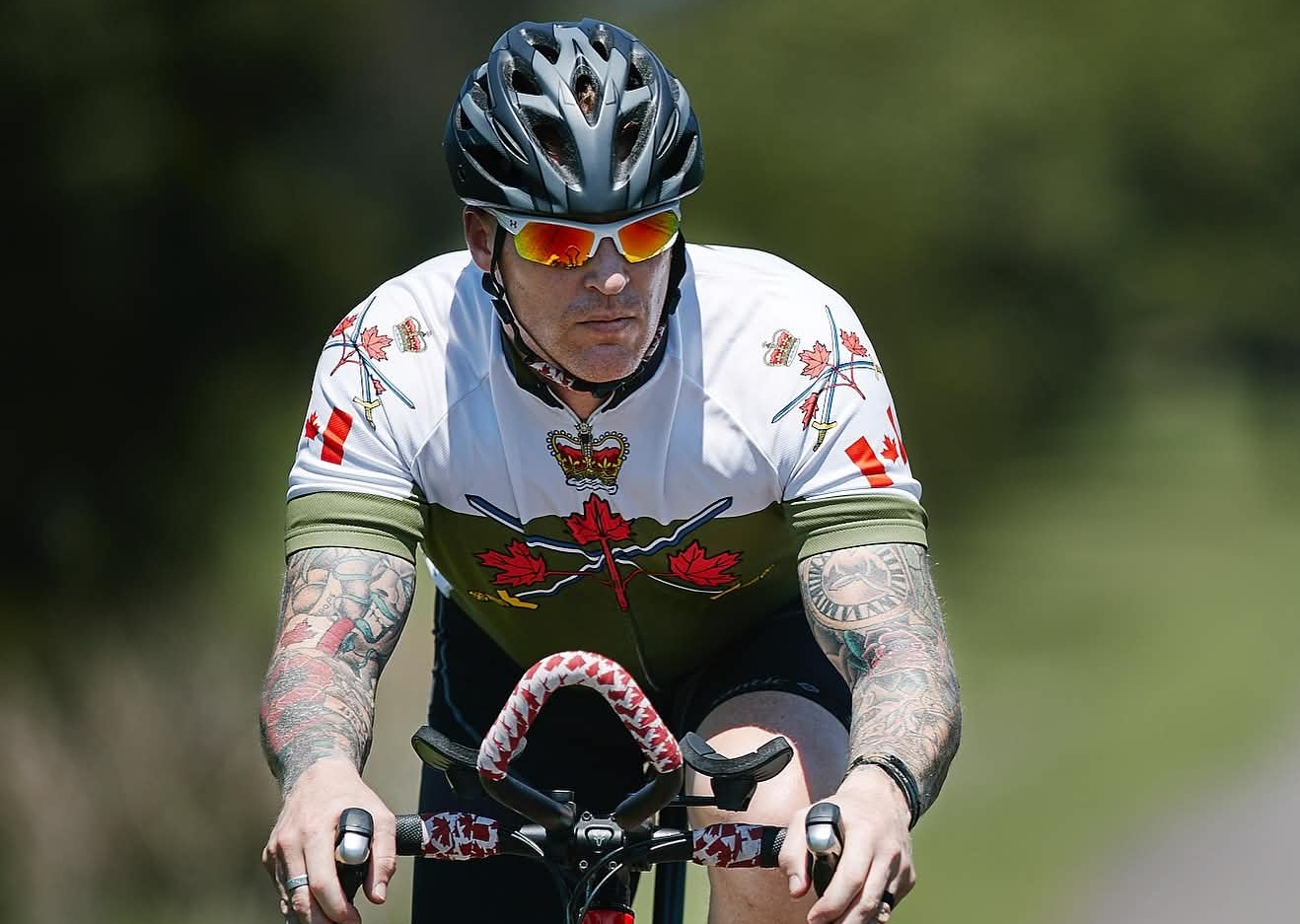 Veteran Cory Nowell competes in the 2018 Invictus Games in Sydney, Australia, held Oct. 20–27, 2018. (Courtesy of Cory Nowell/Invictus Games)
Nowell has also been involved with the Invictus Games, an international sporting competition for wounded, injured, and sick military personnel and veterans that promotes recovery through sport.
Vietnam War
The Vietnam War had been raging for several years when 20-year-old Rob Purvis and three friends crossed the Canada-U.S. border in 1969 and enlisted in the American army.
Purvis, now 79, told The Epoch Times that they joined because their parents were World War II veterans and their families regularly watched television news reports showing fighting in Southeast Asia.
“We were just young and adventurous,” he said.
Purvis became an airborne ranger with the 75th Infantry Rangers’ K Company in the 4th Infantry Division. He trained in the United States and Panama before requesting deployment to Vietnam after learning that a friend had been killed there.
“I was pretty shocked [by the friend’s death]. I guess I came to the realization that this is not going to be fun,” he said.
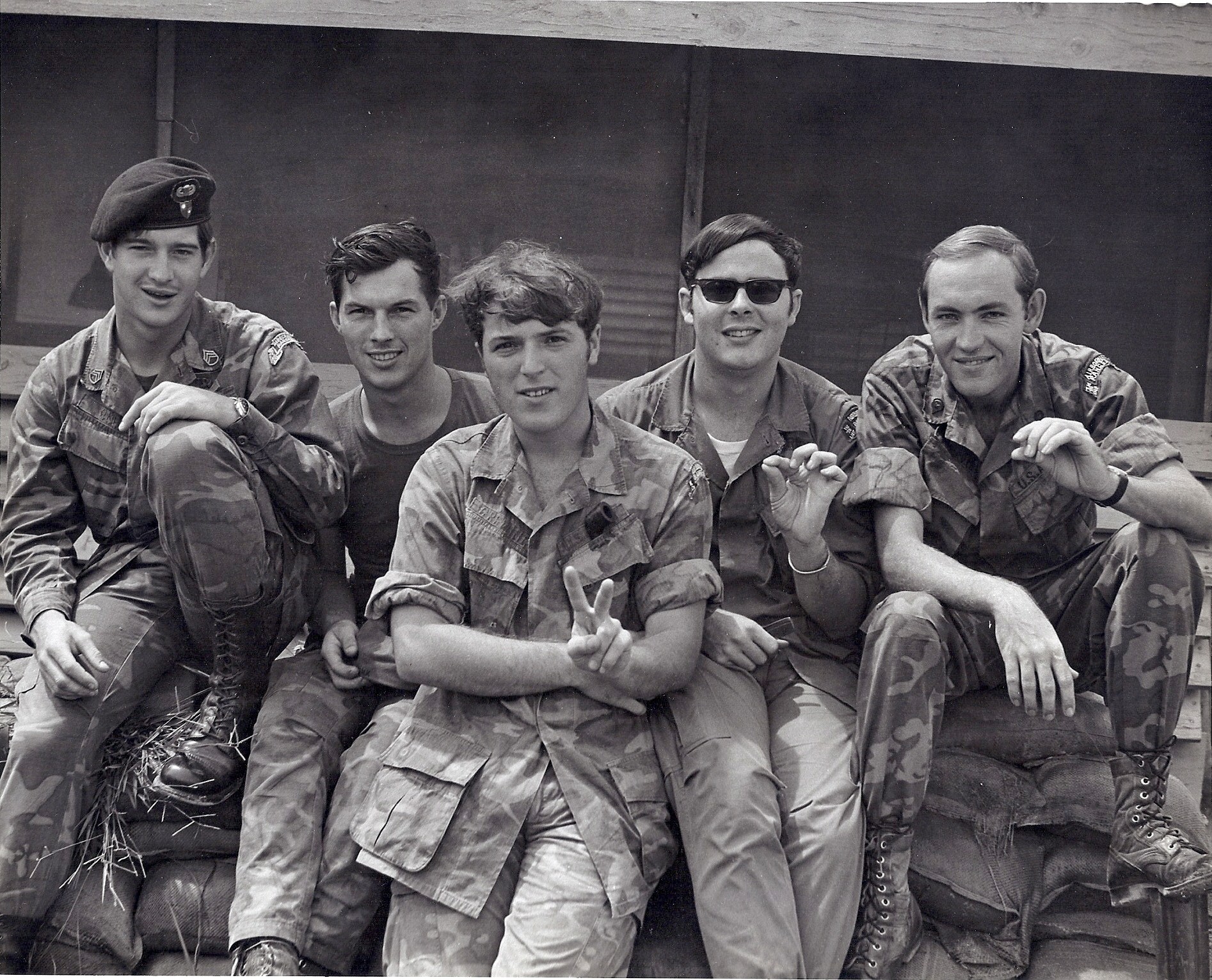 Rob Purvis (far R) poses with other soldiers of the 75th Infantry Rangers’ K Company, 4th Infantry Division, in Vietnam in 1969. (Courtesy of Rob Purvis)
The Canadian Vietnam Veterans Association estimates that about 20,000 Canadians enlisted in the U.S. military during the conflict, with 134 killed in action. Other historians have suggested that as many as 40,000 Canadians served.
Purvis said it’s difficult to describe his experiences in Vietnam, although he and his comrades “learned pretty quick to stay alive.” He served on a four-man long-range reconnaissance patrol that conducted five-day missions in the central highlands. The soldiers usually had to remain hidden and “very, very quiet” to avoid detection, fleeing quickly whenever enemy forces discovered their position.
Purvis estimated their chances of survival at “50/50.”
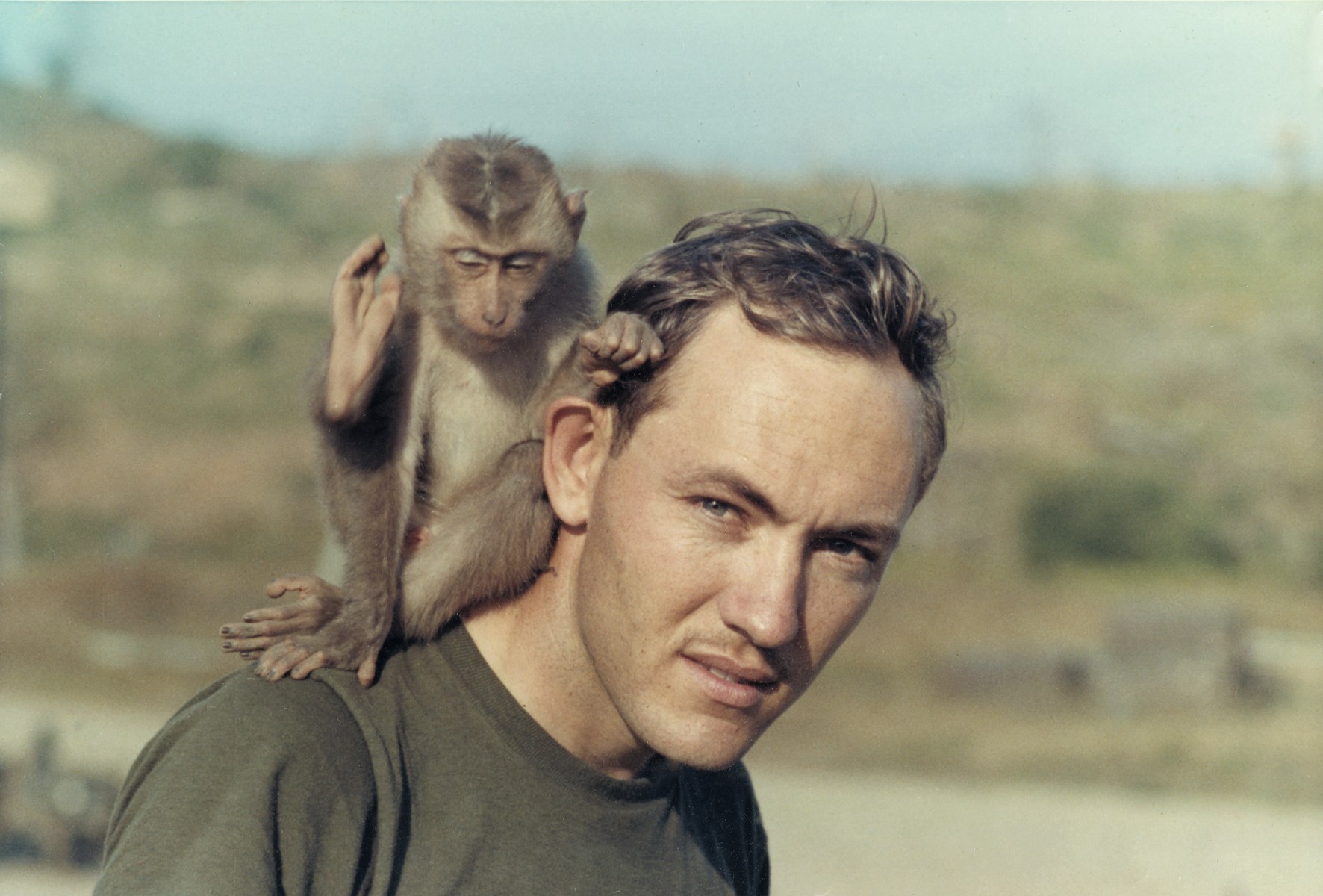 Rob Purvis hangs out with a monkey in Vietnam, during his tour with the U.S. Army in 1969–70. (Courtesy of Rob Purvis)
During one of his final missions, his unit was stationed on a mountain and communicating by radio with another team in a valley. Enemy forces detected their transmissions and began searching for them.
“The weather closed in and we couldn’t get out [by air]. The only support we had was artillery. So we ended up calling artillery on top of our own position,” he said, noting that the explosions showered the soldiers with branches and mud but forced the enemy to retreat.
“That drove that enemy off, so we survived.”
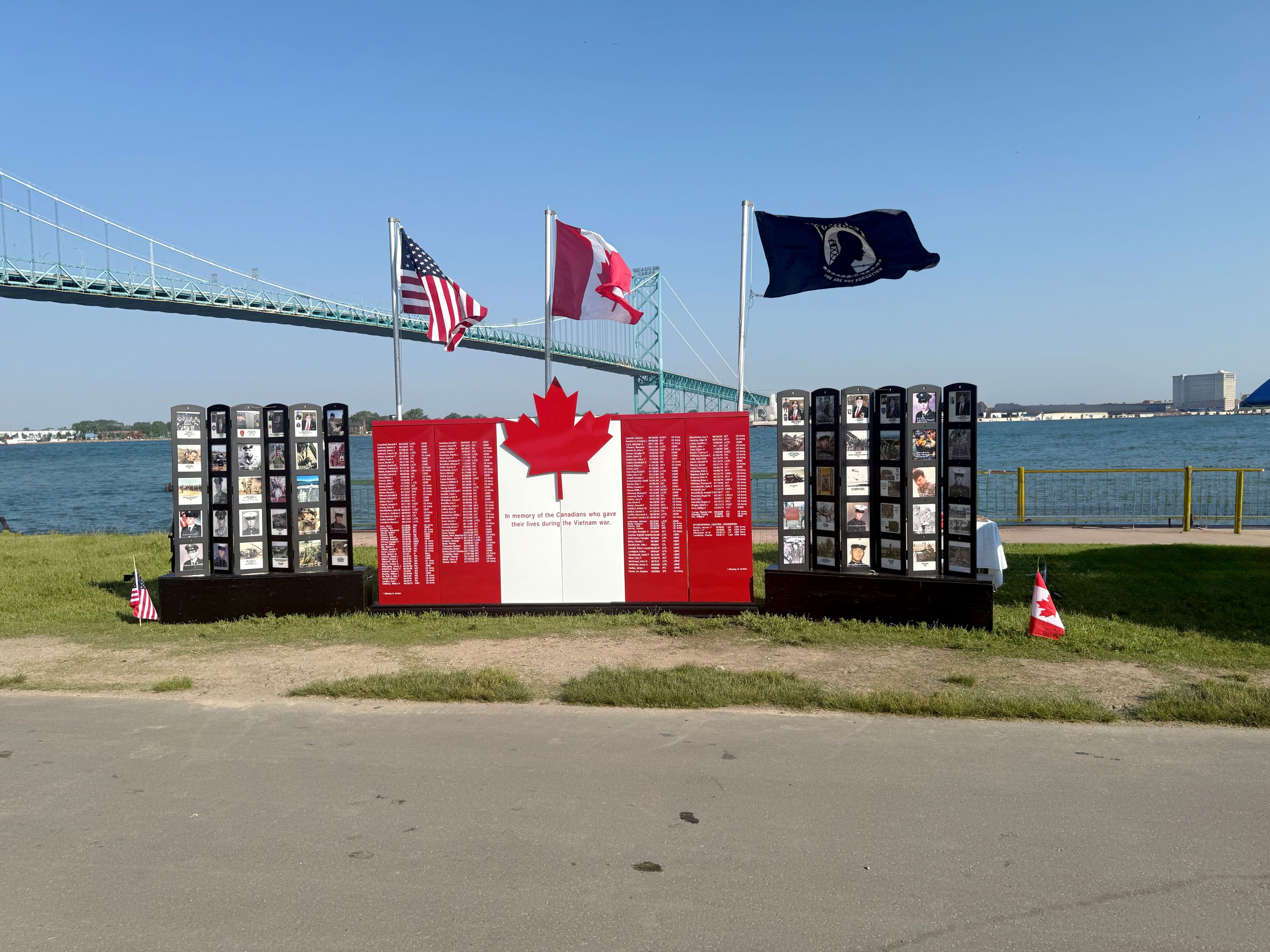 The Canadian Vietnam Veterans Association created this travelling memorial to honour the Canadians who died fighting with the U.S. military in Vietnam. The association set it up in Windsor in July 2026 to celebrate the monument’s 30th anniversary. (Courtesy of Rob Purvis)
Purvis completed his tour in 1970 and returned to Winnipeg within 48 hours of being discharged. He used financial assistance from the U.S. GI Bill to attend the University of Manitoba, which helped him adjust to civilian life and deal with his battle stress. He later worked in construction, spending the final 25 years of his career as an independent contractor.
Purvis said he avoided discussing his wartime experiences for several years. However, after learning that other Canadians had also served in Vietnam, he helped establish the Canadian Vietnam Veterans Association, which holds regular reunions.
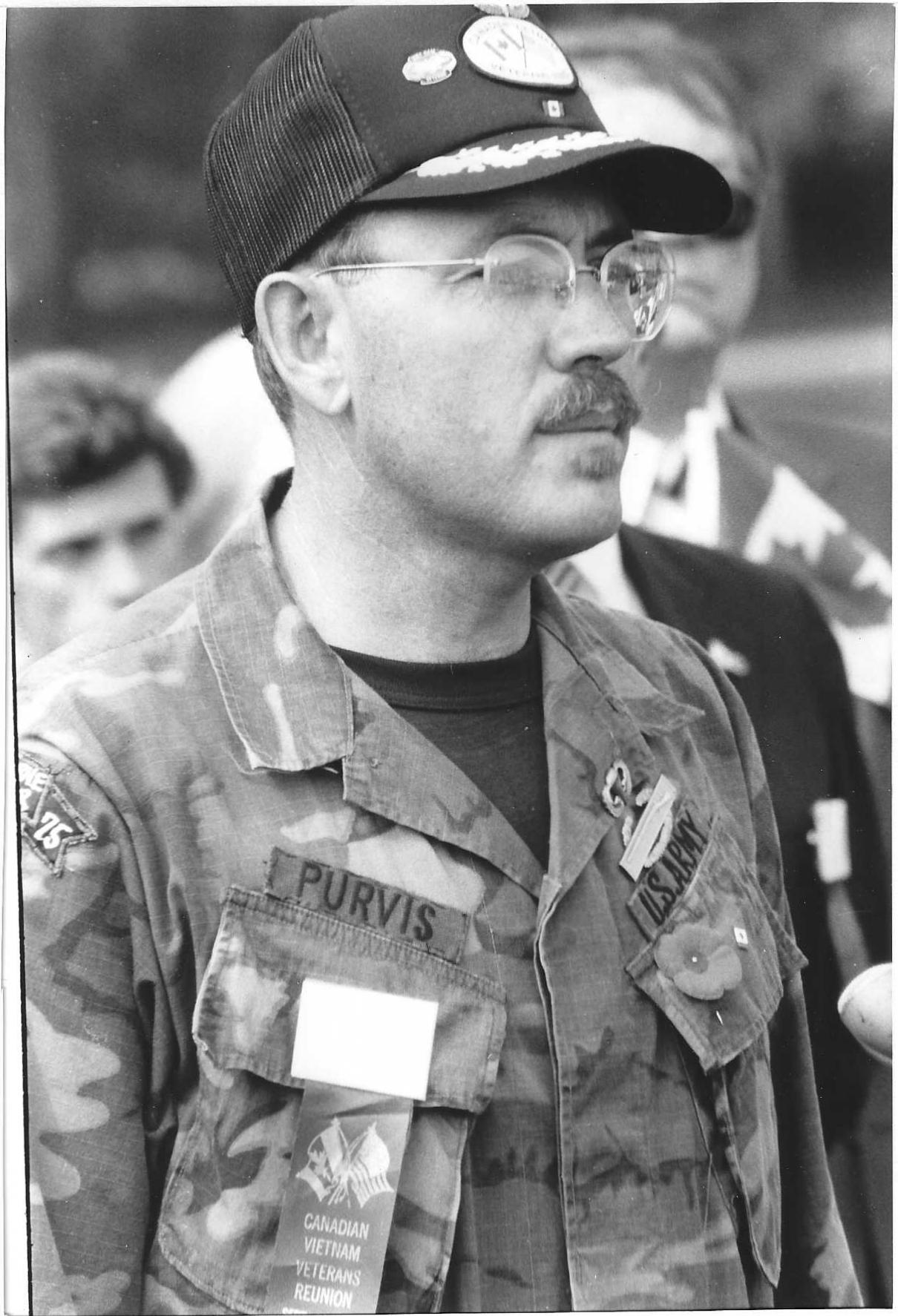 Veteran Rob Purvis attends the Canadian Vietnam Veterans’ reunion in Washington, D.C., in 1986. (Courtesy of Rob Purvis)
Purvis said he remains in contact with former comrades, although many have passed away.
He returned to Vietnam in 1992 with his wife and son and spent a month touring the country. He recalled that the jungle had reclaimed much of the landscape where soldiers had fought decades earlier.
Purvis added that he enjoys sharing his story because he wants future generations to understand what soldiers experienced during the conflict.
The Epoch Times thanks Canadian documentarian Zach Dunn and U.S.-based Veterans Breakfast Club for the interview information about Jim Parks. Paul Rowan Brian contributed to this article.
 Friends Read Free
Copy
Facebook
Tweet