
Sponsored Content by PurelyWHITE. This article includes affiliate links, which may earn us a commission, to support truthful and independent journalism (at no extra cost to you).
Coffee, tea, red wine, tobacco, and aging can leave teeth looking darker or more yellow over time. Whitening can help, but for some people the trade-off is sensitivity, gum irritation, messy trays, or a routine that becomes difficult to keep up with.
PurelyWHITE Purple Whitening Strips take a different approach. Instead of relying on hydrogen peroxide, the strips combine a purple color-correcting pigment with PAP+, short for phthalimidoperoxycaproic acid, a peroxide-free whitening ingredient. The brand says the strips are designed to provide an immediate cosmetic brightening effect from the purple pigment while PAP+ works on stains with repeated use.
The two effects are not the same. One is mainly visual. The other is a whitening process.
Understanding that difference makes it easier to decide whether this type of at-home whitening fits what you actually want.
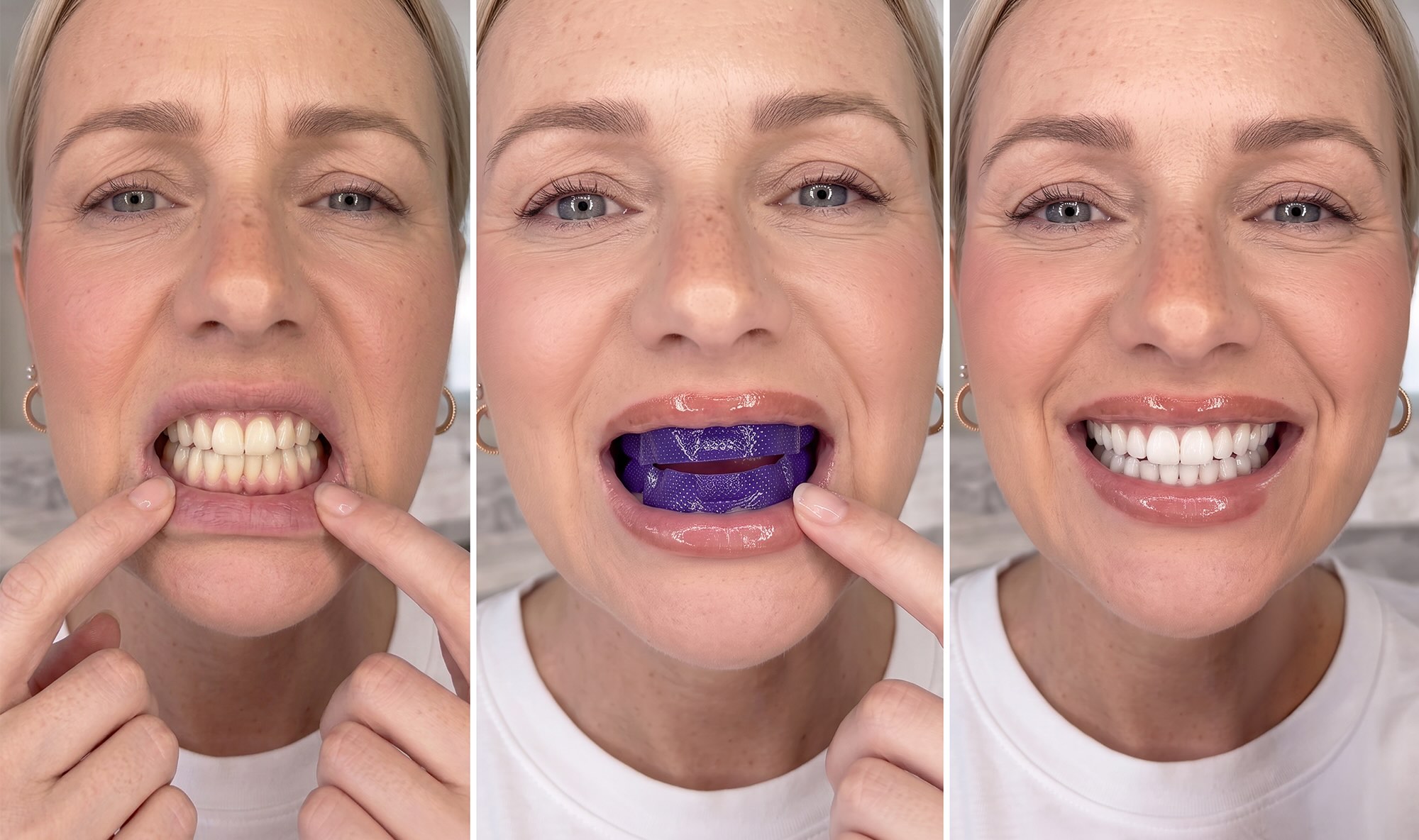 PurelyWHITE Purple Whitening Strips combine a violet color-correcting pigment with a peroxide-free PAP+ whitening formula. Individual results vary. Source: PurelyWHITE
Why Teeth Begin to Look Yellow
Tooth discoloration can come from several sources.
Surface stains can build up from coffee, tea, red wine, tobacco, and highly pigmented foods. Teeth can also darken or become more yellow with age, and some discoloration comes from changes within the tooth rather than surface staining alone.
That distinction matters because not every whitening product works equally well on every type of discoloration.
Whitening also affects natural teeth differently from crowns, veneers, fillings, and other tooth-colored restorations. Those materials generally don’t lighten the same way natural enamel does.
If one tooth has suddenly changed color, the discoloration is very uneven, or you have significant dental work in the visible area, talk with a dentist before starting a whitening routine.
What Makes the Strips Purple?
The purple part of the formula is based on color correction.
Purple sits opposite yellow on the color wheel. When you place a violet pigment over a yellow-toned surface, it can make that surface appear less yellow to the eye.
That immediate effect is mostly visual, not a permanent change in tooth color.
The more meaningful question is what happens after repeated use, which is where PAP+ comes in.
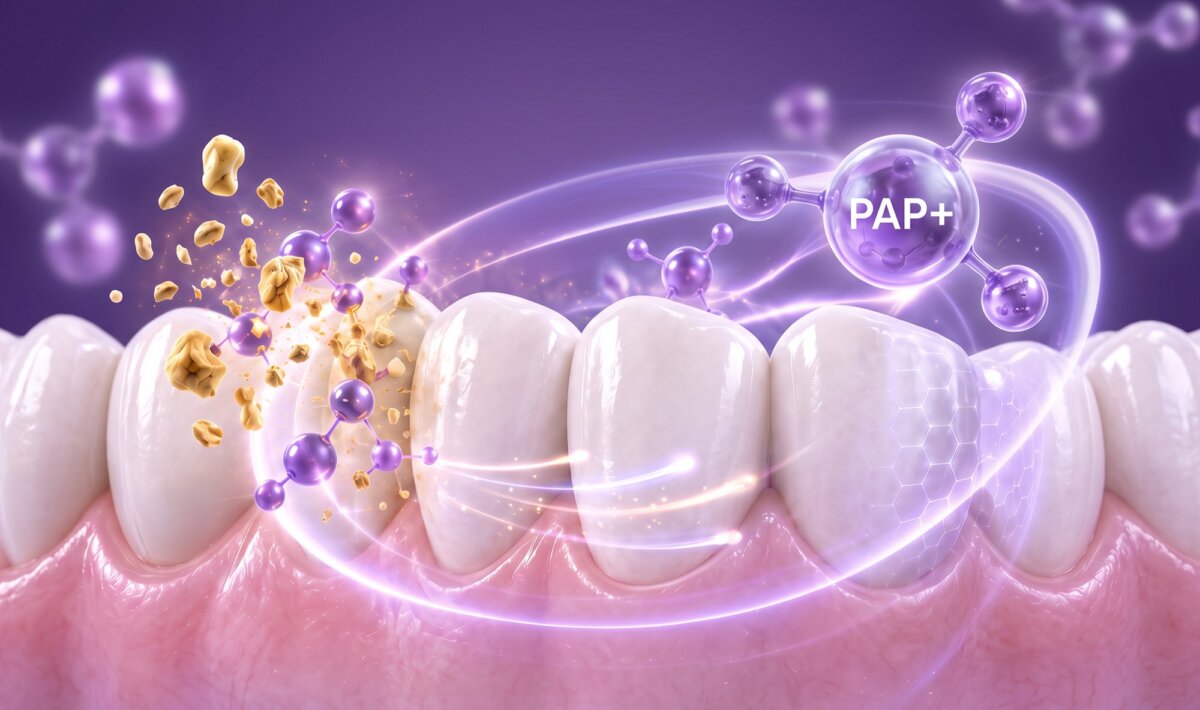
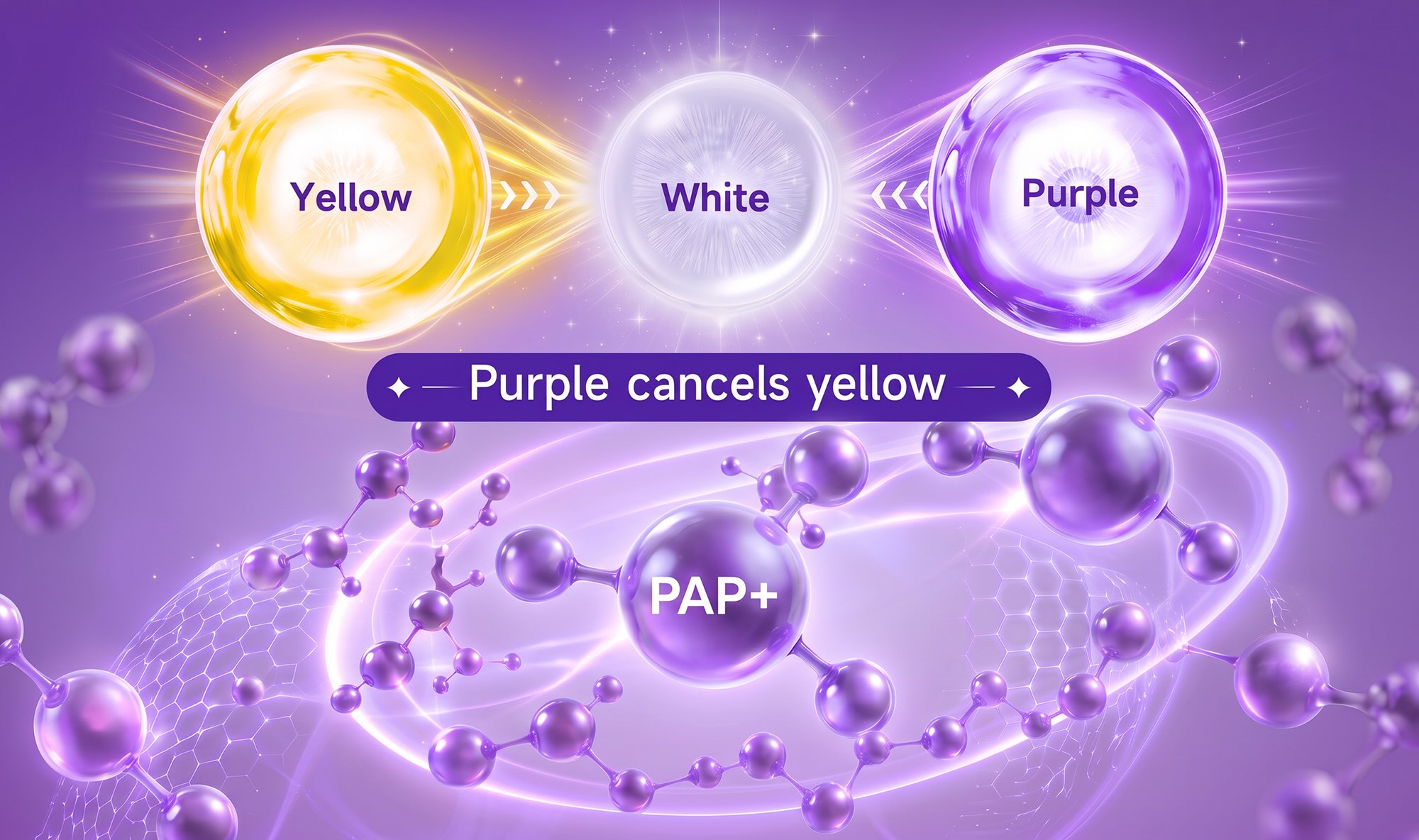 Purple pigment can visually counteract yellow tones. That immediate color-correcting effect differs from PAP+’s longer-term whitening action. Graphic courtesy of PurelyWHITE
What Is PAP+?
PAP is a peroxide-free whitening ingredient used as an alternative to hydrogen peroxide and carbamide peroxide.
PurelyWHITE says PAP+ is the part of the formula intended to work on stains over repeated use, while the purple pigment provides the more immediate cosmetic effect.
Research on PAP-based whitening is still developing. Some studies suggest PAP can produce measurable whitening while causing less sensitivity or less change to enamel surfaces than some peroxide-based systems under controlled conditions.
That does not mean every PAP product performs the same way, and it does not guarantee that every user will get the same result.
The practical takeaway is that PAP+ gives people who want a peroxide-free option another route to at-home whitening, but expectations should stay realistic.
How the Strips Are Used
Each PurelyWHITE box contains 28 strips: 14 for the upper teeth and 14 for the lower teeth. That provides a 14-day course.
The routine is simple:
-
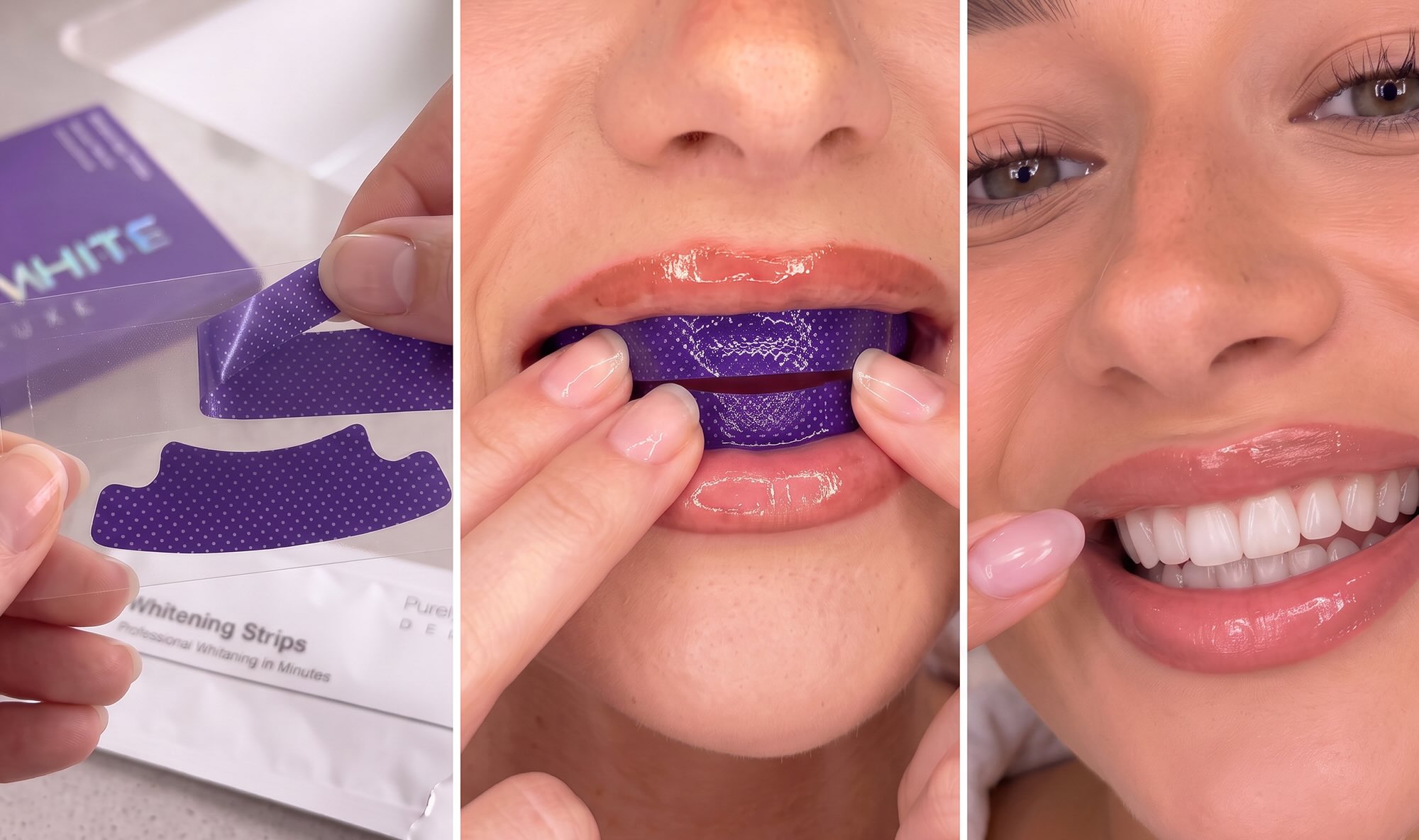
Remove the strips from the backing.
-
Apply them to the upper and lower teeth.
-
Press them into place.
-
Leave them on for about 30 minutes.
-
Remove the strips and follow the package directions for any cleanup.
For people who don’t want to prepare trays, measure gels, or charge a whitening device, the strip format is fairly straightforward.
What About Sensitivity?
Sensitivity is a main reason people look for alternatives to traditional whitening products.
PurelyWHITE markets its purple strips as peroxide-free and designed with sensitive teeth in mind.
That may appeal to people who have stopped using peroxide products because of sharp “zings” or gum discomfort. Still, peroxide-free does not mean irritation is impossible.
No whitening product can guarantee zero sensitivity for every user. If you already have exposed roots, cavities, cracked teeth, gum disease, or a history of significant sensitivity, it makes sense to talk with a dentist before whitening.
Who Might Prefer a Peroxide-Free Strip?
PurelyWHITE’s strips may make the most sense for someone who:
-
Wants an at-home strip rather than a tray or light-based kit;
-
Prefers a peroxide-free whitening formula;
-
Is especially concerned about sensitivity;
-
Wants a routine that takes about 30 minutes a day;
-
Mainly wants to improve yellow or dull-looking teeth;
-
Understands that the purple effect and the longer-term whitening effect are different.
They may be less useful if you expect crowns or veneers to whiten along with natural teeth, want the strongest possible whitening effect, or have discoloration that a dentist should evaluate first.
How Much Should You Expect From the Purple Effect?
The purple pigment can make teeth appear brighter quickly by changing how yellow tones are perceived. That does not necessarily mean the tooth itself has become dramatically whiter after one use.
A useful way to think about the two-part approach is this:
Purple pigment = immediate color correction
PAP+ = intended longer-term whitening with repeated use
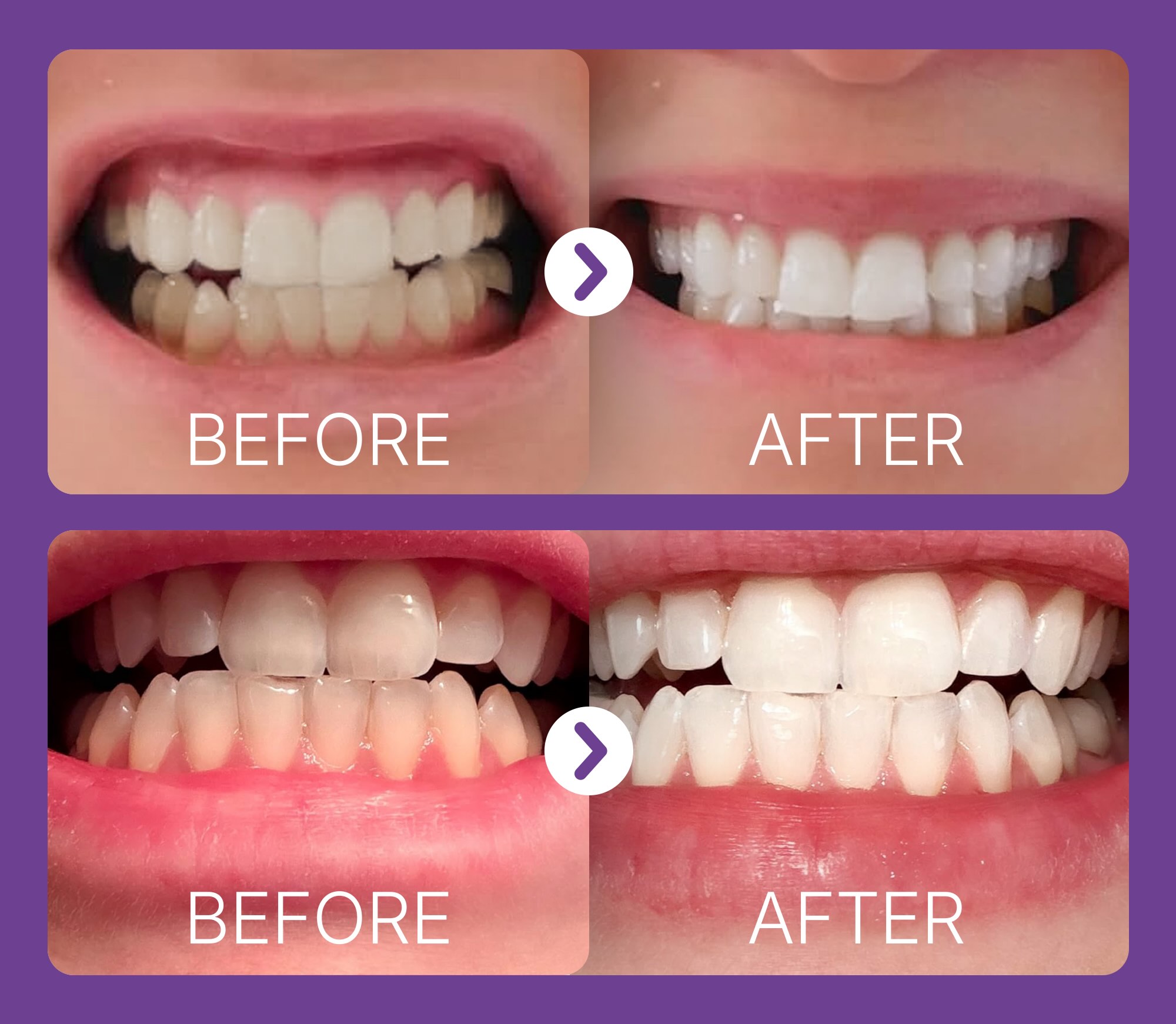
That distinction matters when looking at dramatic before-and-after photos online.
Lighting, camera exposure, lip color, image processing, tooth-surface hydration, and timing can all influence how white teeth appear in a photograph.
What the Evidence Does and Does Not Show
PAP is a real whitening ingredient, not simply a color-correction gimmick.
The available research suggests PAP-based formulas can whiten teeth under controlled conditions. At the same time, the evidence base is smaller than it is for hydrogen peroxide and carbamide peroxide, which have been used in whitening products for much longer.
That means readers should separate two questions:
-
Is there evidence that PAP can whiten teeth?
-
Has this specific retail product been independently tested and shown to produce a particular result?
Those are not necessarily the same thing.
For that reason, broad phrases such as “clinically proven” or “professional-grade” should be supported by specific evidence about the finished product if they are used.
How the Cost Compares With Professional Whitening
Professional whitening prices vary widely depending on the dentist, the whitening system, the geographic area, and whether the treatment is done in the office or with dentist-supervised take-home trays.
A simpler comparison: at-home strips are generally less expensive than professional whitening, while professional treatment offers direct dental supervision and may provide more customized care.
Cost alone should not be the deciding factor if someone has underlying dental problems or needs a more predictable whitening result.
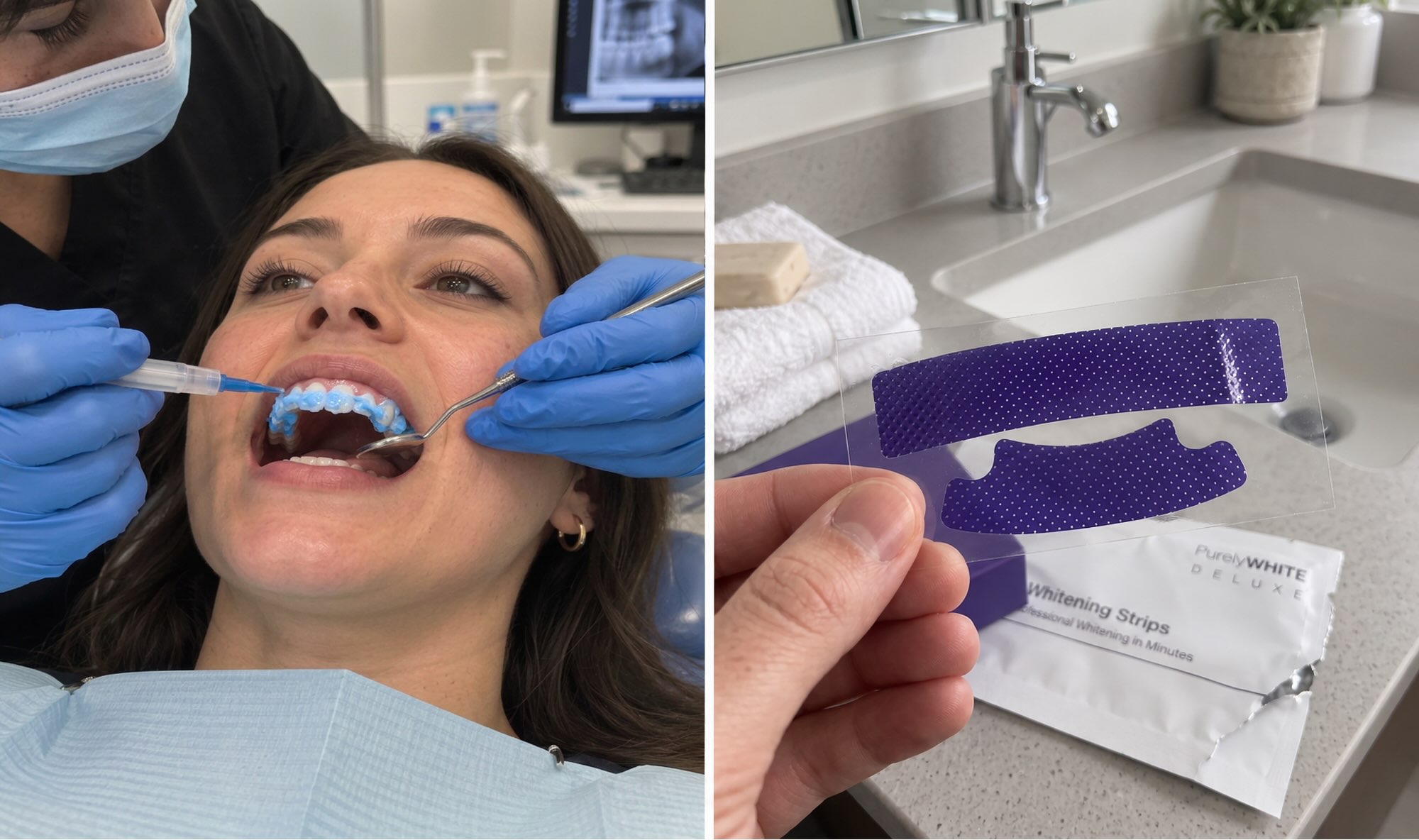
Before buying any whitening strips, it helps to look at a few practical things.
The active whitening ingredient
PurelyWHITE uses PAP+ rather than hydrogen peroxide.
That may appeal to people looking for a peroxide-free option, but it also means the evidence base is different from traditional peroxide strips.
The time commitment
The current PurelyWHITE routine is designed for about 30 minutes a day over 14 applications.
That is relatively simple, but it still requires consistency. If you know you are unlikely to stick with a two-week routine, the product may not be a good value.
Your dental work
Crowns, veneers, fillings, and other restorations generally do not whiten like natural teeth.
If your visible teeth include a mix of natural enamel and restorations, whitening can sometimes make the color difference more noticeable.
Your sensitivity history
Peroxide-free does not mean sensitivity-free.
Anyone with significant tooth sensitivity or gum problems should proceed with caution.
The current price and return policy
PurelyWHITE sells the strips directly through its site with a 30-day money-back guarantee. The promotional pricing can change.
Check the current product page for the live price, shipping terms, and return policy for the most up-to-date information.
What About the Customer Numbers and Ratings?
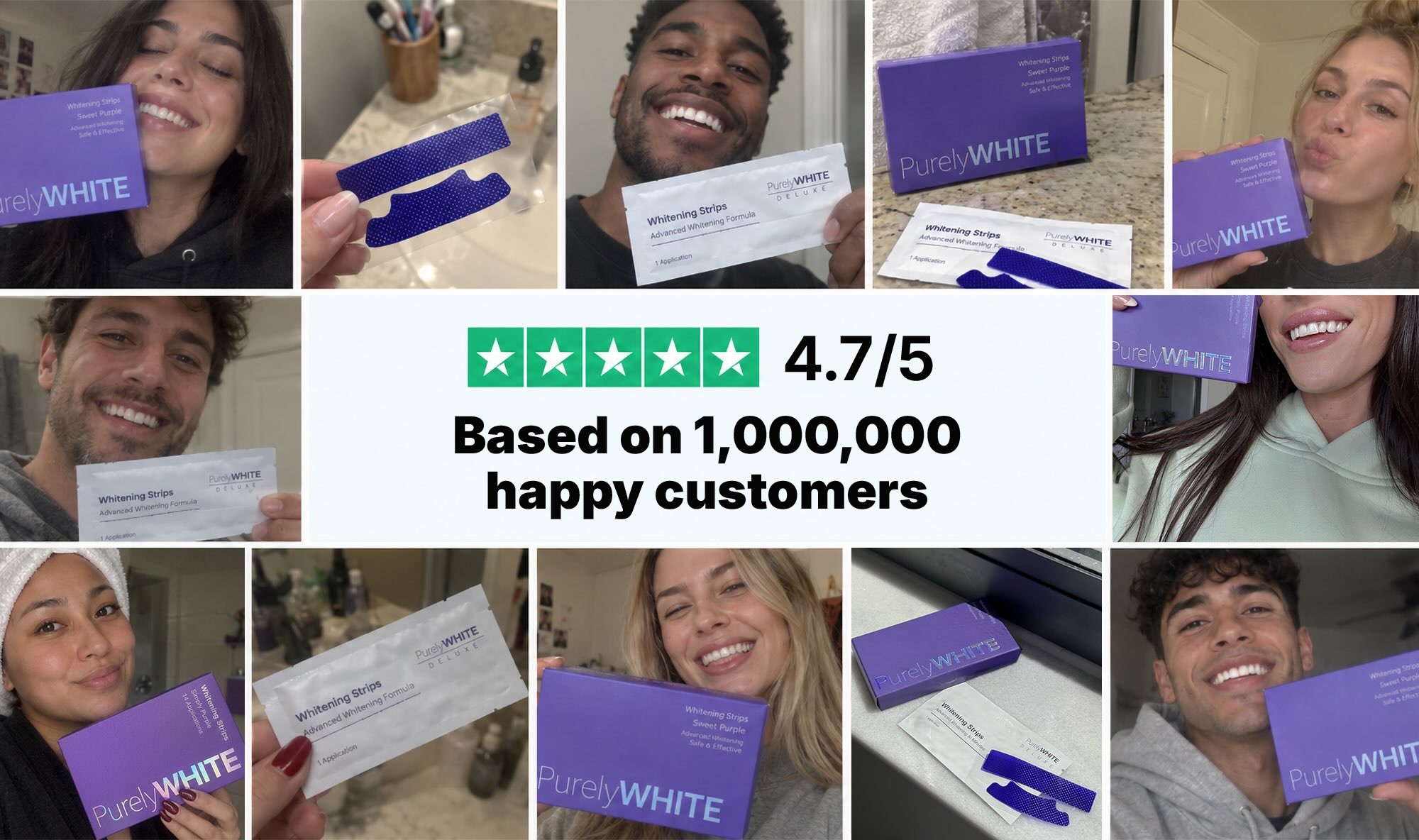
PurelyWHITE states that more than 1 million customers have purchased its products and promotes a 4.7 out of 5 rating along with thousands of five-star reviews.
Those are company-reported figures and should be viewed as customer-feedback claims rather than independent measures of whitening effectiveness.
These statements may tell you that many people have tried the product, but they do not establish how much whitening any individual user should expect.
The Bottom Line
PurelyWHITE Purple Whitening Strips offer an alternative to traditional peroxide whitening. The purple pigment can make yellow tones look less noticeable right away, while PAP+ is intended to provide a more lasting whitening effect with repeated use.
For someone who has struggled with peroxide sensitivity or wants a simple at-home strip routine, that may make the product worth considering.
Purple color correction can provide a quick cosmetic effect, PAP+ may gradually improve tooth color, and results vary by staining type, natural tooth color, existing dental work, and individual response.
If whitening has caused significant pain in the past, or if the discoloration is unusual, uneven, or limited to one tooth, start with a dentist.
 Friends Read Free
Copy
Facebook
Tweet