


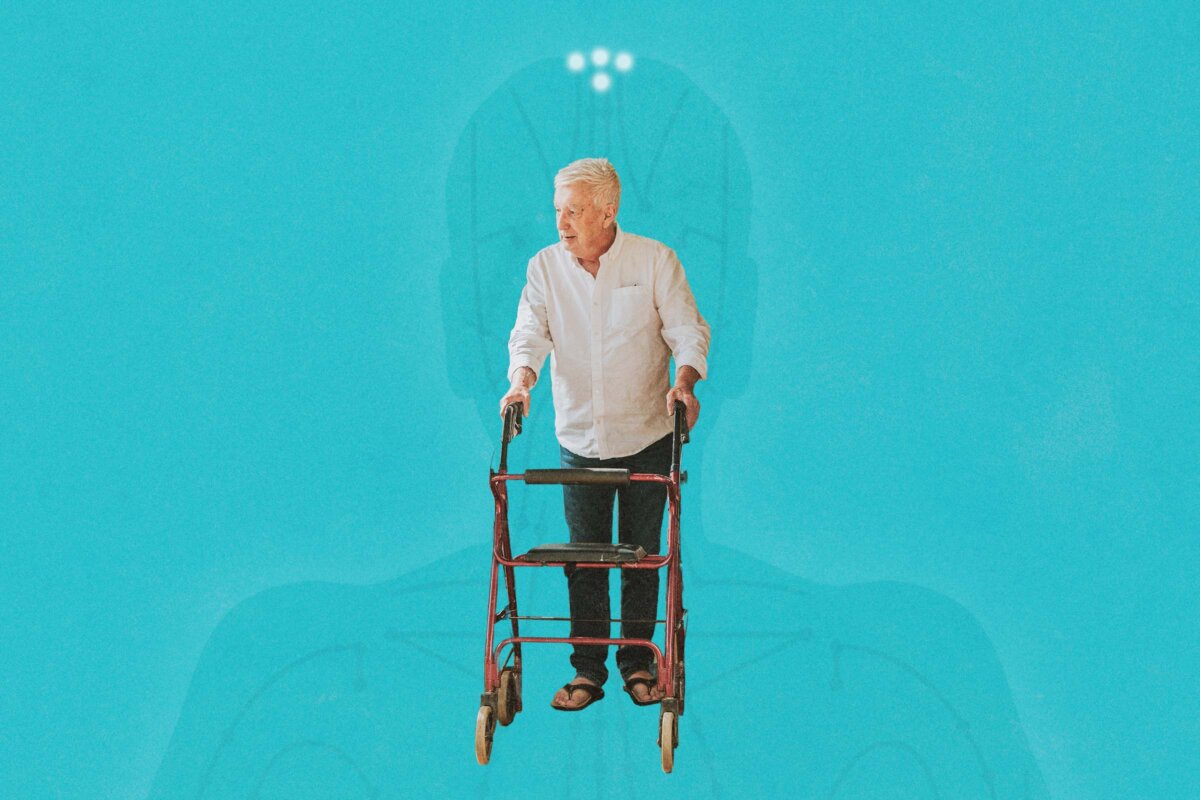
One afternoon, a 65-year-old retired civil servant did not wake up from his nap. When his wife checked on him, she found that he had lost control of his bladder and bowels. He was rushed to the hospital and diagnosed with an ischemic stroke.
After a month in the hospital, he could walk with a quad cane and was discharged.
However, the previously sociable man developed aphasia (a language disorder), which significantly affected his ability to communicate. His speech became slurred, and he could no longer understand what others were saying or read written text. As a result, he had to stop volunteering.
After about four months of speech and language rehabilitation, he could finally hold simple conversations and spend time with friends.
Chun-Ping Wang, director of Runsheng Rehabilitation Clinic in Taiwan, shared the case with The Epoch Times.
The first three to six months after an ischemic stroke are a critical window for rehabilitation, Wang said. During this period, the brain exhibits increased neuroplasticity, allowing neural pathways to reorganize more efficiently and supporting a more favorable recovery process.
The effects of an ischemic stroke vary depending on the region of the brain affected, so rehabilitation must be tailored to each person.
4 Common Challenges After an Ischemic Stroke
Four of the most common aftereffects of an ischemic stroke and their corresponding rehabilitation strategies are:
1. Limb Weakness and Unsteady Walking
Dr. Pin-Yuan Chen, a professor and attending neurosurgeon at Chang Gung Memorial Hospital in Taiwan, told The Epoch Times that hemiplegia (paralysis on one side of the body) and movement impairment are among the most common complications of ischemic stroke.
When the areas of the brain responsible for movement are damaged, patients may experience weakness in the arm and leg on one side, muscle stiffness, and poor coordination. In the early stage of the stroke, some may be almost completely paralyzed.
Task-oriented training is commonly used to improve balance, postural control, walking speed, and endurance, Wang said.
Proprioceptive neuromuscular facilitation is a rehabilitation technique that uses movements such as squatting, reaching, and controlled breathing to help patients relearn how to control their limbs.
When combined with electrical stimulation, it can further promote muscle contraction and increase range of motion. It helps patients perform larger movements, thereby building confidence in rehabilitation.
2. Speech and Language Difficulties
When an ischemic stroke affects the brain’s language network, communication between the brain and the muscles involved in speech may be disrupted, potentially leading to aphasia, Chen said.
Melodic intonation therapy can be used to address language difficulties.
The therapy uses melody and rhythm to retrain speech and helps patients practice breath control, articulation, and speech rhythm, gradually improving their ability to communicate.
On “Health 1+1” on NTD, a sister outlet of The Epoch Times, Kuo-Pin Wu, director of XinYiTang Traditional Chinese Medicine (TCM) Clinic in Taiwan and a contributor to The Epoch Times, described a 48-year-old patient who had severely slurred speech after a stroke. The patient was deeply discouraged by his symptoms.
Wu instructed him to sing at least five songs every day, joking, “If you don’t sing five songs, don’t come back to see me.”
The patient began singing with his wife every day at home. Over time, he found that singing not only helped him relax but also gradually improved his speech and language abilities.
3. Choking and Swallowing Difficulties
If the nerves that control swallowing are damaged, patients may cough or choke while eating and drinking, increasing the risk of aspiration pneumonia (lung infection when food or liquid enters the lungs), Chen said. This issue should not be overlooked and requires prompt attention.
These patients may benefit from resistance exercises for the swallowing muscles, Wang said. By strengthening the tongue, jaw, and throat, these exercises may help improve swallowing function.
4. Depression and Cognitive Decline
Emotional changes are among the most easily overlooked complications of stroke, Chen said. These changes are not solely a psychological response to the loss of physical function. Damage to neural circuits in the brain can also impair emotional regulation.
Some patients may also experience memory loss, difficulty concentrating, and declines in judgment and executive function. In severe cases, these can progress to vascular dementia, a decline in thinking and memory caused by reduced blood flow to the brain.
A 2025 study found that after eight weeks of mindfulness-based training, people with minor stroke showed signs of improved cognitive performance, particularly in functions associated with the frontal lobe. Compared with the control group, participants showed greater improvement in processing speed, executive function, and global cognitive function.
The key factors influencing rehabilitation outcomes include starting rehabilitation during the critical recovery window, engaging in goal-directed and repetitive training, and the patient’s willingness to actively participate, Wang said.
Support and encouragement from family members can play an important role in helping patients stay motivated and adhere to their rehabilitation over the long term. After leaving the hospital, continuing regular rehabilitation, getting enough sleep, maintaining proper nutrition, and adjusting the rehabilitation plan as needed can all help support ongoing recovery.
TCM as a Complement to Stroke Rehabilitation
In addition to the rehabilitation methods described above, TCM may be used as an adjunctive therapy following an ischemic stroke.
Chou Tsung-han, chief physician of Ming Tang Clinics in Taiwan, told The Epoch Times that, from a TCM perspective, stroke is not viewed solely as a sudden event but as the result of long-term imbalances in the body.
TCM treatment is individualized and focuses on restoring balance in organ function and rebuilding physical strength, helping patients sustain the energy required for rehabilitation and everyday activities.
Acupuncture is often used in TCM to support blood flow to the brain, thereby aiding muscle responsiveness and neurological recovery.
Commonly used acupoints include:
Hundred Meetings (Bai Hui, GV20)
The Hundred Meetings acupoint is located on the midline at the top of the head, in a slight depression approximately at the level of the tips of the ears.
Four Mind Alertness (Si Shen Cong, EX-HN1)
Four Mind Alertness consists of four points located approximately one thumb-width in front of, behind, and on either side of the Hundred Meetings acupoint.
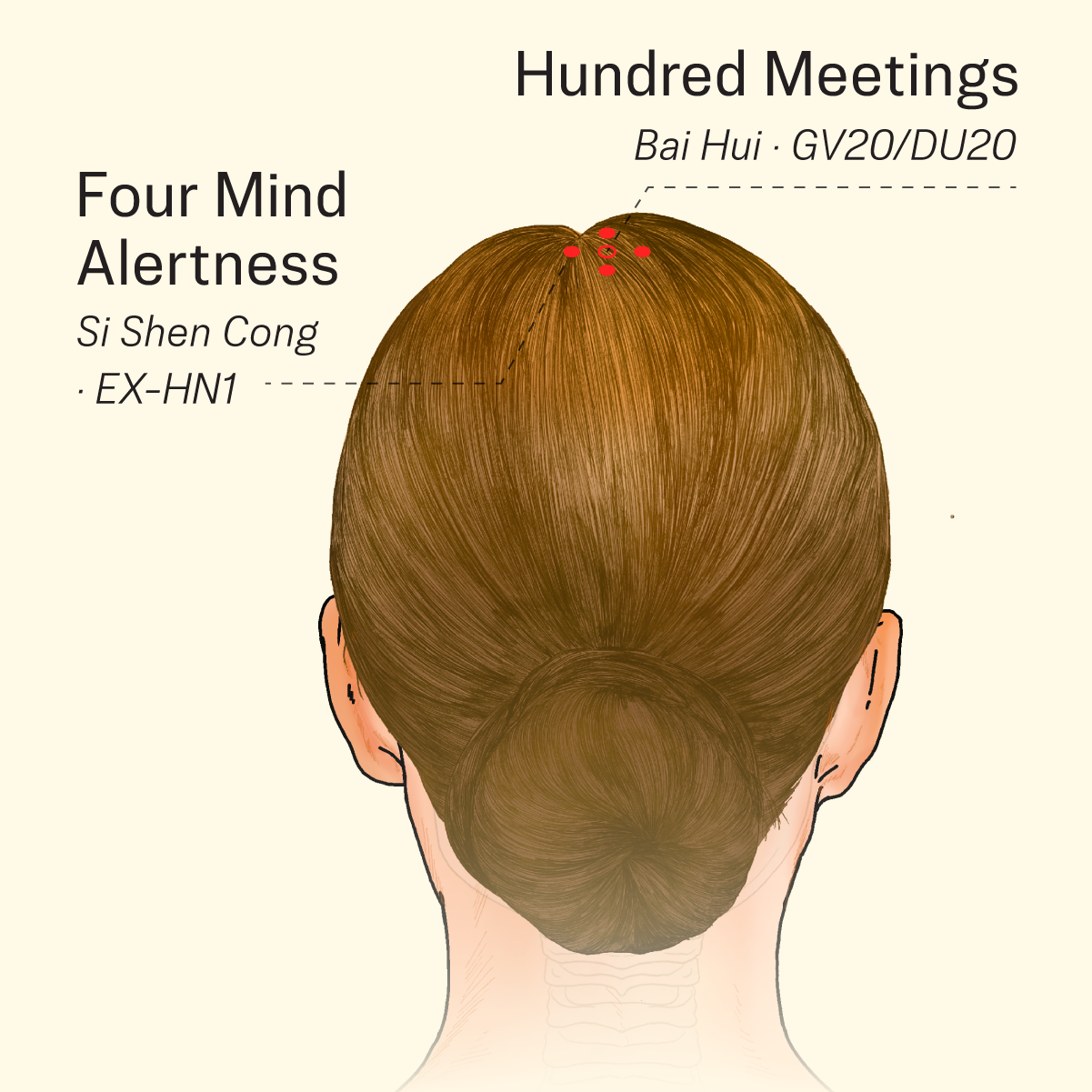 Location of the Hundred Meetings and Four Mind Alertness acupoints. (The Epoch Times)
Dietary Therapy for Stroke Recovery
Gastrodia rhizome is commonly used in TCM to address transient cerebral ischemia (mini stroke) and support stroke prevention, Chou said.
A 2022 review found that gastrodin, an active compound in gastrodia rhizome (a TCM herb), has anti-inflammatory, antioxidant, and neuroprotective properties. It may help reduce damage caused by cerebral ischemia and support neurological recovery.
Chou recommends the following dish as part of a daily diet during stroke recovery:
Chicken Soup With Gastrodia and King Oyster Mushrooms
This medicinal soup may be suitable during recovery after an ischemic stroke and as part of a regular diet to help support brain health.
Servings: 6
Soak Time: 2 hours
Prep and Cook Time: 1 1/2 hours
Total Time: 3 1/2 hours
Ingredients
-
10 grams gastrodia rhizome
-
50 grams dried black fungus
-
500 grams king oyster mushrooms
-
1 stewing hen
-
4 quarts water
-
8 grams salt
-
Ginger slices, scallion sections, and ground pepper, to taste
Instructions
-
Soak the gastrodia rhizome in water for 30 minutes. Soak the dried black fungus for two hours until rehydrated. Slice the king oyster mushrooms. Clean the stewing hen and cut it into pieces.
-
Pour the water into a pot and add the black fungus, king oyster mushrooms, chicken, ginger slices, and scallion sections.
-
Bring to a boil over high heat and continue to boil for five minutes.
-
Reduce the heat to low, add the gastrodia rhizome, and simmer for one hour.
-
Season with salt and pepper before serving.
Note: Because gastrodia rhizome is a medicinal herb, pregnant women and people taking medications should consult a physician before taking it regularly.
Some herbs mentioned in this article may be unfamiliar, but they are generally available in health food stores and Asian grocery stores. It is important to note that treatment methods may vary depending on the person. Please consult with a healthcare professional for a specific treatment plan.
Views expressed in this article are the opinions of the author and do not necessarily reflect the views of The Epoch Times. Epoch Health welcomes professional discussion and friendly debate. To submit an opinion piece, please follow these guidelines and submit through our form here.