
Commentary
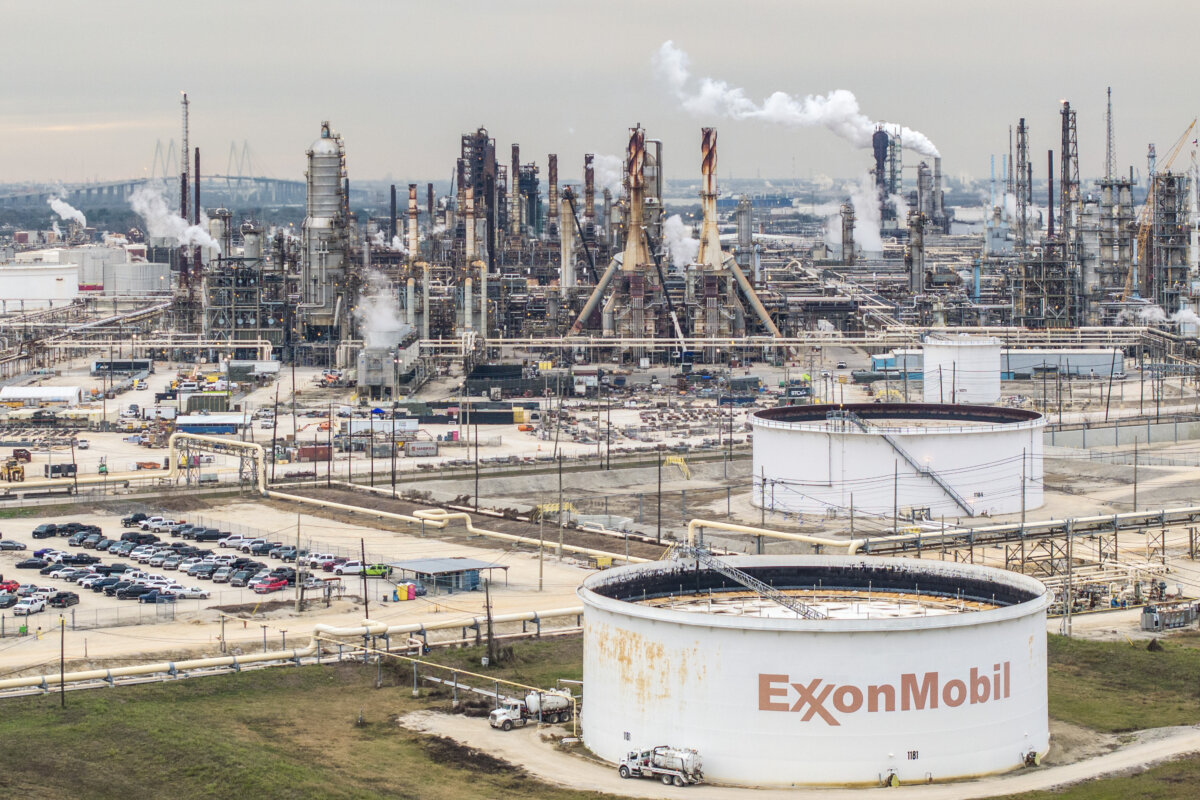
On Oct. 5, Colorado ranchers gathered outside the Supreme Court in Washington to support a climate lawsuit against oil and gas giants ExxonMobil and Suncor Energy. Among those speaking were ranchers Kathryn Bedell and Deirdre Macnab, women describing the devastating consequences of drought and the struggle to keep their ranching livelihoods alive.
The lawsuit, brought by Boulder County and the city of Boulder, seeks to hold these companies financially responsible for climate-related damages, including drought, wildfires, and declining water supplies. The plaintiffs also allege that the companies misled the public about the environmental consequences of fossil fuels.
Watching these women stand at the podium, my heart went out to them. As a woman in agriculture, I understand the extraordinary challenges of making a living from the land. Here in Texas, our wells have gone dry. We’ve watched the grass disappear and struggled to find enough water for our animals. I know the desperation of looking across your land and wondering how you’re going to make it through another season.
I wanted to stand beside these women because I understand their struggle. But then I heard whom they were holding responsible. The oil companies. The very companies supplying the fuel that powers our tractors, transports our livestock, pumps our water, and makes modern agriculture possible.
And that’s where I part ways with them.
We are not victims of the oil industry. We are willing participants.
Every day, we give our consent to petroleum. We give consent when we pull up to the gas pump, put on our shoes, take medications, or use the plastic medical devices indispensable to modern healthcare. We give consent when we open our refrigerators, drive our tractors, buy groceries, or climb aboard an airplane.
Petroleum is in our irrigation pipes, clothing, children’s toys, tires, tractors, and food packaging. Cheap, abundant energy has made possible a standard of living that kings and queens of previous centuries could scarcely have imagined.
We have collectively demanded these products, built our lives around them, and benefited enormously. Then we turn around and blame the companies providing them. I find that extraordinary.
If an oil company spills petroleum into a river, it should clean it up. If it contaminates someone’s drinking water, it should be held responsible. If a manufacturer knowingly puts dangerous chemicals into furniture or children’s products while concealing the risks, that is another conversation entirely.
But supplying a product society enthusiastically consumes is not the same thing as poisoning someone’s well.
The Colorado lawsuit alleges that these companies misrepresented climate risks. Those allegations should be judged on evidence. But even if we accept that fossil fuel emissions contribute to global warming, that doesn’t automatically establish that two companies caused the drought destroying these ranchers’ livelihoods.
Colorado has experienced droughts for centuries. Weather patterns are complicated. Precipitation, temperature, water management, land use, and natural climate variability all influence the water available to a ranch. I don’t pretend to know exactly why these ranches are suffering, and that is precisely why I hesitate to assign blame.
But I believe that something deeper is happening in our culture.
For decades, we have been taught that human beings are a plague upon the Earth. That our existence is destructive, our consumption is shameful, and our carbon footprint is something for which we should apologize. I believe that this message has become so embedded in our consciousness that we’ve begun accepting the idea that the world would be better without us.
And I wonder what that belief has done to our willingness to protect human life.
We are surrounded by chemicals that interfere with our hormones. Forever chemicals have been detected in drinking water, soil, food, and human blood. Researchers have documented troubling declines in sperm counts.
Reproductive epidemiologist Shanna Swan and her colleagues reported that sperm concentrations among Western men declined by more than 50 percent between 1973 and 2011. Swan warned that extending that trajectory could theoretically bring median sperm counts to zero by 2045, although that projection is not inevitable.
Yet somehow our environmental conversations remain overwhelmingly focused on carbon. Carbon, carbon, carbon. I am far more concerned about the endocrine-disrupting chemicals my children encounter than the carbon dioxide (CO2) they exhale.
CO2 at ordinary atmospheric concentrations is not a carcinogen. Rising atmospheric CO2 can affect climate, but that is different from direct exposure to substances that damage human health. Why aren’t we demanding cleaner food, cleaner water, and products that don’t interfere with our biology?
I believe that when people are repeatedly told that they are the problem, they become less willing to insist that their own health and existence matter. We have become so accustomed to discussing how humans are destroying the environment that we have forgotten that humans are part of the environment.
And carbon itself is not the enemy.
Carbon is the building block of life. It is in our bodies, soil, plants, and every living creature. Plants take CO2 from the atmosphere and turn it into the sugars that support life. Satellite research has documented substantial greening of the planet over recent decades, with increased atmospheric CO2 contributing significantly to that growth.
As a regenerative rancher, I spend my days building soil, increasing biological activity, and improving our land’s ability to absorb and retain water. Human beings are meant to be active participants in the natural world, not apologetic visitors.
And that brings me back to Colorado.
What practices have these ranchers used to build their soil? What are their grazing rotations? How much organic matter have they accumulated? Have they worked to improve water infiltration and protect their watersheds?
I don’t know. They may be doing extraordinary regenerative work. They may have exhausted every option. No amount of soil health can make rain fall from an empty sky. But shouldn’t these questions be part of the conversation? Shouldn’t we be asking what humans can do to improve the land before deciding that our presence is the problem?
I believe that we are capable of functioning as a keystone species. Through thoughtful management, we can restore degraded grasslands, rebuild soil, improve water cycles, and create conditions in which other species flourish. We are not inherently destructive. We are capable of extraordinary restoration.
I don’t want my children believing that their existence is a burden on the planet. I want them to understand that they belong here, that they have a responsibility to care for the Earth, and that their presence can make the world better.
And I don’t want struggling farmers believing that their only hope lies in holding someone else responsible for forces they may not fully understand.
I stand with these Colorado ranchers in their suffering. I understand their fear and their determination to preserve what generations worked to build. But I cannot support the idea that the companies providing the foundation of modern civilization should automatically be held responsible for the weather.
We cannot collectively demand a product every day, enjoy its extraordinary benefits, and pretend we had no part in creating the system that supplies it.
We are not victims of our own consumption, and we are not a plague upon this planet. We belong here. We have work to do. And our greatest responsibility is not to apologize for being human, but to become the kind of humans who leave the Earth more alive than we found it.
Views expressed in this article are the opinions of the author and do not necessarily reflect the views of The Epoch Times.
 Friends Read Free
Copy
Facebook
Tweet