House of Representatives overwhelmingly approved legislation on May 27 calling for sanctions on Chinese officials responsible for oppression of Uyghur Muslims, sending the bill to the White House for President Donald Trump to veto or sign into law.
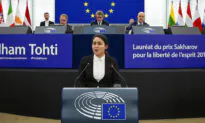
BRUSSELS—The daughter of jailed Uyghur rights activist Ilham Tohti accepted a European Parliament prize on his behalf on Dec. 18, urging lawmakers in an address not to be "complicit in the Chinese persecution of the Uyghur people."
He judges that China’s massive Belt and Road Initiative “requires the complete subjugation of the Uyghur population.”
The brutal campaign has caused Uyghurs to flee to central and southeast Asia to escape.
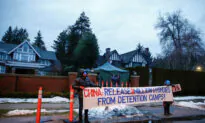
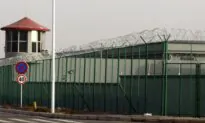
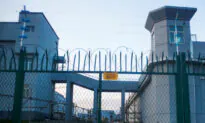
The Chinese regime has intensified its crackdown on Uyghurs, including by establishing internment camps in Xinjiang where Uyghurs undergo political indoctrination and brainwashing in an attempt to force them into giving up their faith.
(Greg Baker/AFP/Getty Images)
A website that was hosting the Android tools, meanwhile, had also served malware to Uyghur Android phones in an operation exposed this month by security firm Volexity lurking on websites frequented by Uyghurs.
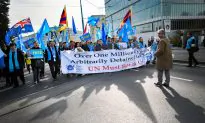
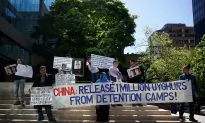
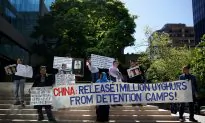
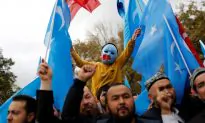
Uyghurs and Tibetans demonstrate against China outside of the United Nations (UN) offices during the Universal Periodic Review of China by the UN Human Rights Council in Geneva on Nov. 6, 2018.
Congress is still debating the infamous virus relief package. We ask, do we really need another one? In the run-up to the election, a new report asks Americans if they’re in better financial shape now than when President Donald Trump came into office. We also look at how oil producers are preparing for a potential […]
"It is without doubt that Ms Shimizu's manga has played an invaluable role in letting the world know the Uyghur issue," Japan Uyghur Association Chairman Ilham Mahmut said.
He expressed appreciation for the “strong bipartisan cooperation in addressing the agony of the Uyghurs,” adding, “tonight’s action gives Uyghurs hope.”
“This legislation takes the next step,” said Rep.
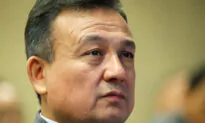
Dolkun Isa, president of the Munich-based group the World Uyghur Congress, was speaking after two leaked troves of classified Chinese government documents provided evidence of mass detention camps for Uyghurs in its western Xinjiang region.
Leaked Chinese Communist Party (CCP) documents have revealed how China uses artificial intelligence to round up Uyghurs and other ethnic minorities for detention in Xinjiang’s network of mass internment camps.
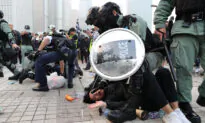
U.S. lawmakers renewed calls for the administration to sanction officials overseeing human rights abuses against Uyghurs and other Muslim minorities in Xinjiang.
But China has also prioritized tracking the movements of ethnic Uyghurs, a minority mostly Muslim group considered a security threat by Beijing.
China is facing growing international criticism over its treatment of Uyghurs in Xinjiang.
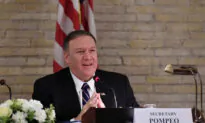
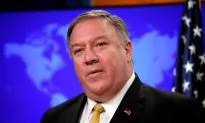
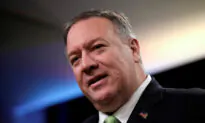
Peter Irwin, program manager at the World Uyghur Congress (WUC), said Pompeo’s meeting shows that the U.S. government places great importance on the Uyghur issue, in an email to The Epoch Times.
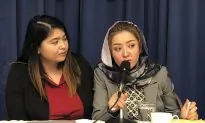
Jewher’s father, Ilham Tohti, was a Uyghur economics professor in Beijing who ran a website called “Uighur Biz,” which attempted to form a bridge between the Uyghurs in China and the Han Chinese.
US Action
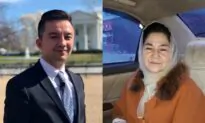
In March, Pompeo met with a Uyghur survivor of the camps, and three other Uyghurs whose relatives have either been detained at the camps or criminally sentenced in China.
A 54-year-old former Uyghur detainee, Gulbakhar Jalilova, a Kazakhstan national, told The Epoch Times that young Uyghur women are being raped daily by CCP officials in the camps and could be killed if they resist.
The Uyghur Act of 2019 is an amended, and stronger version of the bipartisan Uyghur Human Rights Policy Act from U.S. Senators Marco Rubio (R-FL) and Bob Menendez (D-NJ), that angered Beijing when it passed the Senate in September.
The United Nations says at least 1 million ethnic Uyghurs and other Muslims have been held in mass detention, deprived of any legal rights, and subjected to mistreatment.
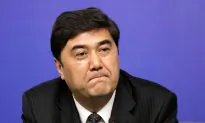
As governor, Bekri supported policies that restricted religious practices of the Muslim Uyghurs, who make up a majority of the overall Uyghur population.
He was also a proponent of educating Xinjiang's Turkic-speaking school children in Mandarin.