
Transportation Secretary Sean Duffy asked Congress late Friday for $50 billion to rebuild the nation’s air traffic control system, up from a $30.1 billion request in a letter dated Nov. 12.
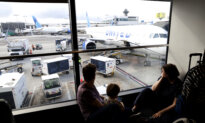
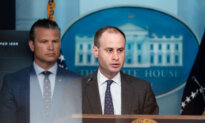
He made the case at a White House briefing after an outage that led the Federal Aviation Administration (FAA) to halt flights nationwide, which he said was due to aging equipment.
Duffy called the situation an emergency and asked Congress for emergency funding. “What’s more important than having an air traffic control system that actually works?” he said.
Radar and communications became unstable at 3:36 p.m. ET at FAA en route centers and terminal radar approach control facilities, Duffy said. The FAA then issued a ground stop. More than 3,500 aircraft were airborne at the time, and fewer than 400 remained when he last checked.
Duffy blamed analog telecommunications gear and described “an incredibly old air traffic control system.” Switches and routers became overloaded with data and started returning inconsistent information, he said, while newer internet-protocol switches stayed up.
Homeland Security Secretary Markwayne Mullin, who joined him, said officials had found no sign of a cyberattack, though investigators had not ruled out other causes.
“It appears that this was mechanically driven,” Mullin said.
He added that patches and newer technology the FAA had added to the network appeared to have overwhelmed the older system. Asked whether the patching had caused the outage, Duffy said the problem lay in the old analog system, which had become overloaded with data, and noted that upgraded facilities weren’t affected.
The FAA reopened the airspace at 8:15 p.m. ET on Friday. Duffy said recovery would be slow because airlines needed crews in position, and larger general aviation flights would get priority. He expected operations to be back to normal by the Thanksgiving rush.
Duffy said he couldn’t anticipate every failure of the old analog network and didn’t know whether the same failure would happen again. “You will have more of these,” he said, unless Congress funds a new system.
The earlier $30.1 billion request came from Duffy and Office of Management and Budget Director Russell Vought. It includes $10.1 billion for air traffic control modernization, $2 billion for towers, and $18 billion for airport projects, among them $10 billion for terminals.
In their letter to lawmakers, the two officials described the goal as “a resilient telecommunications backbone for air traffic controllers.” They said that as of Oct. 15, the FAA had replaced more than 68 percent of its legacy copper network with fiber.
The Republican-led Senate Commerce Committee said the outage showed the need to put en route centers ahead of other projects. It noted that Congress has already approved $1.9 billion to replace them. American, Delta, United, and Southwest airlines have expressed support for the request.
Duffy said Congress had a chance to provide the money in an emergency funding bill before the end of the year. Democrats are set to take control of Congress in January.
On Nov. 5, Duffy announced that the FAA was replacing floppy disks holding weather and other critical information with a new system, which replaces four 1980s-era systems at more than 400 FAA facilities. The FAA plans to install it at 435 sites by the end of 2028.
Duffy said a similar telecommunications failure had disrupted New York-area flights a couple of months ago, as world leaders were flying in for the U.N. General Assembly.
As of January, the FAA projected the overhaul would cost at least $32.5 billion. That included a $12.5 billion down payment Congress approved in July 2025, and Duffy had asked Congress for an additional $20 billion. Some experts questioned the schedule of three and a half to four years.
“I think it’s probably aggressive,” aviation lawyer and private pilot Greg Reigel told The Epoch Times at the time.
Margaret Wallace, assistant professor of aviation management at Florida Institute of Technology, called it an unrealistic timeline.
An earlier equipment outage in May 2025 led the FAA to order a temporary ground stop for flights bound for Newark Liberty International Airport. “We have to fix this, because what you see in Newark is going to happen in other places across the country,” Duffy told NBC’s “Meet the Press” at the time.
On April 28, 2025, Philadelphia air traffic controllers handling Newark traffic lost contact with planes for about 30 seconds after the primary communication line went down and the backup didn’t activate, Duffy told Fox News at the time.
Reuters contributed to this report.
 Friends Read Free
Copy
Facebook
Tweet