
U.S. officials said on Sunday that the communications failure that triggered last week’s nationwide ground stop was not caused by its new AI intelligence-powered traffic management system, saying the two are “not related.”
The Federal Aviation Administration (FAA) issued the clarification in a question-and-answer update after speculation over whether the outage was linked to the recently launched Strategic Management of Airspace, Routes, and Trajectories (SMART) system.
Asked whether the ground stop had been caused by SMART, the agency replied: “No. The two systems are not related. SMART is a data aggregator, and it does not feed information into the air traffic control system.”
During a joint press conference on Nov. 13, Homeland Security Secretary Markwayne Mullin and Transportation Secretary Sean Duffy addressed questions about whether artificial intelligence had played a role in the FAA’s nationwide ground stop.
Asked whether a cyberattack or “rogue AI” caused the outage, Mullin said nothing was “completely certain,” but added that “it doesn’t appear that way.”
Duffy said the SMART system was “completely disconnected” from the air traffic control systems affected by the outage.
He said SMART provides decision-support information to help manage aircraft trajectories and weather, but does not control aircraft or issue commands. Instead, it offers recommendations that FAA personnel can choose to accept or reject.
“There’s no possible way SMART would have impacted what happened,” Duffy added.
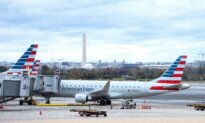
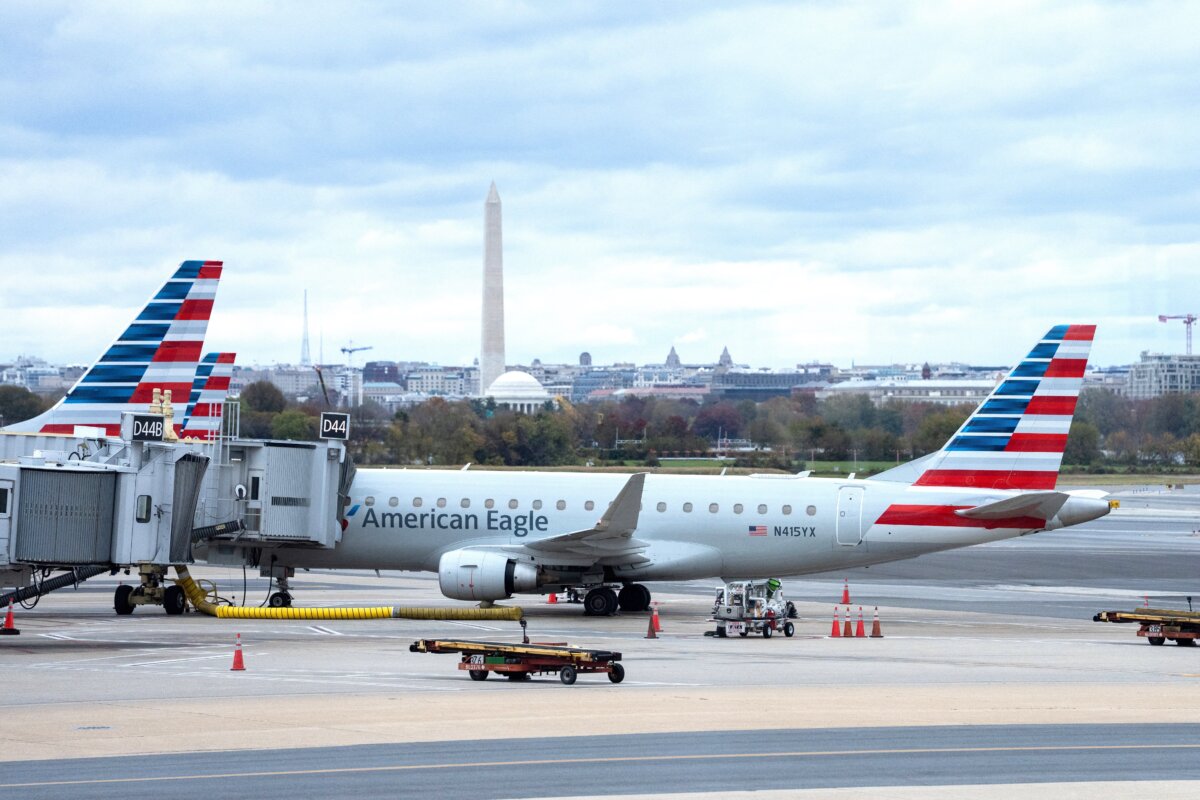
The FAA ordered a nationwide ground stop shortly before 4 p.m. on Nov. 13 after a communications failure affected the network that manages air traffic between airports. The restriction remained in place for more than four hours before the FAA lifted it at 8:15 p.m.
What Is SMART?
The FAA unveiled the SMART platform on Sept. 21 as part of a broader effort to modernize the U.S. air traffic control system.
It combines information from 200 data streams, including weather forecasts, flight schedules, traffic flow, and air traffic controller staffing, into a single system. An AI-supported engine analyses the data to help aviation specialists identify future congestion, weather disruptions, and airspace constraints before they occur.
The FAA said SMART is intended to shift the agency from reacting to disruptions after they develop to predicting problems hours, days, or even weeks in advance. Last week, the agency announced it would use SMART in the airspace of all 22 centers nationwide.
Major U.S. airlines, including United Airlines, Delta Air Lines, American Airlines, and Southwest Airlines, have supported the initiative.
Lawmakers have also scrutinized the rollout. Last month, Senior House Transportation Committee Democrats, led by Rick Larsen (D-Wash.) and Andre Carson (D-Ind.), have asked the U.S. government watchdog to audit SMART.
In an Oct. 13 letter, the lawmakers said SMART’s AI raised questions about its reliability.
“Concerningly, the nation’s frontline aviation safety workforce apparently had little to no input into SMART’s development and have received limited training and information during the current deployment process,” they said.
Data Overload
More than 10,000 flights to and from U.S. airports were canceled or delayed over Nov. 14–15 as airlines worked to recover from the disruption.
The FAA said on Sunday that the initial investigation indicated excessive data flooding came from two potential locations, one of which was undergoing network equipment work. The agency added that, together with its network service provider L3Harris, it was continuing to investigate the root cause to “ensure this doesn’t happen again.”
Duffy said on Nov. 13 that before the ground stop was declared, FAA switches and routers “got overloaded with data” and forced the shutdown.
“I have already replaced some of those switches with President Trump and our new IP switches did not go down,” he said. “It’s the old hardware that went down.”
President Donald Trump urged Congress on Nov. 15 to allocate more funding to the FAA to improve the air traffic control system.
Jack Phillips and Aldgra Fredly contributed to this report.
 Friends Read Free
Copy
Facebook
Tweet