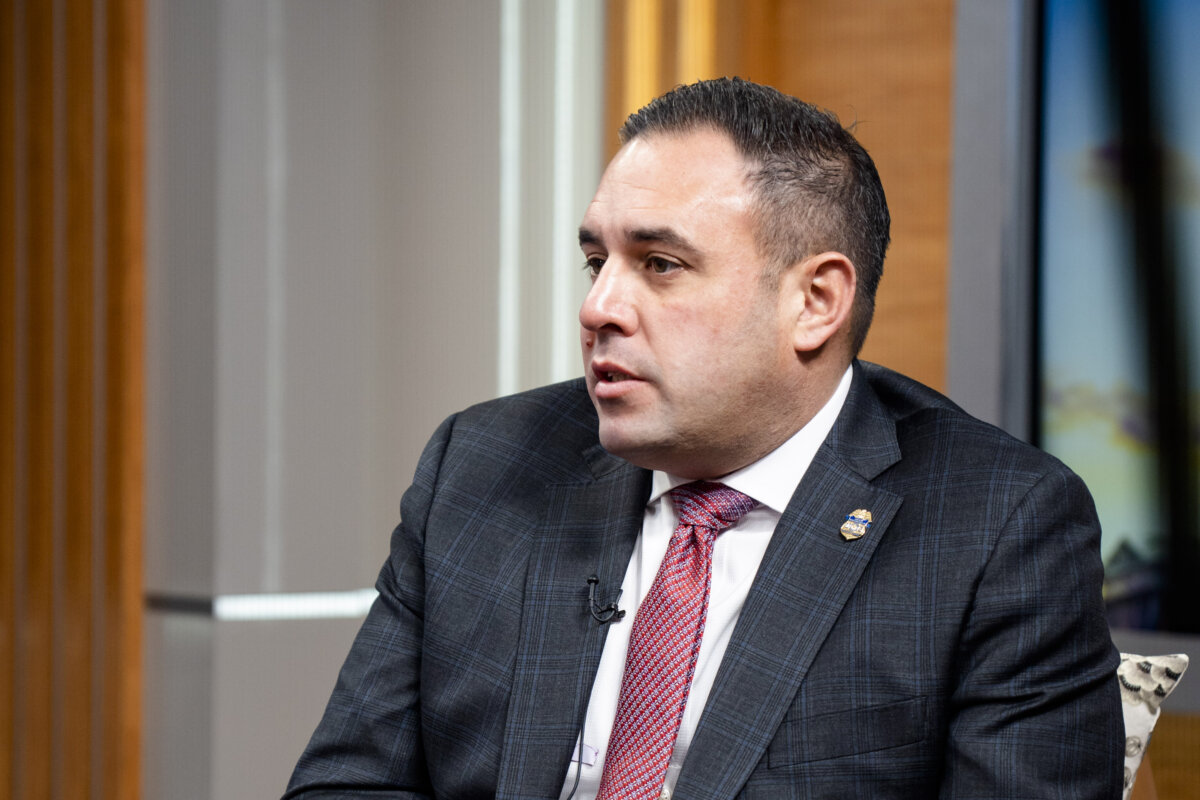

U.S. Labor Department Inspector General Anthony D’Esposito said more time is needed to deal with what he called the obscene amount of pandemic-era fraud—otherwise the statute of limitations will expire and fraudsters will evade prosecution.
During a Nov. 12 interview, D’Esposito told NTD that both he and Labor Secretary Keith Sonderling have worked with Congress to extend the statute of limitations for unemployment insurance fraud.
“We need that statute of limitations extended so that each day that passes, we aren’t giving those who have taken advantage of the most vulnerable population in America, we’re not giving them a free pass,” D’Esposito said.
The Labor Department’s Office of Inspector General recently released its first most-wanted list, naming 16 fugitives linked to about $60 million in alleged fraud, D’Esposito told NTD. He said three were tied to a South American criminal enterprise that used stolen U.S. unemployment benefits to fund gang violence.
D’Esposito described a separate case in which he said a shell company that operated like an online marketplace funneled money to the Chinese communist regime.
He said his office also joined a task force led by Nassau County police on Long Island to investigate suspected fraud involving “ghost pharmacies.” These are sham pharmacies that look legitimate on paper and bill programs such as Medicare or Medicaid for prescriptions they never dispense.
States reported recovering about $2.4 billion in fraudulent unemployment benefits through Sept. 30, 2026, according to the U.S. Department of Labor’s latest annual financial report. The department’s inspector general previously estimated that $76 billion in unemployment benefits were obtained through fraud during the COVID-19 pandemic.
The Nov. 13 report said states recovered about $11.5 billion in improper unemployment payments from April 1, 2020, through the end of September 2026, including the $2.4 billion tied to fraud. The inspector general previously estimated that states may have paid $191 billion improperly during the pandemic, a figure that includes the estimated $76 billion in fraudulent payments.
As of July 2023, the Department of Labor reported allocating grants totaling about $1.4 billion to states for initiatives including fraud prevention, detection, investigation, and recovery.
The Government Accountability Office (GAO) put the fraud total higher. In September 2023, it estimated that $100 billion to $135 billion in unemployment benefits were obtained through fraud from April 2020 through May 2023, accounting for about 11 percent to 15 percent of benefits paid. The Labor Department said the estimate was likely overstated. GAO stood by its methodology.
GAO said the full extent of unemployment insurance fraud during the pandemic will likely never be known with certainty.
Reps. Beth Van Duyne (R-Texas) and Tom Suozzi (D-N.Y.) introduced a bill May 19 that would double the statute of limitations for pandemic unemployment fraud from five to 10 years, giving federal authorities more time to bring charges. Van Duyne’s office said the deadline for bringing some cases began expiring in March 2025.
“We need to root out waste, fraud, and abuse at every level of our government. Members of Congress have a duty to protect victims of fraud and identity theft, who are most often senior citizens, and make sure bad actors don’t get away with preying on them,” Suozzi said in a May press release.
The House passed legislation on June 29 that would give federal authorities up to 10 years to bring cases involving pandemic unemployment fraud. The limit was previously five years for criminal cases and six for civil cases, involving pandemic unemployment fraud. The bill, H.R. 8873, was referred to the Senate Finance Committee on July 13, the latest action listed in congressional records.
 Friends Read Free
Copy
Facebook
Tweet