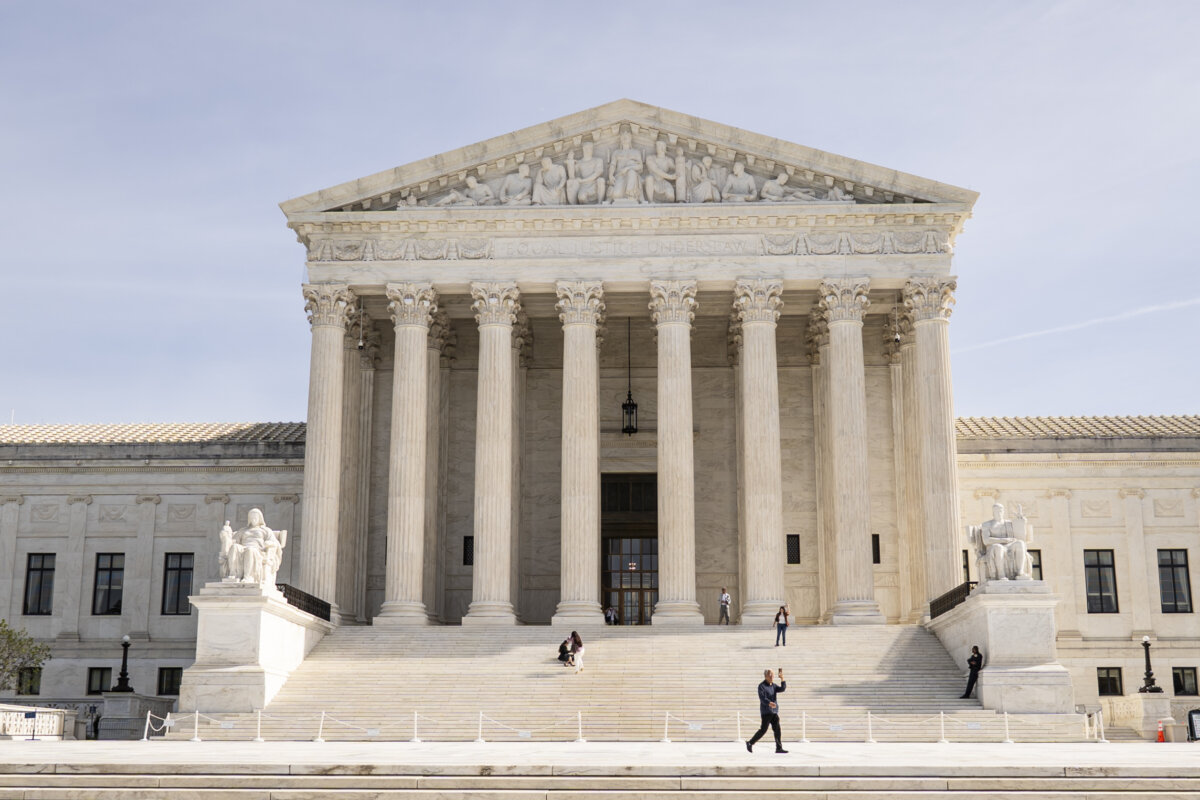

The U.S. Supreme Court on Monday declined to hear a challenge to Maryland’s restrictions on carrying guns in a range of public areas the state designates as sensitive places.
Maryland was among several states to enact such restrictions after a landmark 2022 Supreme Court ruling expanded gun rights.
The law, signed in 2023 by Maryland Gov. Wes Moore, barred guns from being carried in locations such as college campuses, hospitals, power plants, amusement parks, and places licensed to sell cannabis or alcohol for on-site consumption. The state already had gun restrictions for some areas, including public transit, schools, protests, and casinos.
In a statement, Supreme Court Justice Clarence Thomas wrote on Monday that he was skeptical that the challenged restrictions were consistent with the nation’s historical tradition of firearm regulation under the standard set by the 2022 Supreme Court decision, New York State Rifle & Pistol Association, Inc. v. Bruen.
The Bruen ruling declared for the first time that the Second Amendment protects an individual’s right to carry a handgun in public for self-defense.
Thomas wrote that he agreed with the Supreme Court’s decision not to hear the case because of the complexity and breadth of the state regulations involved.
“In an appropriate and more narrowly focused case, however, we should consider the scope of States’ authority to ban firearms in ‘sensitive places,’” Thomas, who authored the Bruen ruling, wrote.
He concluded that he has “serious doubts that our Nation’s historical tradition of firearm regulation supports many of these sweeping restrictions. In an appropriate case, this Court should consider whether particular sensitive-place laws are consistent with the right to public carry.”
Gun rights groups and several firearms-owning residents sued to challenge the restrictions, arguing that a number of them violated their Second Amendment rights as defined by the Supreme Court’s 2022 decision.
In their petition, the residents and gun rights groups challenged the legality of the “sensitive place” bans, saying the scope of the state regulations is too broad.
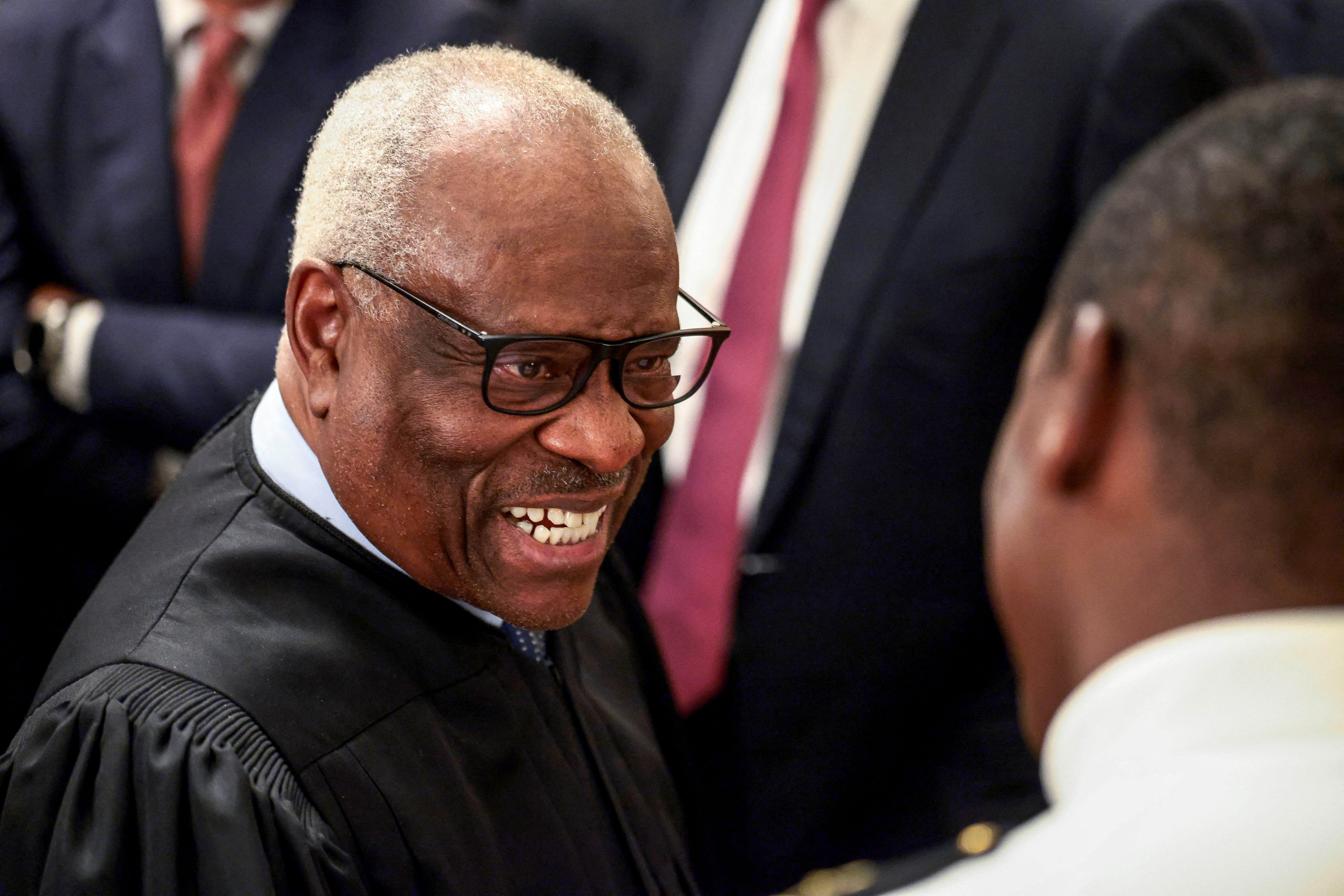 U.S. Supreme Court Justice Clarence Thomas attends a swearing-in ceremony for a new Federal Reserve Chair Kevin Warsh at the White House on May 22, 2026. (Evelyn Hockstein/Reuters)
In response, Maryland’s attorney general, Anthony Brown, wrote to the top U.S. court that the sensitive-place laws pass the 2022 Bruen legal test and are consistent with the nation’s tradition around firearms regulations. He said that early laws had barred firearms from being carried in public areas.
“This Court endorsed such ‘longstanding’ bans in schools, legislative assemblies, polling places, and courthouses, while recognizing that this list was non-exhaustive,” Brown wrote in an August filing.
Reuters contributed to this report.
 Friends Read Free
Copy
Facebook
Tweet