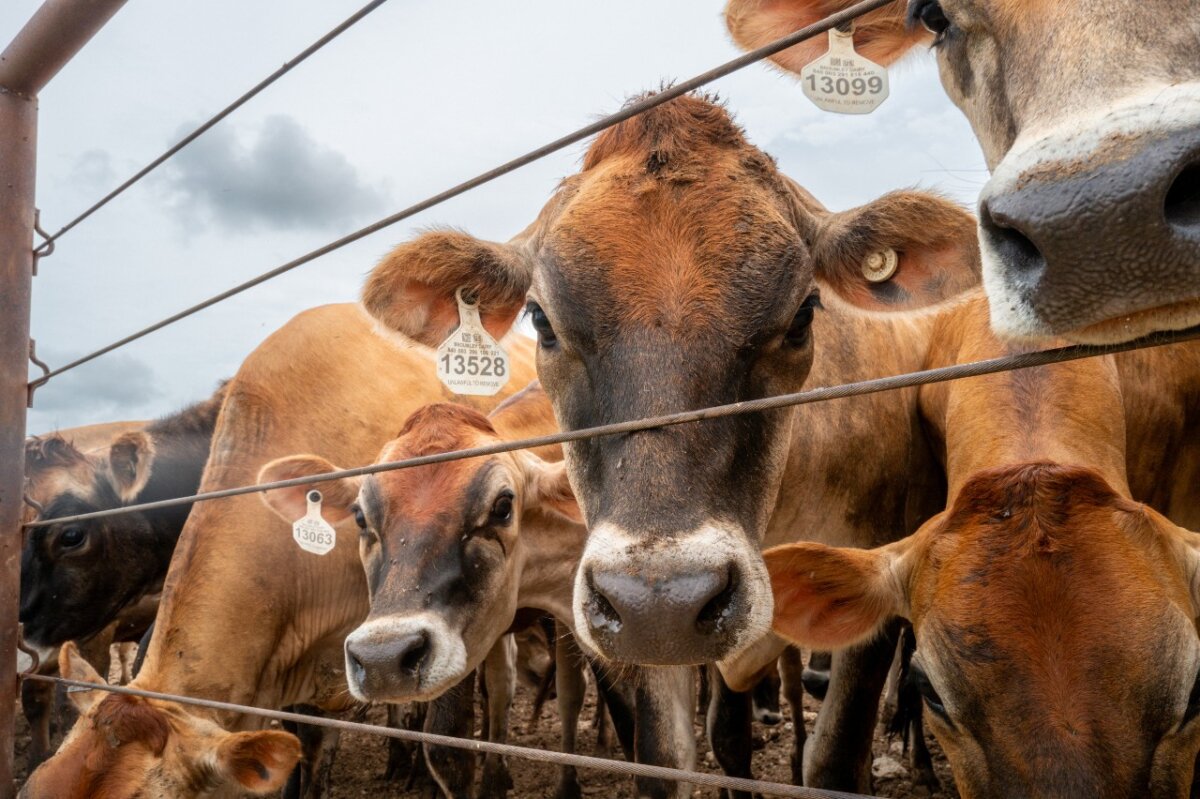

The United States plans to expand cattle imports from Mexico to two additional southern border ports after a yearlong suspension intended to prevent the spread of New World screwworm, a flesh-eating parasite.
The announcement marks the latest step in the U.S. Department of Agriculture’s gradual easing of restrictions imposed after Washington halted imports of live Mexican cattle, bison, and horses in 2025.
The USDA resumed livestock trade through Douglas, Arizona, in August and through the larger Santa Teresa, New Mexico, port in September, marking the first stages of the border’s gradual reopening.
The department said on Tuesday that the Columbus, New Mexico, port of entry will reopen to cattle imports on Oct. 26. If animal health conditions continue to support safe trade, and inspection infrastructure remains in place, Nogales, Arizona, is scheduled to reopen on Nov. 30.
The department said it will also resume importing horses and other equines through the Santa Teresa, New Mexico, land crossing beginning Oct. 26.
Under updated USDA protocols, imported equines will continue to undergo a rigorous inspection and treatment process before export. They will then complete a mandatory seven-day quarantine before entering the United States.
The agency said equines entering through Santa Teresa will complete quarantine at a USDA-approved facility on the U.S. side of the border. Quarantine facilities on the Mexican side of the crossing will remain closed.
The New World screwworm is a parasitic fly whose females lay eggs in open wounds or mucous membranes of warm-blooded animals. After hatching, the larvae burrow into living tissue and can kill an untreated host. It has surged north from Central America through Mexico.
USDA said in June that a 3-week-old calf in Zavala County, Texas, near the Mexican border, had been infected by the New World screwworm.
Two days later, the department detected a second case of the flesh-eating New World screwworm in a 1-month-old calf in the same county, just 5.6 miles from the first confirmed case.
The Texas cases mark the first outbreak of the flesh-eating parasite since Florida Key deer were infected in 2016.
The outbreak posed a significant challenge for the cattle industry by tightening livestock supplies and raising production costs. Prices hit record highs during the year as tighter cattle supplies continued to affect the market.
The average price of a pound of ground beef reached nearly $7 in July 2026, an increase of about 70 percent since January 2021.
 Beef at a grocery store in Elkridge, Md., on Oct. 24, 2025. (Madalina Kilroy/The Epoch Times)
U.S. Agriculture Secretary Brooke Rollins said in an Oct. 20 post on X that the administration’s response to the outbreak had delivered results while allowing trade to resume under strict safeguards.
She added that officials had released more than 1.5 billion sterile flies to halt the spread of the New World screwworm and said five of 56 confirmed cases remained active.
The Moore Air Base sterile fly facility in Texas produces sterile screwworm flies to help stop the pest from reproducing and spreading. Its projected capacity is 300 million sterile flies per week.
Rollins said the facility is ahead of schedule and will significantly expand the country’s ability to combat the pest.
Darlene McCormick Sanchez contributed to this article.
 Friends Read Free
Copy
Facebook
Tweet