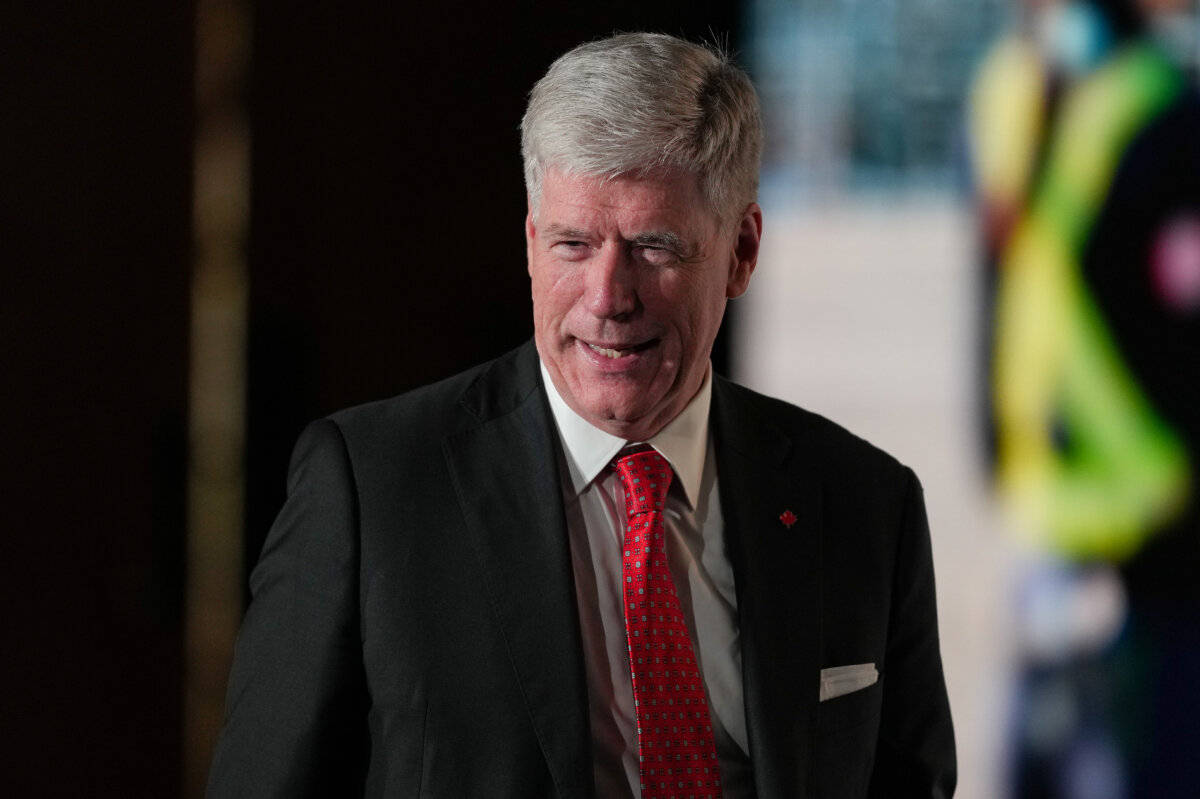

The federal government is investing $200 million in British Columbia’s Woodfibre LNG project over three years, funding that Energy Minister Tim Hodgson says will help diversify Canada’s energy exports.
Hodgson said during an announcement in Vancouver that Canada’s Pacific coastline gave the country direct access to some of the world’s most dynamic economies.
“We will seize that advantage,” Hodgson said at a news conference also attended by British Columbia’s premier-designate Lorne Doerkson.
“We will turn geographic advantage into conditions to attract investment to this country, to build major projects, and to create jobs for British Columbians and Indigenous peoples, as we grow this industry in partnership with the private sector.”
Woodfibre LNG is a liquefied natural gas export facility seven kilometres southwest of Squamish, B.C.
CEO Luke Schauerte said the project was about 75 percent finished, with the first exports more than a year away.
Hodgson said the federal investment would support a near-25-percent increase in the project’s capacity from 2.1 million tonnes to 2.6 million tonnes of LNG per year.
He said the project takes place in collaboration with the Squamish Nation and the facility is the first major industrial site in Canadian history approved through an Indigenous-led environmental assessment, with the First Nation acting as regulator.
“Woodfibre is a project that should make Canadians proud of not only our resources, but in the kind of energy superpower Canadians are building,” Hodgson said.
Doerkson, who will be sworn in later this month after a decisive win by his B.C. Conservatives in October’s snap election, said the federal investment was welcome news for the region and British Columbia’s economy.
“Our resources are the strongest hand that British Columbia holds, and Woodfibre is what it looks like when we play it,” Doerkson said.
He said the project showed British Columbia’s potential, and what governments, First Nations and industry could achieve when they worked together.
“One question that has come up, whether I’m in the Cariboo, whether I’m in the Okanagan, the Island, or Metro (Vancouver) is: Can we still build big things in this province? And today is proof that we can,” he said.
Schauerte said that the project “is already bringing benefits to British Columbia and Canada.”
He said construction alone generated more than $13.6 billion in economic output, and contributed nearly $7 billion to Canada’s gross domestic product.
“We have created more than 52,000 job-years through construction, and with more than 1,500 people on site today, there is more to come,” he said.
Once completed, the project would generate about $11.6 billion in government revenues over the next 40 years, Schauerte said.
 Friends Read Free
Copy
Facebook
Tweet