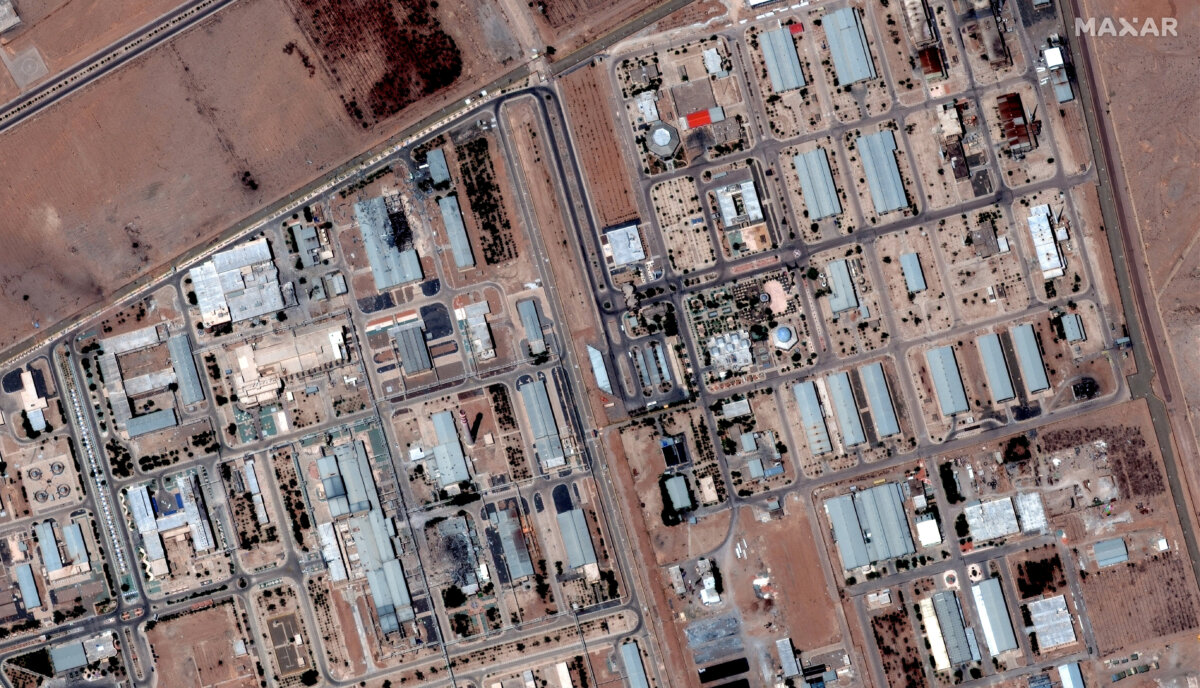

Iran won’t allow the United Nations to inspect its damaged nuclear sites until after the war with the United States ends, the Islamic Republic said on Nov. 15.
The International Atomic Energy Agency (IAEA) has repeatedly requested that Tehran grant its inspectors access to the sites since they were first hit in June 2025, but it has been rebuffed repeatedly.
Iranian Deputy Foreign Minister for Legal and International Affairs Kazem Gharibabadi said that the IAEA’s “likely aim in requesting visits to Iran’s damaged nuclear sites is to assess the effectiveness of American weapons,” the state-affiliated Fars News agency reported on Nov. 15 in an X post.
“We will not allow the nuclear agency access to the facilities until Iran’s conditions are met and the war is permanently ended.”
The Epoch Times contacted the IAEA for comment but did not receive a response before publication.
Iran set out seven conditions that must be met for inspectors to be allowed to return to the country, including sanctions relief, the release of frozen Iranian assets, and paying war reparations.
The deputy foreign minister’s remarks come on the heels of Tehran ruling out transferring its enriched uranium abroad last week, saying the material was needed for domestic nuclear projects.
Mohsen Rezaei, secretary of Iran’s Supreme National Security Council, said Tehran had informed Russia that all enriched nuclear material would remain inside Iran for domestic use. Russia has previously offered to remove uranium from Iran.
“We need enriched materials to design ships and submarines powered by nuclear energy,” Rezaei told Lebanon’s Al Mayadeen television network in an interview published on Nov. 11.
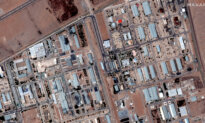
U.S. President Donald Trump’s administration has repeatedly said it aims to prevent the terrorism-backing Iranian regime from rebuilding its nuclear program after U.S. forces struck the Fordow, Natanz, and Isfahan nuclear sites in June last year.
In his remarks on Sunday, Gharibabadi also criticized IAEA Director General Rafael Grossi for not condemning the strikes on Iran’s nuclear facilities.
“Why did an international official, who should not be affiliated with any country, not take any position regarding the attacks on Iranian nuclear facilities?” he said, the regime-affiliated Mehr News Agency reported on Nov. 15.
“In similar cases, we have witnessed the agency using words like condemnation. For example, on the issue of Ukrainian nuclear facilities, the Agency’s Director General took positions against Russia. But why didn’t he condemn the attacks on Iranian nuclear facilities?”
Although Grossi has not taken a public position on the conflict between Washington and Tehran, he described the attacks in June 2025 as “deeply concerning” and reiterated his position that “nuclear facilities must never be attacked, regardless of the context or circumstances, as it could harm both people and the environment.”
On Oct. 27, Grossi told the U.N. Security Council that Iran has not, as far as the IAEA could tell, attempted to mend the nuclear facilities damaged during either Operation Midnight Hammer or the current war.
He said that “since June 2025, we have not identified any activity to repair or reconstruct any of the facilities damaged in the military attacks of 2025 and 2026,” in a statement to the council.
However, Grossi also said that “nothing replaces access to the facilities to verify the actual situation,” something the global nuclear watchdog has been unable to do since June 2025.
“Any path forward with regards to Iran’s nuclear programme must include the IAEA’s indispensable verification role, without which no solution is verifiable, and as a consequence sustainable. Our work with the United States negotiating and technical team has been thorough,” he said.
Grossi went on to say that Iran, in breach of international law, has not provided any requested information or access to the Fordow, Natanz, and Isfahan enrichment plants, nor to the Khondab Heavy Water Research Reactor. The IAEA is supposed to verify that previously declared nuclear material at the facilities is under safeguards.
 Friends Read Free
Copy
Facebook
Tweet