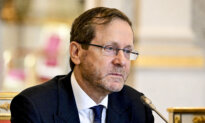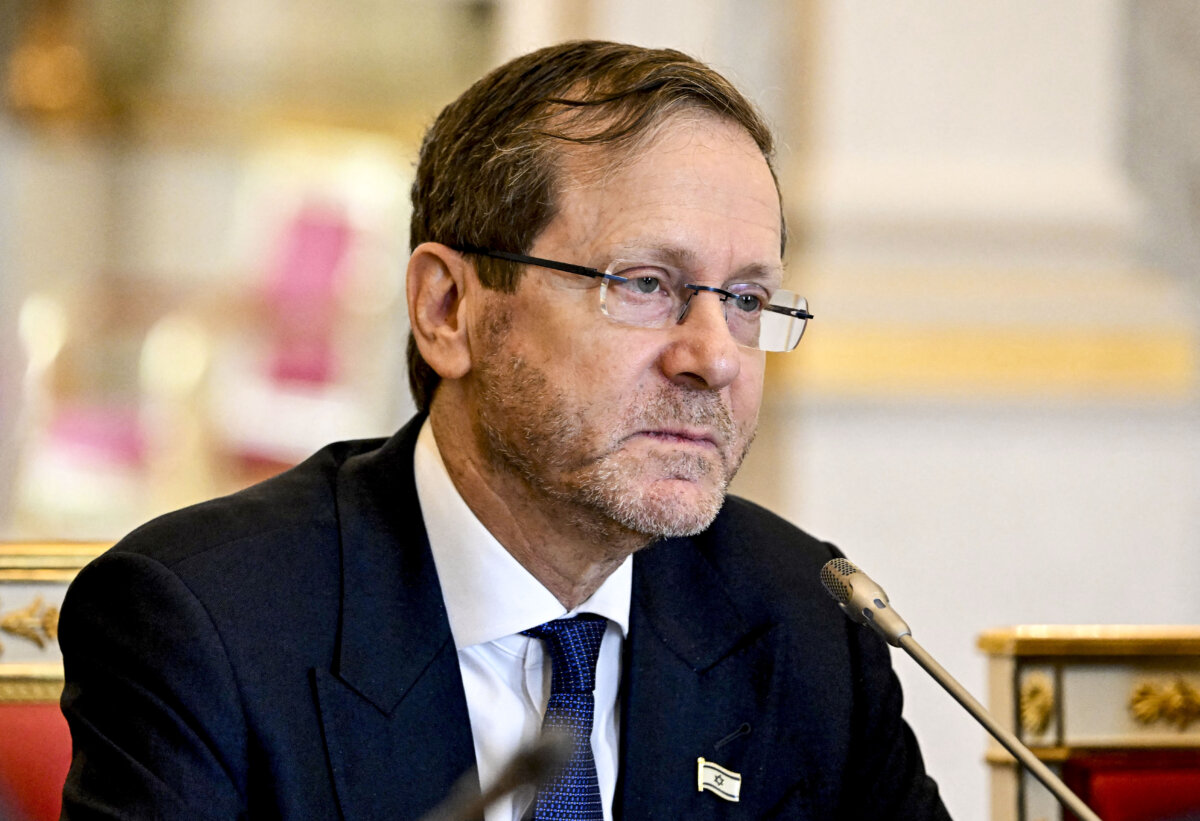

Israeli President Isaac Herzog has accepted the certified results of Israel’s national election, despite claims of fraud and foreign interference by sitting Israeli Prime Minister Benjamin Netanyahu.
“I hereby receive the official results of the elections for the 26th Knesset,” Herzog announced in an address on Nov. 4. “I adopt them and confirm their receipt in accordance with the law.”
Netanyahu, who is seeking to remain in office, had raised allegations that Israel’s Arab political parties had defrauded the Oct. 27 Israeli national election through various means, including bribery and intimidation. He subsequently raised additional allegations that outside forces had also interfered to benefit Israel’s Arab parties.
Netanyahu’s election fraud allegations came as Israel’s Central Election Committee recorded a historic turnout for Israel’s two main Arab parties, Joint List and Ra’am. Joint List won 11 seats in Israel’s Knesset legislature, and Ra’am won eight.
Herzog said the Israeli authorities, including the Shin Bet security service, would continue to investigate the election fraud claims.
“I have full confidence in the work of the Shin Bet, the Israel Police, and the law enforcement authorities,” Herzog said. “Any suspicion of subversive foreign interference in the election results must be fully investigated by the Shin Bet and the Police.”
As he addressed the election results and the alleged interference, Herzog denounced vitriol directed at Arab voters.
Earlier on Wednesday, the Times of Israel reported that the Shin Bet presented the Israeli election committee with a preliminary assessment indicating widespread foreign funding and influence efforts. The Israeli security service said it would need further investigation to determine the scale of the alleged foreign involvement and establish a high degree of certainty in its findings.
Israeli Supreme Court Justice Noam Sohlberg, an election committee chair, said the election investigation was continuing, but that the allegations had not proved sufficient to justify delaying certification of the results. Sohlberg said the fraud and interference claims, even if confirmed, would have a limited impact on the overall election result.
Netanyahu previously accused Israeli Attorney General Gali Baharav-Miara of blocking investigations into at least four suspects in connection with the election fraud probe.
“This is what selective enforcement looks like,” Netanyahu wrote in an X post on Nov. 3.
Netanyahu’s Likud-led coalition won 53 Knesset seats, while his main opposition bloc won 48.
To form a government in Israel’s parliamentary system, a party or coalition of parties must win at least 61 of the 120 seats in the Knesset.
Neither major bloc appears ready to ally with the Arab parties to form a government.
The election outcome leaves Netanyahu at the head of a diminished caretaker government until a bloc can negotiate a new governing majority.
In the event no party wins a clear majority in the Knesset, the president of Israel nominates party leaders to take turns negotiating for a coalition government. If no majority coalition forms, the country may call another round of elections.
“In the current reality, in which there is no clear winner after the elections, I ask for originality and creativity, courage and goodwill, so that the State of Israel emerges the winner,” Herzog said on Wednesday.
The Israeli president has since entered into talks with the various political party leaders to assess which one he will name first in an attempt to form a government.
 Friends Read Free
Copy
Facebook
Tweet