




Splitting the measles, mumps, rubella (MMR) vaccine into separate shots could take up to a decade, according to one of the two companies that produce the vaccine for the U.S. market.
“Even under current expedited review pathways, it could take years—potentially as many as 10—to meet the safety and efficacy requirements to obtain FDA approval and then begin manufacturing and commercialization” of single-disease shots, Merck said in a statement.
Merck, which did not respond to a request for more details, had told Politifact in 2025—after President Donald Trump floated splitting the MMR vaccine—that it could take more than 10 years to separate the components into three separate vaccines.
Trump said in an Aug. 10 order that he was issuing “gold standard childhood vaccine recommendations,” which “recognize that the combined measles, mumps, rubella (MMR) vaccine should be administered in three separate single-disease shots once such products are domestically available.” The order directed agencies to take steps to advance the recommendations.
Before signing the order, Trump said, “You have the MMR, we want it in three separate vaccinations given at separate times. Together there could be a possibility they are quite lethal and separately, it looks like they are not at all lethal but just very effective.”
Asked for citations, White House spokesman Kush Desai told The Epoch Times in an email that “countless parents who have voiced questions and concerns about the combined MMR vaccine” and “the Administration’s push to develop separate vaccinations for all three diseases will give parents more options on timing and frequency for their children, which ultimately will increase vaccination rates for all three diseases.”
Dr. Robert Malone, a former member of the Centers for Disease Control and Prevention’s vaccine advisory panel, said in an Aug. 10 post on X that splitting combination vaccines into separate shots could reduce adverse events without sacrificing protection.
The CDC’s website says, “No published scientific evidence shows any benefit in separating the combination MMR vaccine into three individual shots.” A January update to the childhood vaccine schedule retained recommendations for MMR vaccination, advising that children receive one dose around the age of 1 and a second dose from 4 to 6 years of age.
The MMR vaccine has been available since the 1970s. Merck and GlaxoSmithKline produce it for the United States.
“Combination vaccines play a crucial role in improving vaccination coverage rates; their safety and efficacy have been demonstrated by decades of research,” a GlaxoSmithKline spokesperson told The Epoch Times in an email.
“By reducing the number of separate injections required, combination vaccines allow for a simpler and more efficient immunization process, which is essential for timely protection against disease. There is no scientific evidence that separate measles, mumps, and rubella shots improve safety or efficacy compared to combined MMR.”
Standalone vaccines were discontinued in the United States in 2008. Merck said in a 2009 letter to healthcare providers that it was moving forward with the MMR and not the monovalent vaccines because the combination shot “eliminates the need for 3 separate injections and reduces the chance of delays in helping protect against any of these potentially serious diseases.” The standalone vaccines are still available in certain other countries.
Side effects of the MMR vaccine include febrile seizure and severe allergic reactions, according to regulatory labels.
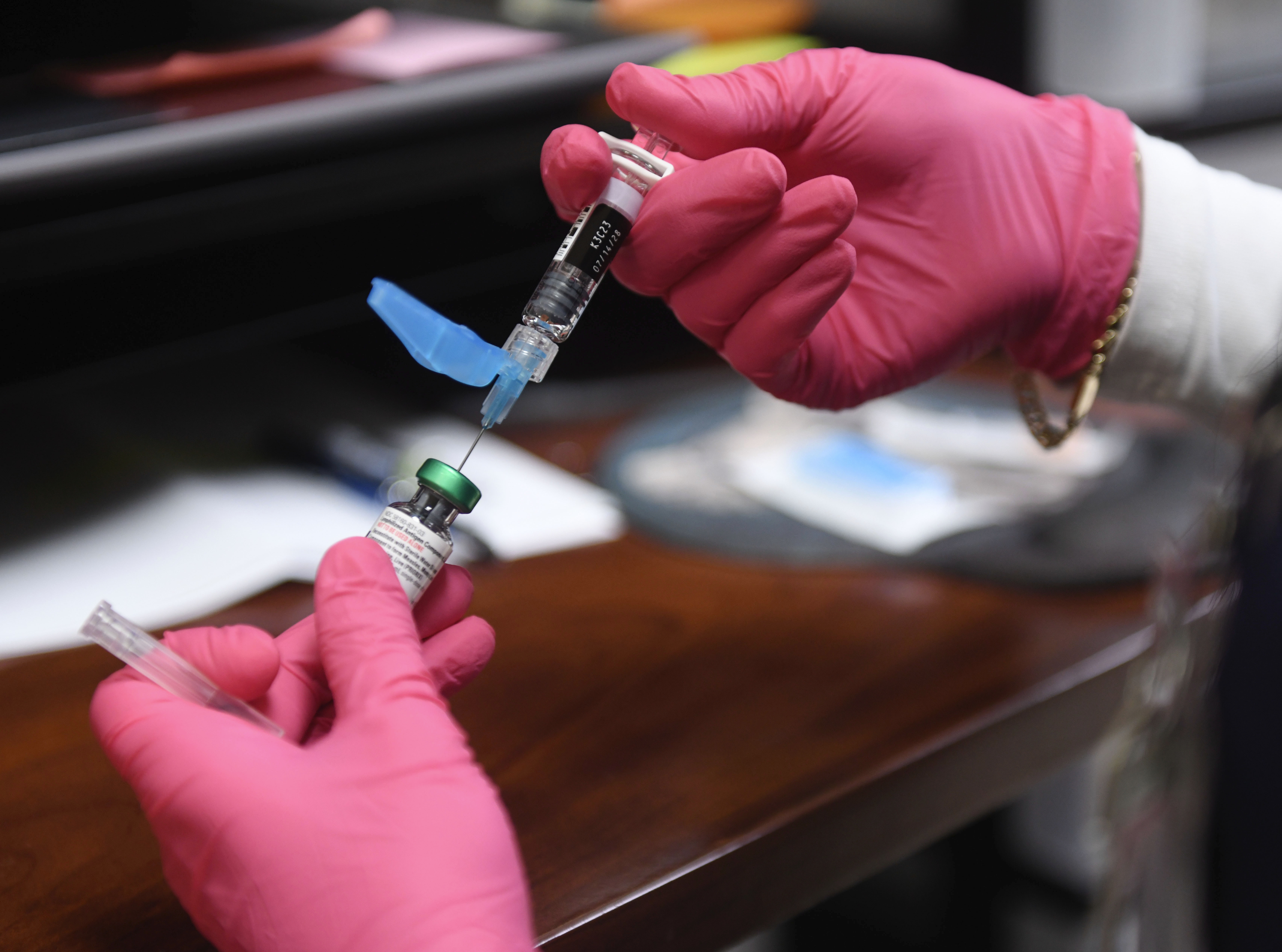 A healthcare professional prepares a measles, mumps, and rubella (MMR) vaccine at the Andrews County Health Department in Andrews, Texas, on April 8, 2025. (Annie Rice/AP Photo)
“They wouldn’t be able to do that probably for another 10 years, and there’s no indication that they have any interest in doing that,” he said.
A White House official told reporters on a call about the order that the administration would work with the private sector to make the option of separate vaccines available to parents, relying on market-based solutions.
The Food and Drug Administration did not respond to a request for comment by the time of publication.
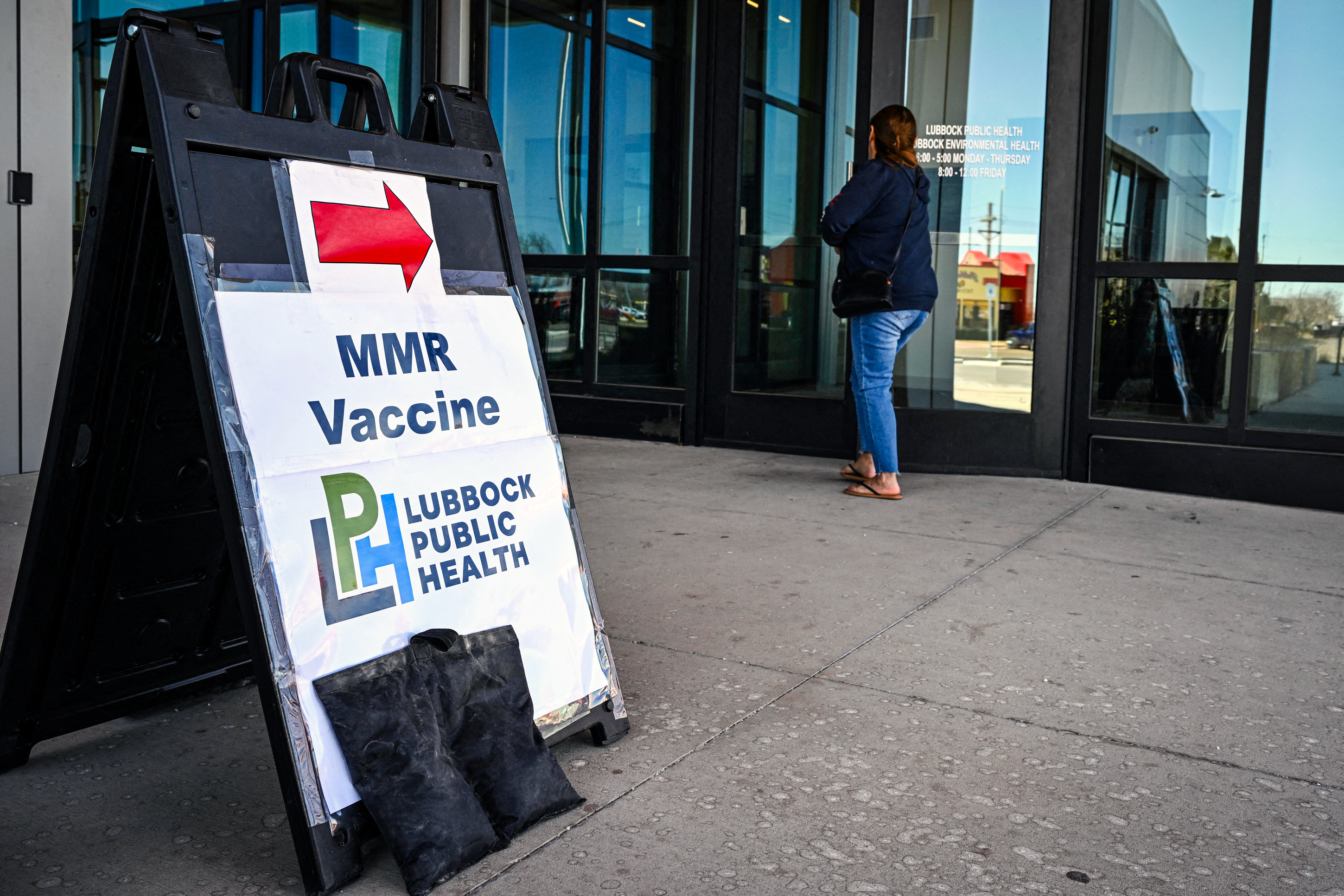 A person walks past a sign at a health center where the measles, mumps, and rubella (MMR) vaccine is administered in Lubbock, Texas, on Feb. 27, 2025. (Ronald Schemidt/AFP via Getty Images)
“They’d be making three times as many vials or vaccines and filling three times as many,” Goodman said. “It’s not like they have facilities sitting around idle—so they might need to either change current facilities or even create additional capacity for them.”
Reuters contributed to this report.