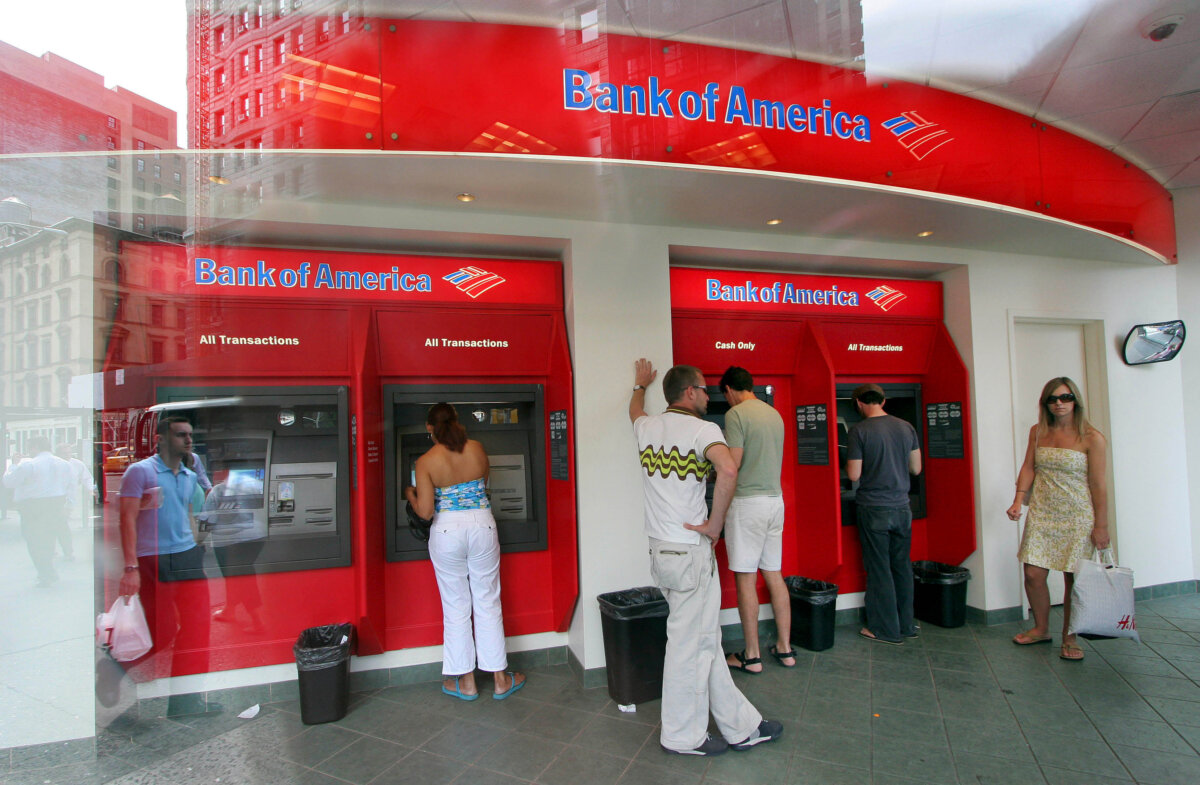

A Federal Reserve official warned Monday that artificial intelligence could pose new risks to the financial system, from faster bank runs to market manipulation, as banks, air traffic control, and Microsoft services faced outages in recent days.
Michael Barr, a member of the Federal Reserve Board of Governors since 2022, said Monday that instability fueled by AI could lead to bank runs, or when a large number of bank customers simultaneously withdraw deposits from a financial institution due to fears about a bank’s stability or solvency.
“Where customers once needed to execute transfers, AI agents could instantaneously detect yield differentials or stability signals and autonomously move funds at high speed, potentially accelerating runs that unfold in minutes, overwhelming traditional liquidity management and regulatory intervention timelines,” Barr said in prepared remarks for a speech in Milan, Italy.
Barr concluded that challenges posed by AI are “practical constraints of using AI for core business activities in the financial sector, as firms need to ensure that the resulting processes and outcomes are consistent with relevant laws and appropriate risk management” as large companies have started to incorporate or explore the usage of agentic AI into their business models.
“But doing so requires care,” he continued. “To successfully leverage the potential of generative AI on a sustainable basis, decisions based on those models must be well controlled, numerically and legally precise, explainable, and replicable.”
Developers of AI, Barr warned, have struggled to some extent with developing the technology based on those criteria that he listed.
He also pointed to cyber risks from AI-enabled cyberattackers or even rogue AI agents exploiting vulnerabilities in the financial system.
“We need to reduce the risk that AI reinforces biases in consumer lending. And we also need to guard against the risks that could result from the use of AI in financial markets including collusion, market manipulation, or trading strategies that result in significant market volatility or even systemic risk,” he said.
Barr’s comments came in the midst of outages that were reported at major banks and lending institutions this week, with some customers being unable to access ATMs.
Wells Fargo, Bank of America, U.S. Bank, JPMorgan Chase, and Capital One were some of the larger banks that were named by users as experiencing issues on Monday, as well as with the digital payment service Zelle, according to outage reporting platform Downdetector.com.
JPMorgan Chase suffered a temporary issue related to a software bug in on-premise hardware systems, a spokesperson told The Epoch Times.
“There is no evidence this is cyber-related,” the spokesperson said. “It is taking longer than usual to service some customers.”
Customers also reported disruptions at PNC, USAA, Citi, Navy Federal Credit Union, TD Bank, Citizens Bank, KeyBank, and more regional banks. Customers also reported problems with American Express and Visa.
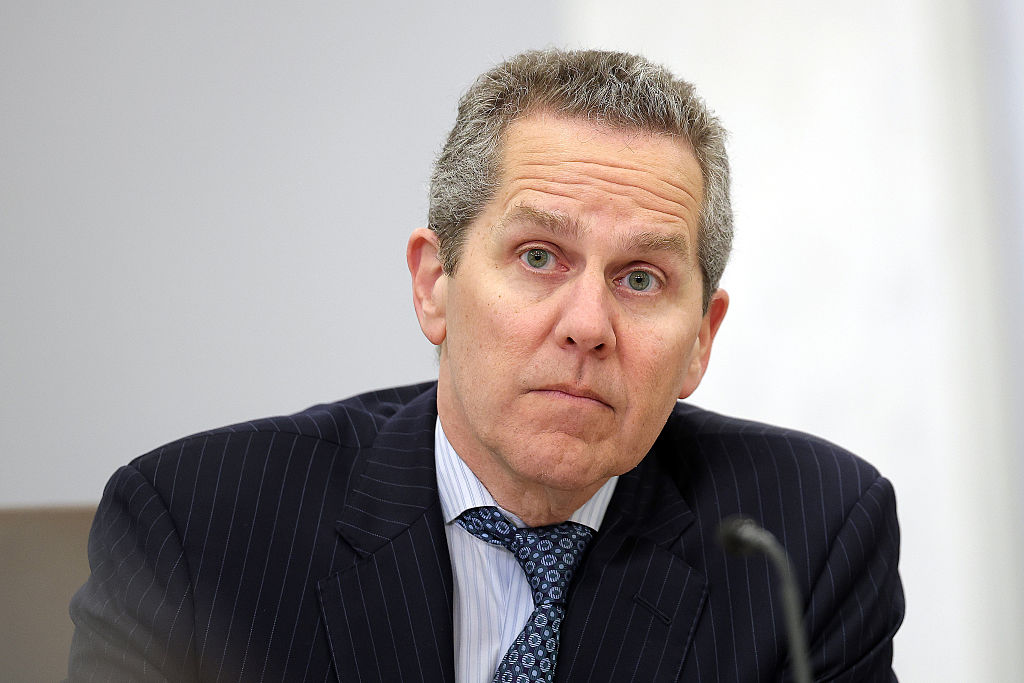 Federal Reserve Board member Michael Barr participates in a board meeting at the Federal Reserve in Washington on March 19, 2026. (Kevin Dietsch/Getty Images)
The day before the ground stop, Microsoft confirmed an outage to its 365 corporate suite, which includes corporate software such as Teams, Outlook, and others.
In the meantime, Homeland Security Secretary Markwayne Mullin said that some of the outages could have been caused by AI, citing a conversation he had with an individual in the tech industry.
“I started talking to the tech industry,” Mullin said in a Fox News interview Monday, adding that the person believes AI is to blame, “because these programs aren’t designed to work as fast” as that technology can work.
Reuters contributed to this report.
 Friends Read Free
Copy
Facebook
Tweet