
Trade representatives from the United States and China discussed agricultural trade and tariff-reduction proposals at the first official meeting under a newly established trade mechanism, according to the Chinese Ministry of Commerce.
“The Trump Administration looks forward to continuing our engagement with China as we work to establish fair and balanced trade between the two largest economies in the world,” the Office of the U.S. Trade Representative wrote on X following the talks.
The Office of the U.S. Trade Representative said the first Board of Trade meeting took place on Nov. 13, with the U.S. Treasury Department also attending.
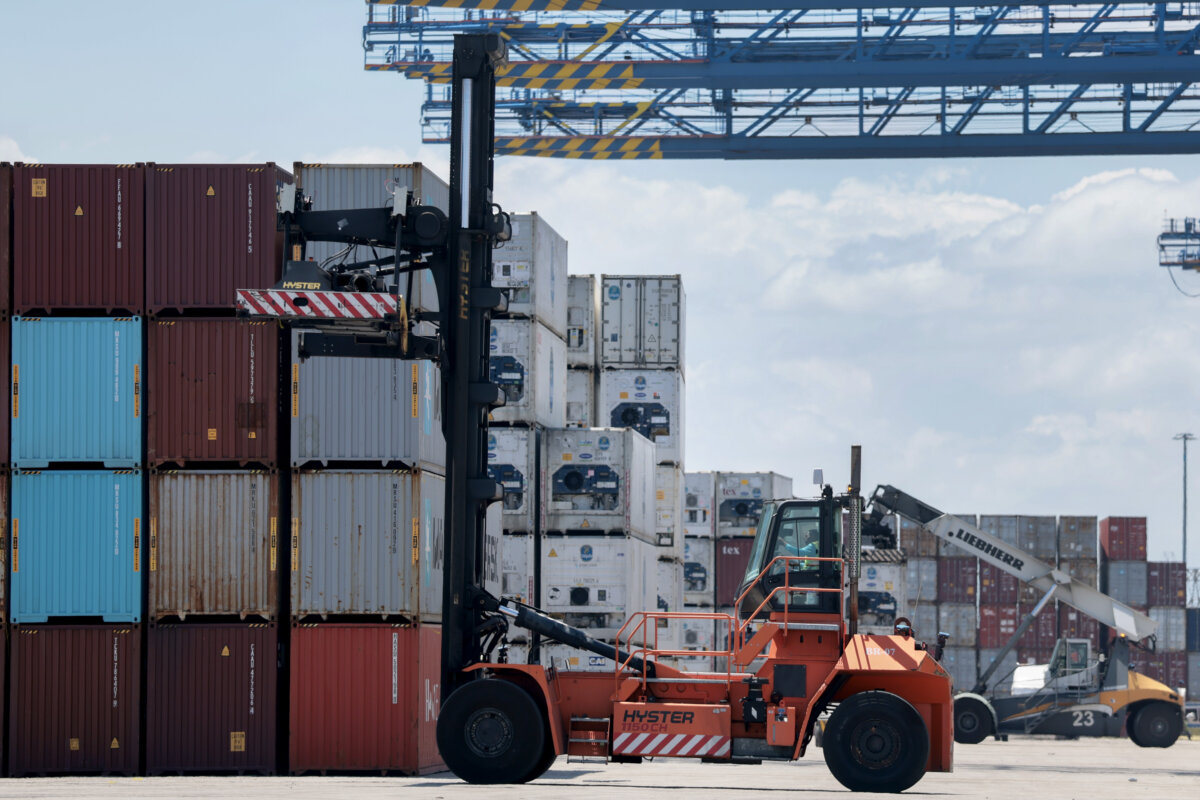
The Board of Trade was established after U.S. President Donald Trump’s May visit to Beijing, where he met with Chinese leader Xi Jinping and reached a consensus on a series of trade issues. These include China’s commitment to buy U.S. aircraft and at least $17 billion of American farm products annually through 2028.
The mechanism began operating in September, after the two leaders met again in Washington and agreed to propose a list of non-sensitive imports worth $30 billion from each country, for tariff reductions.
An import list the White House published at the time showed Washington’s plans to reduce levies on Chinese small appliances—including coffee and tea makers and toasters—as well as toys and holiday decorations.
A separate list of Beijing’s tariff-cut proposal covered a slew of American agricultural products, such as corn, wheat, dairy, fish, and beef.
During the Nov. 13 video conference, Chinese and U.S. officials discussed the $30 billion to $30 billion reciprocal tariff cut plan, agricultural trade, and other issues of mutual concern, according to a summary of the meeting from China’s Ministry of Commerce.
The ministry described the first Board of Trade talks as “candid, in-depth, and constructive,” but did not say whether they achieved anything. Negotiators will continue to communicate through the council and work to address each other’s economic and trade concerns, it added.
The meeting came just days before the Asia-Pacific Economic Cooperation Leaders’ Meeting, scheduled for Nov. 18 to Nov. 19 in Shenzhen, the southern Chinese city bordering Hong Kong. The White House has said Trump will meet with Xi on the sidelines of the summit.
U.S. Trade Representative Jamieson Greer has called on Beijing to take concrete actions to “fully implement its past commitments,” particularly on rare-earth supply and purchases of American agricultural products, during a Nov. 6 call with Chinese Vice Premier He Lifeng.
However, the Chinese regime tied U.S. farm purchases to the $60 billion tariff-reduction plan and repeatedly urged the Trump administration to implement the tariff cuts.
 An aerial view shows a farmer planting soybeans on farmland near West Bend, Iowa, on May 6, 2026. (Scott Olson/Getty Images)
Chinese imports of American farm goods have declined in recent years. In 2025, China dropped out of the top five U.S. export destinations, ranking sixth. Shipments plunged by 66 percent to $8.4 billion from 2024, according to a June U.S. Department of Agriculture report.
The Chinese regime has a record of failing to meet its trade commitments. Its last major pledge to buy U.S. agricultural products was under the phase one trade agreement signed in January 2020.
A 2022 analysis of trade data by the Peterson Institute for International Economics, a Washington-based think tank, found that China achieved about 58 percent of its purchase target for U.S. goods and services covered by the phase one agreement.
For farm goods, China met 83 percent of its purchase commitment, according to the report, which cites U.S. export data.
 Friends Read Free
Copy
Facebook
Tweet